
Steel Cut-to-Length Solutions
High-Speed Metal Cold Sawing Solutions
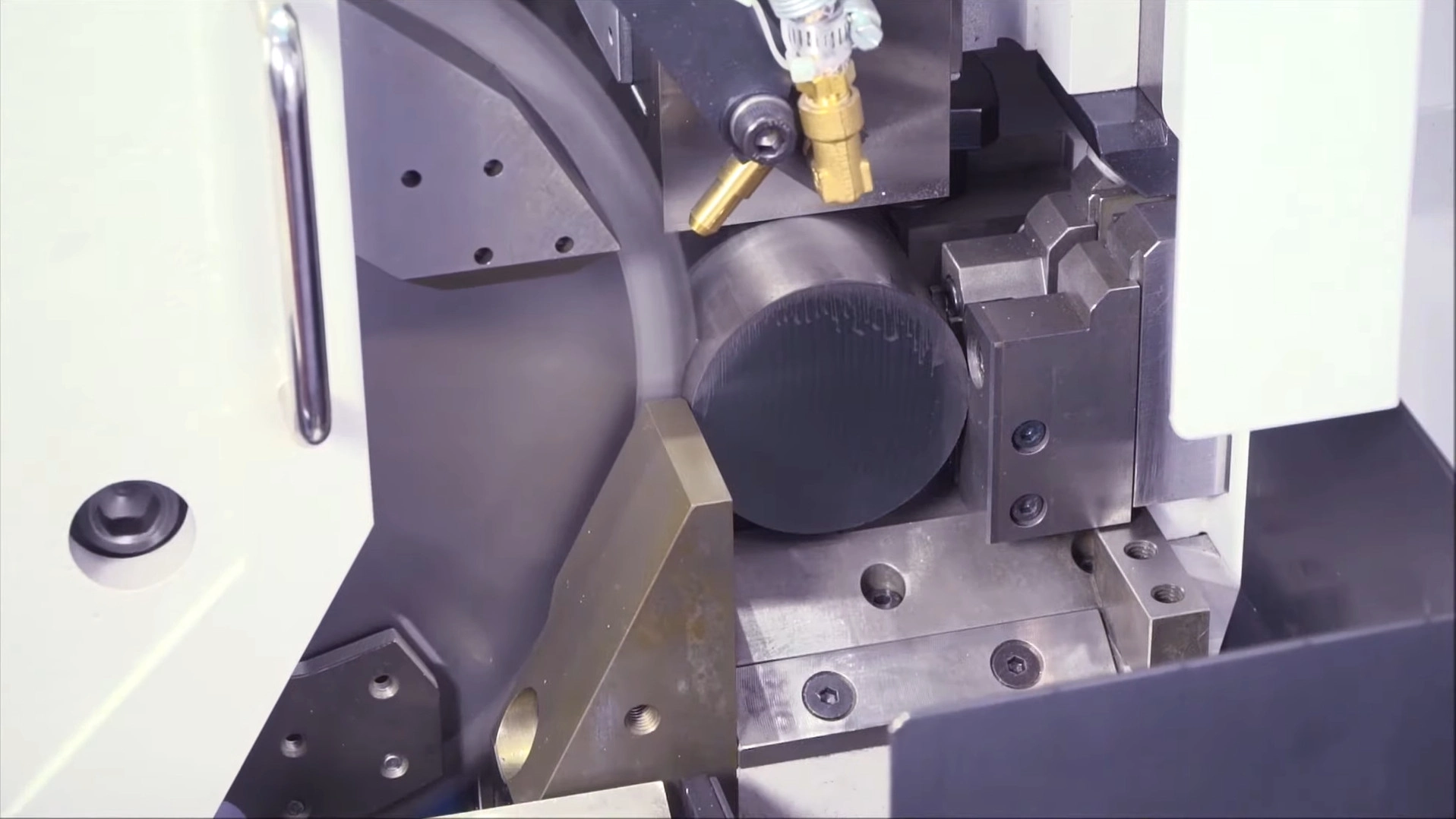
Uncompromising precision at production speed on SOCO, Tsune, Kasto, Nishijima, Noritake, and Everising saws. Cutting solid billets for forging, thick-wall tube for bearings, or thick plate in place of thermal cutting, our cermet and carbide saw blades deliver burr-free, square, cold cuts with no heat-affected zone.
Why Cold Sawing Pays
The “Cold” in Cold Sawing Is Where the Value Is
A clean, square, cold cut isn’t cosmetic — it decides what happens at the forge, the chuck, and the bottom line.
The Physics: Heat Leaves in the Chip
As the tooth shears solid steel, the shear-zone temperature spikes for an instant. Our cermet and carbide tooth geometry curls the chip away the moment it forms, carrying the great majority of the cutting heat off with the swarf.
- The workpiece stays cold — no heat-affected zone, no hardened edge, no change to the microstructure.
- The next process — CNC turning, milling, threading — sees clean, soft, machine-ready steel.
- No edge hardening means no premature wear handed downstream to the operation that follows.
The Economics: Yield & Process Cost
A burr-free, square face takes cost out of every step that follows the saw — and on short-stock work, a thinner kerf takes it out of the raw material itself.
- Forging & cold heading: flat, mark-free billets avoid the folding cracks that start from saw marks, and gram-consistent slugs protect expensive dies from off-center loading.
- CNC feeding: square, burr-free ends mean bar feeders don’t jam and chucking and Z-axis touch-off stay true.
- Thin-kerf option: drop a high-frequency short cut from a 2.0 mm to a 1.5 mm kerf and you save 0.5 mm of costly alloy on every single cut — it adds up fast across tens of thousands of pieces a day.
Industry Challenges
Four Problems Every Cut-Off Shop Knows
Whether you’re an in-house cut-off cell feeding forging and CNC, or a service center selling cut material, these are the four issues that decide your throughput, your scrap, and your reputation.
Cycle-Time Bottlenecks in Mass Production
Band saws are simply too slow to keep a forging press or a bank of CNCs fed, and HSS blades wear out fast on hard alloys. Either way, the cut-off station becomes the bottleneck — and constant saw blade changes turn it into unplanned downtime.
Forging Defects from Poor Cut Quality
Cold heading and forging are unforgiving about billet quality. Wavy saw marks and burrs fold under pressure and seed hidden cracks inside the forging, while out-of-square cuts swing the slug weight — shortening the life of costly dies and scrapping parts at the customer.
Work Hardening in Stainless & Alloy Steel
Cut 304/316 stainless or hard alloy steel with a dull or rubbing edge and the surface work-hardens instantly. That hardened skin then destroys the carbide insert on the very next turning or milling operation.
HAZ & Inefficiency in Plate Processing
Service centers cutting thick plate with oxy-fuel or laser pay for it twice: the process is slow and power-hungry, and it leaves a hardened, heat-affected edge the buyer struggles to machine afterward.
Our Technical Approach
How We Hold Square, Cold, Consistent Cuts
A Dual Cermet & Carbide Tip Matrix
The right tip for the material, not one grade for everything. Cermet (TiC/TiN) gives outstanding hot hardness and chemical inertness against iron — ideal for high-speed, continuous cutting of solid carbon and mild-alloy steel, for a mirror finish and long life. Tungsten carbide brings the impact toughness needed for stainless, hard alloys, and interrupted tube cuts, resisting the chipping that kills lesser blades.
Dynamic Roll Tensioning for Zero Deflection
Gram-consistent, mark-free billets start with a body that doesn’t wander. Each steel body is precision roll-tensioned for its working speed, so as it warms in continuous cutting its internal stress settles into balance and the plate stays rigid — no runout, no sideways drift as the tooth bites into solid bar.
Tight Bore Tolerance & Flatness-Holding Side Geometry
We hold the bore and pinhole tolerances tight and grind the tooth side faces on high-grit diamond wheels so the side edge acts as a finishing edge — wiping out the small ridges that vibration would otherwise leave. Together with precise flange clamping, this locks down squareness and delivers the perpendicular, flat face that forging and CNC demand.
Thin-Kerf Tensioning & Low-Vibration Plate Sawing
For high-frequency short stock, our thin-kerf saw blades get a stricter tensioning treatment so a slim body resists dishing under the torque of cutting solid steel and holds its squareness. The same low-vibration, high-precision approach drives our plate-sawing blades — built to cut thick plate straight, square, and cold on metal beam saws as an alternative to thermal cutting.
Estimate Your Savings
Short-Stock Material Yield Calculator
Plan A
Cutting Plan A
Workpiece Count
-
Whole pieces per bar
Material Utilization
-
Good length / raw length
Plan B
Cutting Plan B
Workpiece Count
-
Whole pieces per bar
Material Utilization
-
Good length / raw length
Comparison
Plan B Compared With Plan A
Calculate both plans above to see the difference. Positive values mean Plan B performs better than Plan A.
Workpiece Count Change
-
Pieces and percentage change
Utilization Change
-
Percentage points and relative change
Recommended Tooling
Matched Saw Blades by Material and Cut
Cermet for clean, fast cutting of solid steel; carbide for stainless, hard alloys, and tube.
Cermet Series
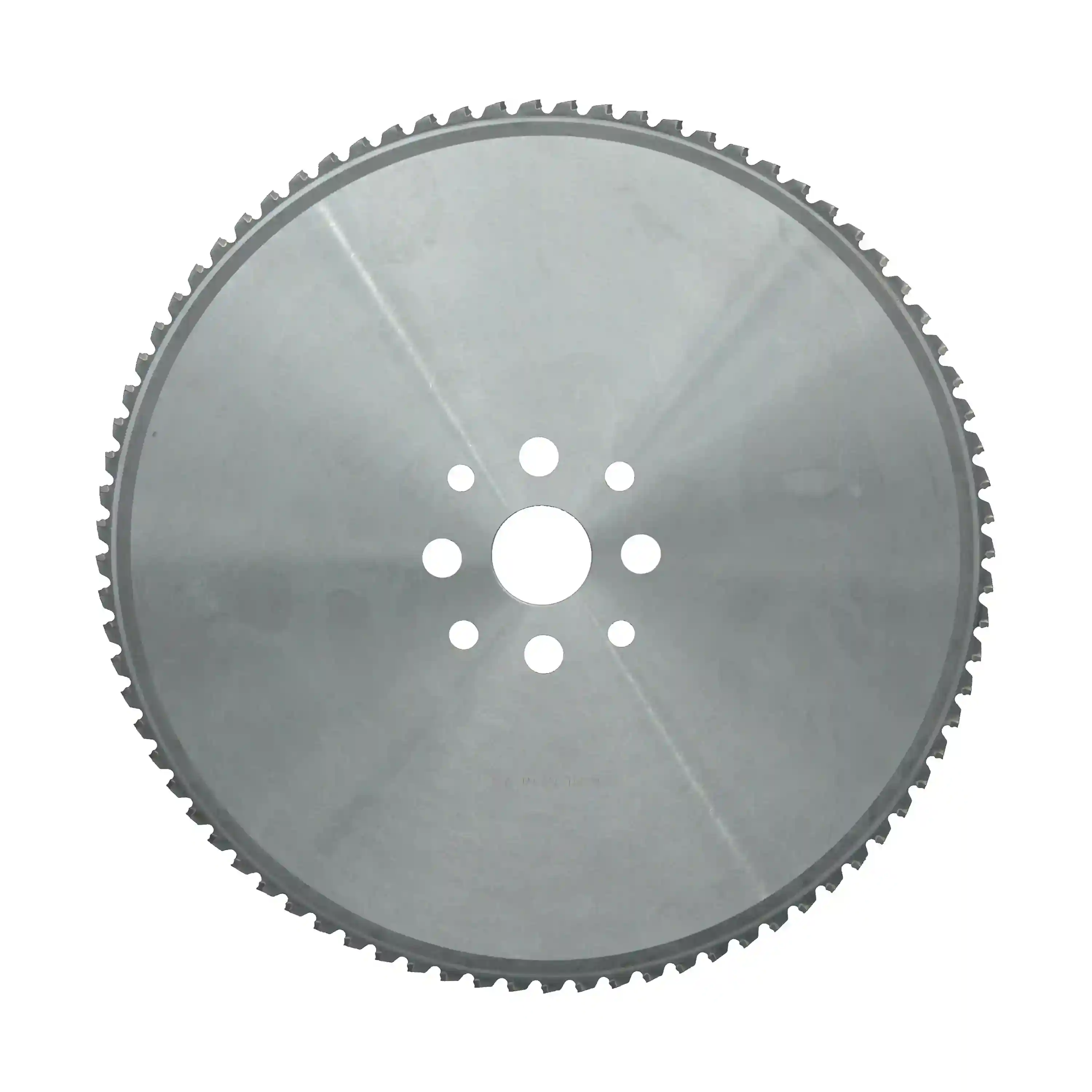
Cold Saw Blades for Low & Medium Carbon Steel
Cermet-tipped blades for solid carbon-steel bar and thick-walled tube. Cermet’s chemical inertness against iron stops built-up edge, for a mirror-clean face and long, steady life on high-volume billet cut-off.
Carbon & low-alloy steel · solids and thick-wall tube
View specifications →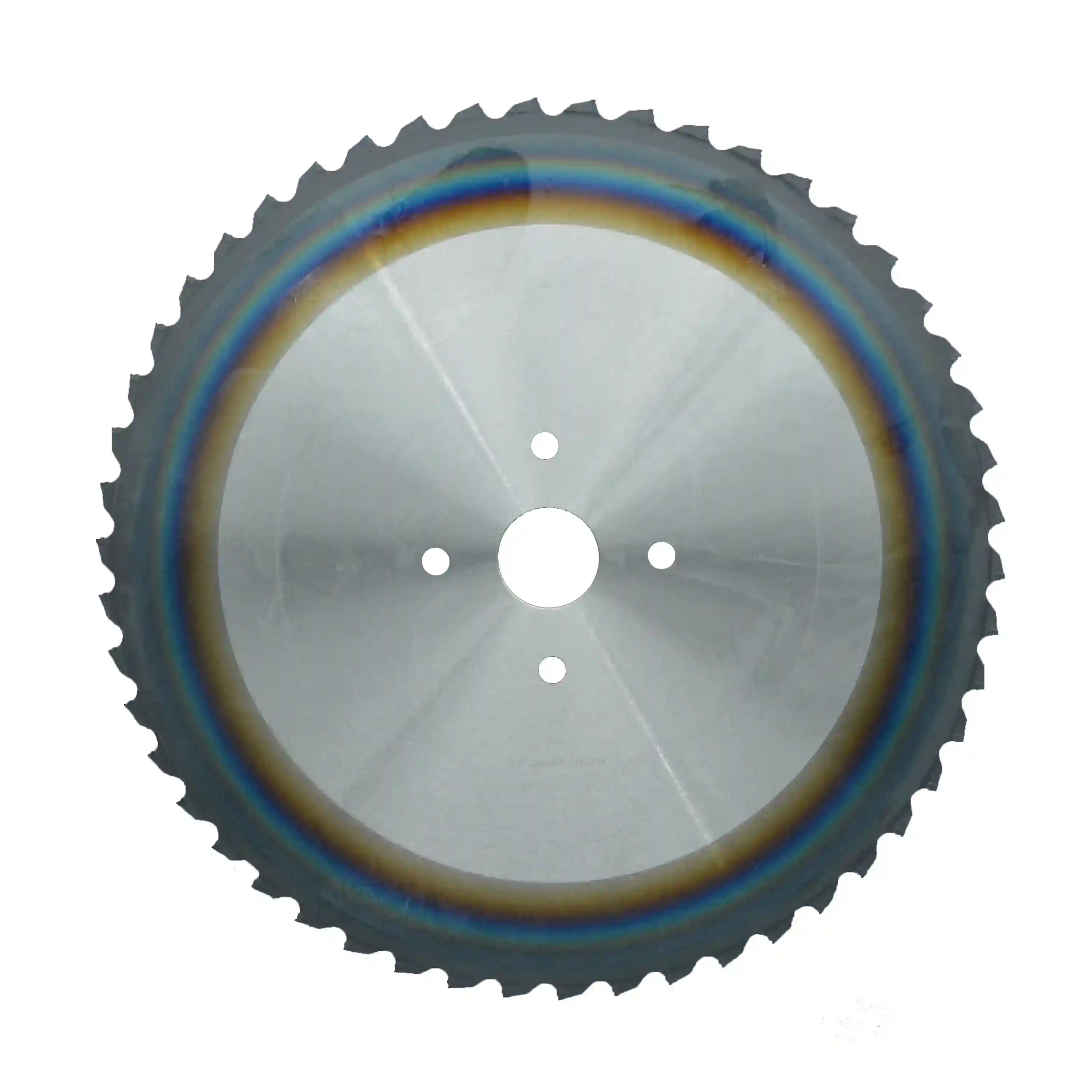
Cermet Series · PVD Coated
Cold Saw Blades for Steel Cutting
Upgraded PVD-coated cermet for a wider range of mild, high-carbon, and alloy steel. The coating adds wear and oxidation resistance for longer life on tougher heats and continuous production.
Mild, high-carbon & alloy steel · solids and thick-wall tube
View specifications →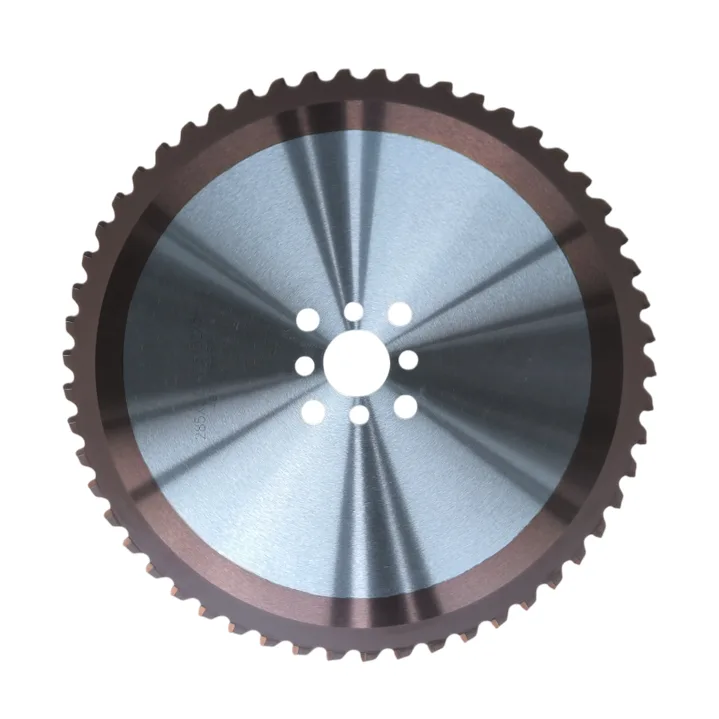
Carbide (TCT) Series
Cold Saw Blades for Stainless Steel
PVD-coated tungsten carbide for stainless, titanium, and demanding high-alloy steel. A cobalt-enriched matrix takes the work-hardening and mechanical load of these alloys without chipping out.
Stainless, titanium & high-alloy steel
View specifications →
Carbide (TCT) Series
Cold Saw Blades for Steel Tube Cutting
PVD-coated carbide built for the interrupted cut of tube and pipe over 3 mm wall — high fracture toughness and thermal-shock resistance to absorb repeated impact in carbon, alloy, and stainless tube.
Carbon / alloy / stainless tube & pipe (>3 mm wall)
View specifications →Expected Outcomes
What This Saw Blades Program Delivers
The gains a cut-off operation can expect when the saw blade grade and parameters are matched to the material.
Flat, perpendicular faces with no heat-affected zone go straight to forging or CNC — no deburring, no folding cracks, no hardened skin to wreck the next tool.
Matched cermet or carbide grades and stable, well-tensioned bodies stretch the run between changes, keeping a fast saw feeding the line instead of stopping for saw blades.
Consistent slug weight protects forging dies, and the thin-kerf option saves costly alloy on every short cut — a real saving across high-frequency cut-to-length work.
Expert FAQ
Frequently Asked Questions
Should I choose a cermet or a carbide (TCT) saw blade for my saw?
It comes down to the material and the cut. Choose cermet when you’re mass-cutting solid carbon and mild-alloy steels — grades like C45 / 1.0503 (S45C, AISI 1045). Cermet’s chemical inertness against iron prevents built-up edge, so you get a flawless finish and long life on solid structural steel. Choose carbide (TCT) for high-strength alloys, stainless, and thick-wall tube — bearing/alloy steels such as 100Cr6 / SUJ2 / 52100 and 42CrMo4, or stainless like 1.4301 / SUS304 / 316. These generate heavy mechanical load, work-hardening, and — in tube — interrupted impact; our cobalt-enriched carbide is built for the fracture toughness and thermal-shock resistance to take it.
Why do thin-kerf saw blades save money on short cuts but aren’t recommended for large billets?
On a 20 mm short cut, going from a 2.0 mm to a 1.5 mm kerf saves a meaningful slice of expensive alloy on every stroke — and that compounds fast in high-frequency work. But on a large-diameter solid billet the arc of engagement is long, the chip volume is huge, and the side load is high. A very thin body doesn’t have the rigidity to stay true under that, so it can deflect and lose squareness. The bigger the diameter, the more body thickness you need — it’s a physical trade-off, not a preference.
Can your plate-sawing saw blades really replace my laser or oxy-fuel cutter?
For straight-line cutting of medium-to-thick plate, yes. Laser slows down sharply on thick plate and leaves a tapered, heat-affected edge; oxy-fuel is slower still and hotter. A metal beam saw with our cold-saw blades cuts thick plate fast and straight, leaving a square, clean, cold edge the customer can take straight to the mill — no HAZ to machine away first. For thin sheet or intricate contours, laser still wins; for volume straight cuts in thick plate, cold sawing is hard to beat.
Get a Cutting Plan
Your cut-off station shouldn’t be the slowest machine in the plant
Tell us your material grades, bar or tube sizes, saw model, and target rate — and our engineers will recommend the cermet or carbide saw blade, kerf, and geometry that lifts your throughput and cut quality.