
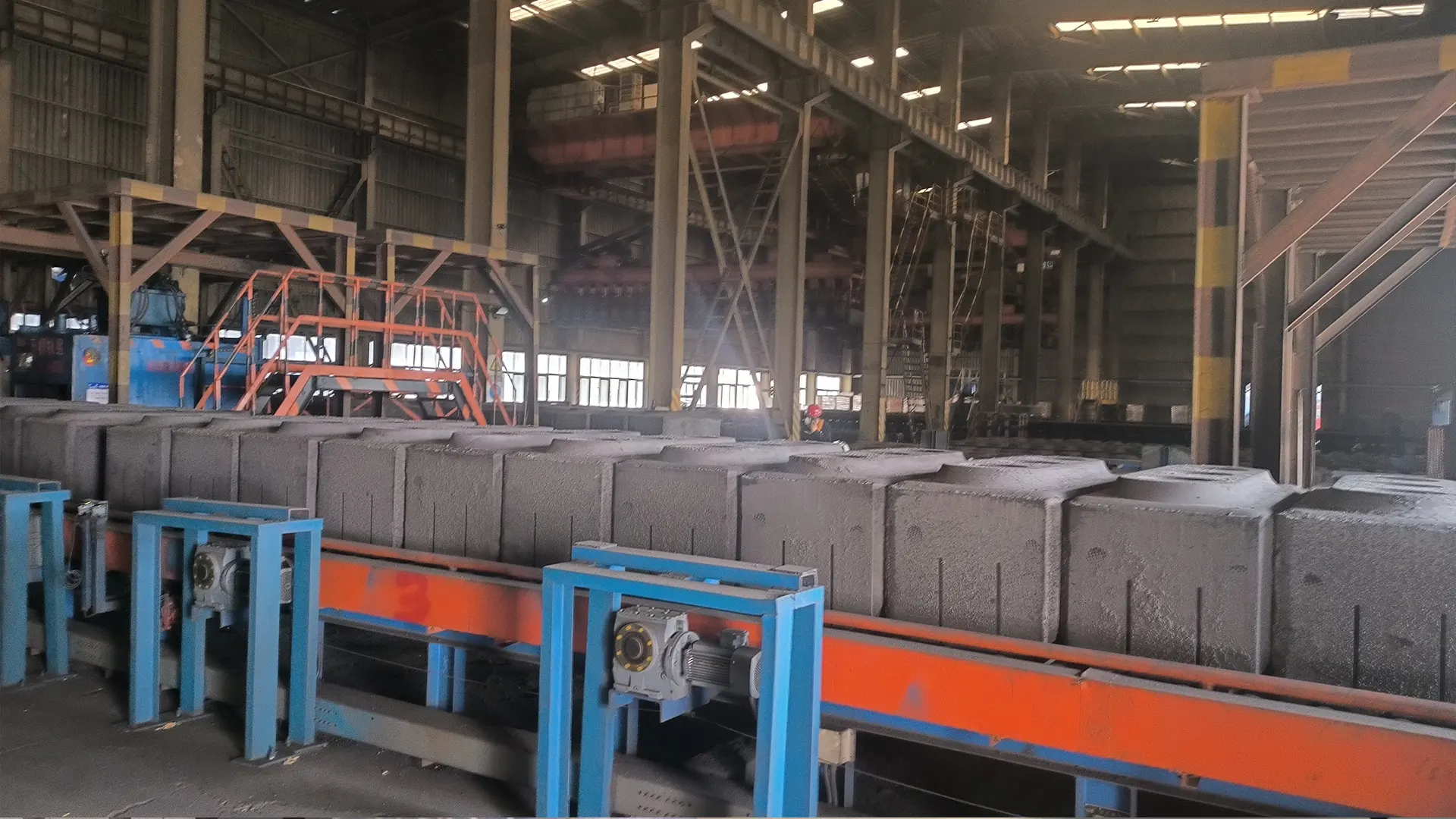
Primary Aluminum Smelter Solutions
High-Performance Carbon Anode Slotting Solutions
Engineered for primary aluminum smelters — delivering 30,000–70,000 anodes of service life, consistent slot geometry for stable cell performance, and a replaceable-segment option that takes the freight and lead time out of your tooling budget.
Industry Challenges
What Makes Anode Slotting So Punishing on a Saw Blade
Slotting prebaked anodes is dry, abrasive, deep cutting on machines that run around the clock. These are the four problems that decide your tooling cost per anode.
Extreme Abrasive Wear from Petroleum Coke
Prebaked anodes are calcined petroleum coke and coal-tar pitch — hard, non-homogeneous, and intensely abrasive. Cut dry, the carbon acts like a grinding wheel on the tip face. Plain carbide is gone in a few hundred blocks, and a weak PCD grade micro-chips on hard inclusions, so the slot walls roughen and side wear accelerates.
Thermal Distortion in Deep Slotting
Slots run 300–450 mm deep. With a large saw blade buried in the cut for long cycles, friction heat floods into the body. If the steel core is under-tensioned or has no thermal relief, the rim expands unevenly, the saw blade dishes or wanders, the slot drifts out of tolerance — and in the worst case it binds in the anode.
Slot Geometry Drift That Disturbs Cell Efficiency
Slot width and depth have to stay constant across thousands of blocks. As tips wear, the slot develops rough, uneven inner walls, gas release from under the anode suffers, and the anode-cathode distance (ACD) starts to vary cell to cell. Inconsistent slots quietly raise cell voltage and energy use.
Freight Cost & Changeover Downtime
An integral PCD saw blade 900–1600 mm across is a heavy steel disc to air-freight overseas — costly to ship, and slow enough to force big, expensive spares inventories. Swapping one with a crane on the slotting machine also stops the line for real production time.
Our Technical Approach
What We Control as the Saw Blade Maker
High-Density Premium PCD Grade
Defeats abrasive wear and short, unpredictable life. We use an industrial PCD grade built for highly abrasive non-metallics, with the diamond grain size and sinter density tuned to push wear resistance to the limit without giving up the impact toughness needed for hard inclusions. The result is a steady 30,000–70,000 anodes per blade and a slot width that holds across the whole service life.
Engineered Thermal-Relief Slots & Roll Tensioning
Defeats body distortion in deep slots. Expansion and noise-reduction slots are positioned from thermal analysis to give the rim room to grow without dishing, and every body is precision roll-tensioned so it stays flat under sustained heat. That keeps slot width and depth dimensionally stable through long, continuous runs.
Replaceable-Segment Modular Construction
Defeats freight cost and long lead times. With the replaceable-tip design, worn PCD means you reorder only the lightweight bolt-on cutter segments — typically cutting consumable shipping weight and international freight dramatically, and shortening replenishment from months to days. Your own crew handles the changeover.
Kerf & Tensioning Options for Narrower Slots
Supports the industry move toward narrower, deeper slots — where your machine allows it. By controlling the PCD tip projection relative to body thickness and applying advanced roll tensioning, we keep a large-diameter saw blade laterally stable even at reduced kerf, helping the slot vent gas more cleanly and maintain ACD accuracy.
Recommended Tooling
Two PCD Anode‑Slot Saw Blades — Fixed or Replaceable Tips
Maximum body rigidity, or the lowest total cost of ownership — both built to your slotting machine.
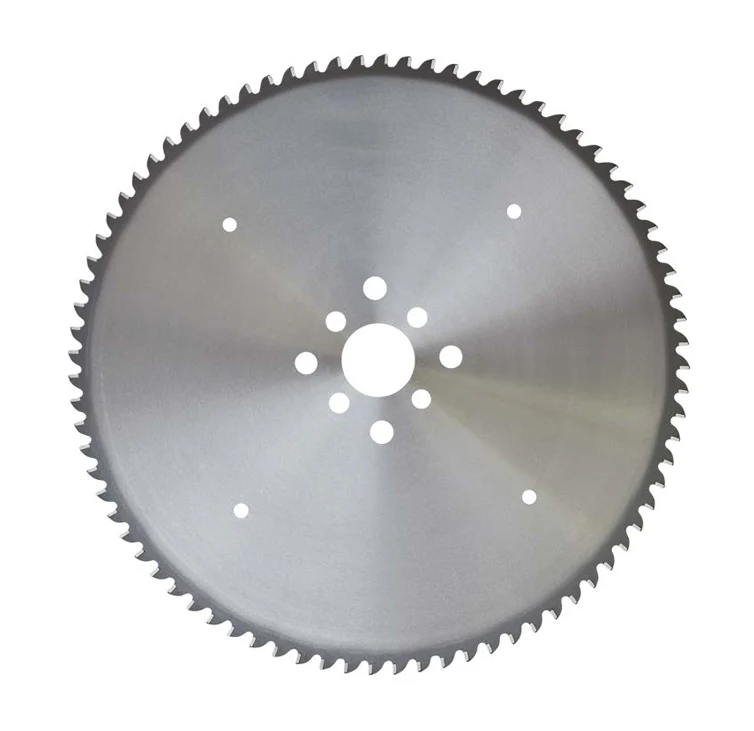
Maximum Rigidity / Integral Body
PCD Circular Saw Blades for Slotting Carbon Anodes
One-piece PCD blades with fixed tips and a pre-tensioned, high-strength alloy body — the choice when absolute body rigidity and vibration resistance matter most. Diameters from 900 to 2500 mm, matched to your slotting machine.
View specifications →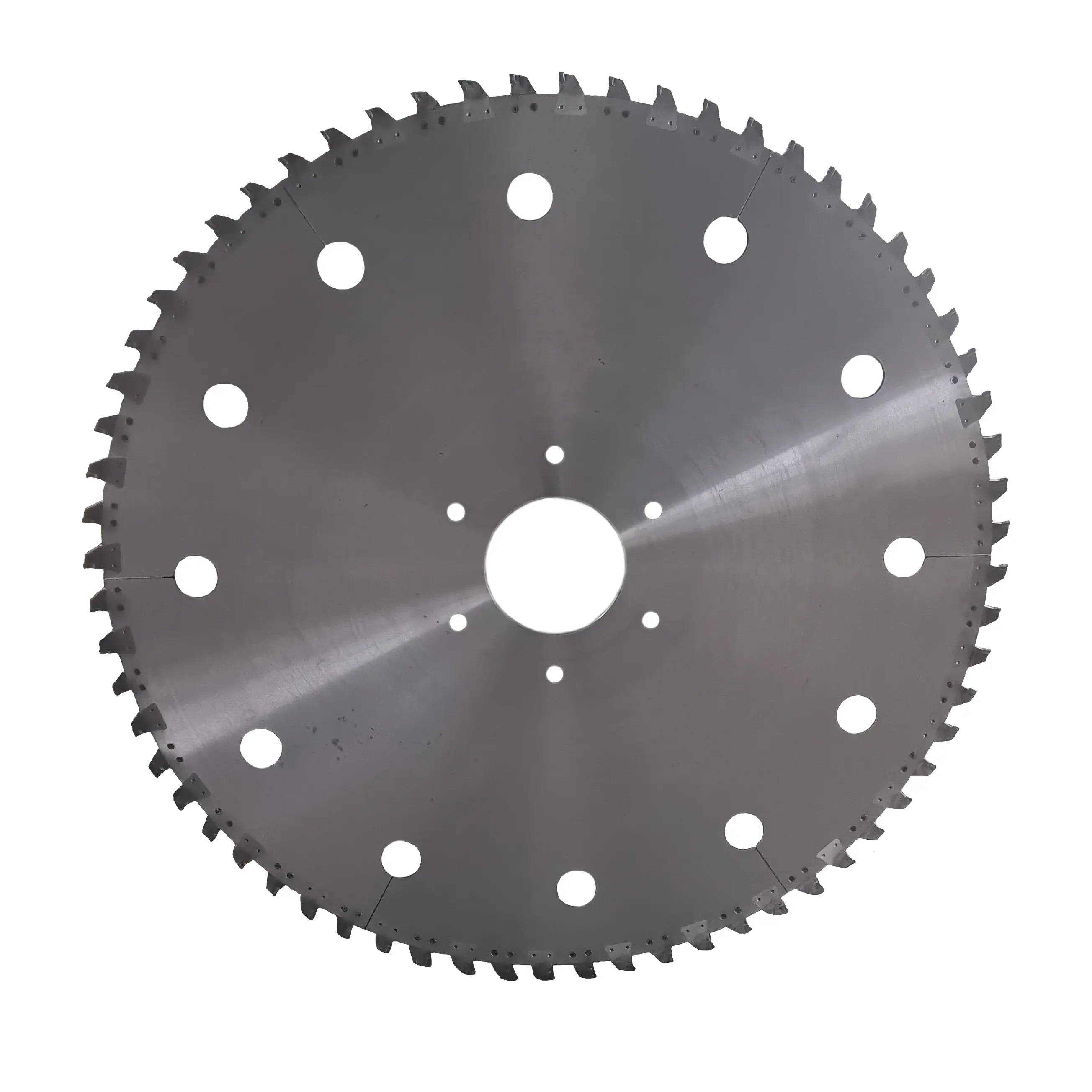
Lowest TCO / Replaceable Segments
Replaceable PCD Circular Saw Blades for Slotting Carbon Anodes
When the PCD wears, you reorder only the bolt-on cutter segments and keep the body in service. Built for overseas smelters fighting high freight costs and long lead times — a changeover handled by your own crew instead of a global shipment.
View specifications →Expected Outcomes
What This Tooling Program Delivers
The gains a smelter can expect when it standardizes on the right PCD carbon anode slotting saw blade and runs it within recommended parameters.
A slot width and depth that hold across the full blade life keep gas release and anode-cathode distance consistent from block to block, so cell voltage and energy use stay predictable.
The replaceable-segment option drops consumable shipping weight from a heavy steel disc to a box of cutter segments, taking most of the international freight cost off the table.
Long, repeatable service life of 30,000–70,000 anodes lets your maintenance team plan blade changes in advance instead of reacting to surprise failures and unplanned downtime.
Expert FAQ
Frequently Asked Questions
Will the replaceable tips work loose during heavy continuous slotting?
No. The cutter segments seat in precision pockets and are held with high-strength locking fasteners. Under the centrifugal and tangential cutting loads of slotting, the segments are pressed harder into their locating seats, not away from them. The joint is secure and, if anything, damps micro-vibration better than it might first appear.
How do you support the move to narrower slots for newer anode designs?
A narrower slot means a thinner body and a tougher thermal environment, so two things have to be right: a PCD grade sharp enough to keep cutting resistance low, and a body given advanced roll tensioning to resist lateral deflection deep in the slot. We can supply reduced-kerf configurations on that basis — but the achievable slot width is ultimately set by your slotting machine, particularly whether it runs conventional or climb cutting and how it guides the saw blade. We will spec the saw blade to what your machine can actually hold.
On the replaceable-tip version, does the body ever need replacing?
The segments can be renewed many times, but the steel body is not eternal — metal fatigue over long service, or an accidental bind in an anode, can eventually distort it. As a rule of thumb we suggest a full flatness, tension, and balance check after roughly 5 to 8 sets of segments, and replacing the body only if it falls outside tolerance.
What anode temperature should we slot at for the best saw blade life?
As cool as your handling allows. PCD life falls quickly as anode temperature climbs, so cutting well below about 250 °C — and lower where practical — protects the diamond and holds slot accuracy. If blocks are arriving hot from the bake furnace, buffering or cooling them before slotting significantly improves saw blade life and helps maintain slot accuracy.
Get a Tooling Plan
Your anode slots set your cell efficiency — and your saw blade bill
Send us your slotting machine model and anode dimensions. Our engineers will recommend the right PCD saw blade — integral or replaceable — and the configuration that lowers your cost per anode.