

Panel Furniture Manufacturing Solutions
High-Precision Panel Sizing & Processing Solutions
Precision and consistency for high-volume furniture production on Homag, Biesse, and SCM lines — chip-free edges on abrasive melamine, MDF, and HPL, backed by a matched PCD and carbide saw blades for every station.
Industry Challenges
Where Panel Lines Make Scrap and Lose Uptime
Faced panels look easy and cut hard: a brittle, abrasive surface over an inconsistent core, processed at high speed where a fraction of a millimetre decides whether a part ships or scraps. These are the four problems that matter.
Melamine Tear-Out & Chipping
A melamine or HPL face is hard but brittle. The moment a saw blade deflects slightly or the edge loses its keenness, it tears the coating instead of severing it — and a chipped top or bottom face turns an expensive cut-to-size part into scrap.
Abrasive Core & Resin Wear
Board cores carry silica from recycled fibre, and the UF/MUF resins that bond them cut hot. Silica grinds the rake face while cutting heat attacks the cobalt binder in carbide — together they round the edge fast, and a rounded edge is what starts the chipping.
Scoring-to-Main Mismatch
A clean two-sided cut depends on the scoring saw blade and the main saw blade sharing one exact line and kerf. If their kerf or tension drifts apart by a hair, the panel edge shows a step — and the edge bander can never lay banding flush over a stepped face.
Vibration in Trimming & Hogging
On edge banders and double-end tenoners, trim saws and hoggers spin fast and remove material aggressively. Any imbalance or poor chip clearance sets off high-frequency chatter that leaves washboard marks, burns the edge, and wears spindle bearings.
Our Technical Approach
How We Hold a Chip-Free Edge, Cut After Cut
A Matched PCD & Sub-Micron Carbide Range
The honest answer to abrasive board is the right tip for the job, not one material for everything. A freshly ground sub-micron carbide saw blade is exceptionally sharp and gives a beautiful edge — its limit is how long it stays that sharp under faced board. PCD starts a touch less keen but holds an acceptable-quality edge for months, so the first panel of a run and the last look the same with no changeover in between. We supply both and help you pick by volume and material.
Laser Slots & Resin-Filled Damping for a Steady Plate
Chip-free starts with a body that won’t move. Our sizing and scoring saw blades use laser-cut expansion slots and resin-filled anti-vibration slots to absorb the harmonic resonance of high-RPM cutting, holding a true line even through stacked panels — because a steady plate is what lets a sharp edge sever the coating cleanly.
Precision-Matched Scoring & Sizing Geometry
We grind scoring saw blades — conical or split — to a tight kerf tolerance and pair them with optimized TCG or ATB geometry on the main saw blade, so the pre-score and the main cut land on exactly the same line. That flat, step-free edge is the foundation of seamless edge banding with no visible glue line.
Balanced, Free-Cutting Hoggers & Trim Saws
Trim saws and segment hoggers are built and balanced for high-RPM spindles, with aggressive rake and open chip pockets that throw waste clear instead of letting it pack and heat the edge. The result is fast, clean squaring and trimming without burn marks — and easier life for your spindle bearings.
Recommended Tooling
A Complete Tooling Ecosystem for the Panel Line
Sizing, scoring, edge trimming, hogging, and CNC grooving — in both PCD and carbide, from one partner.
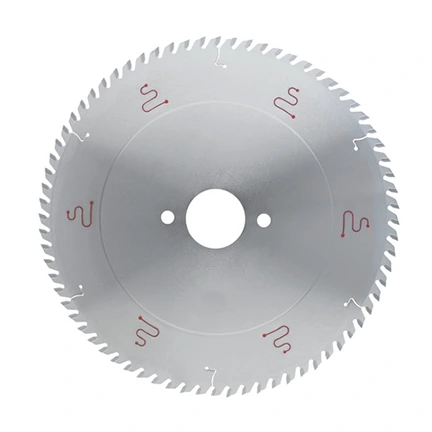
Beam Saw / Sizing
Industrial Panel Sizing Saw Blades
Carbide-tipped TCG main blades for horizontal beam saws and panel sizing machines — chip-free sizing of melamine, HPL, MDF, and laminated chipboard, run together with a scoring blade.
View specifications →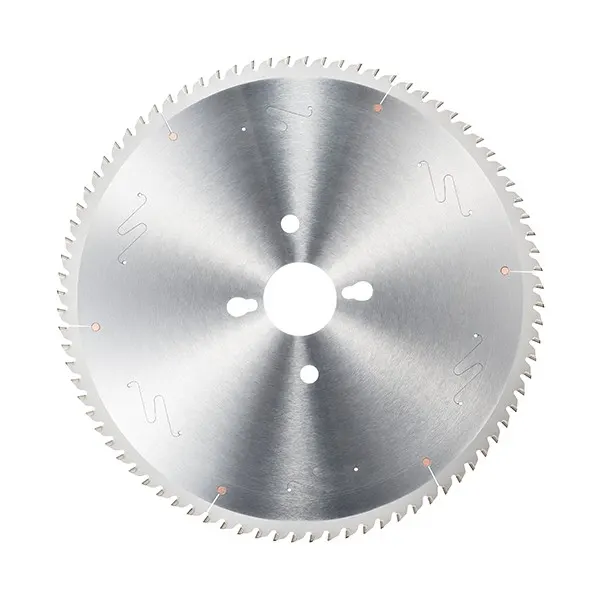
Beam Saw / Sizing
PCD Panel Sizing Saw Blades
PCD-tipped TCG main blades for the same beam saws — when the line runs abrasive board all day, service life runs 10× or more over carbide for the lowest tooling cost per cut and far fewer changeovers.
View specifications →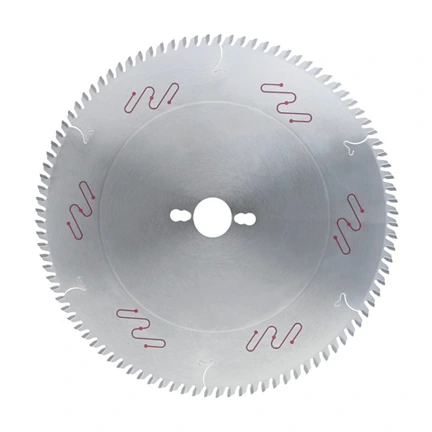
Sliding Table Saw / Sizing
Panel Sizing Saw Blades
Carbide sizing blades for sliding table and table saws, paired with a scoring blade for clean two-sided cuts on melamine-faced chipboard, MDF, and plywood in lower-volume shops.
View specifications →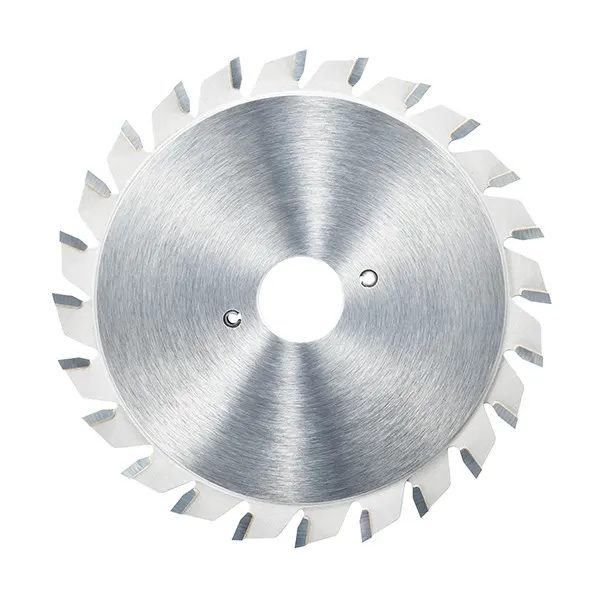
Scoring
Conical Scoring Saw Blades
Carbide conical scoring blades that pre-score the underside coating so the main blade exits into an already-cut line — eliminating bottom-face chipping. Kerf adjusted by height on machines with a scoring lift.
View specifications →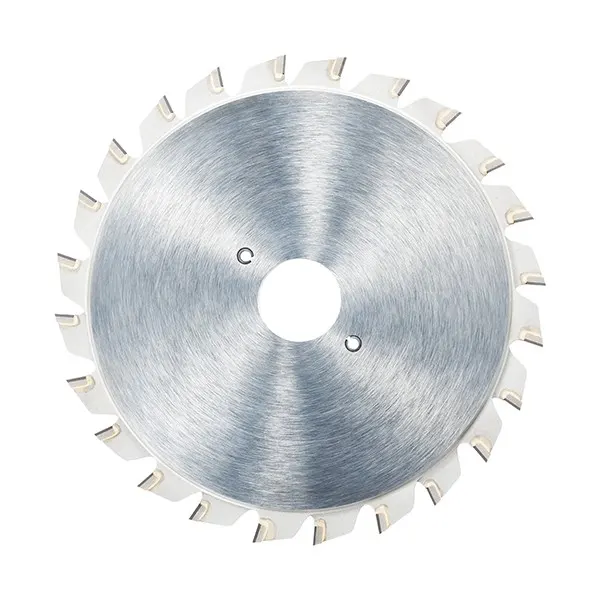
Scoring
PCD Conical Scoring Saw Blades
The diamond-tipped scoring counterpart — it holds its score-kerf width far longer on abrasive board, so the score-to-main match stays in spec across long production runs without constant re-setting.
View specifications →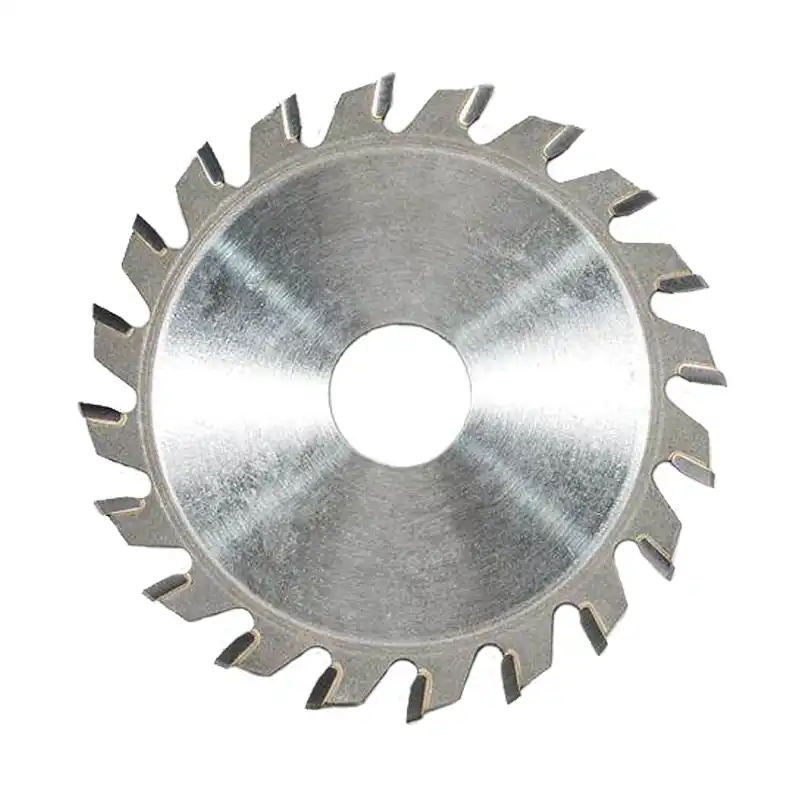
Edge Banding / Trimming
Circular Saw Blades for Edge Trimming
Small high-RPM carbide blades for edge banders, flush-trimming PVC, ABS, PP, PET, veneer, and solid-wood edge bands cleanly without melting or witness marks.
View specifications →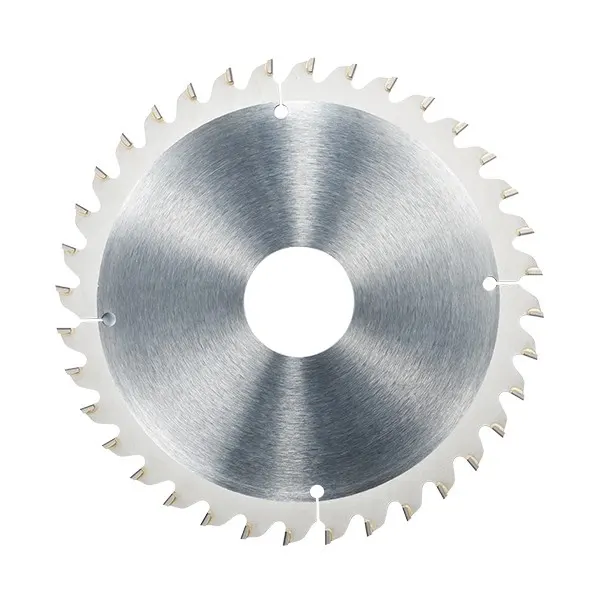
Edge Banding / Trimming
PCD Circular Saw Blades for Edge Trimming
PCD-tipped trim saws for high-volume edge banders — diamond edges stay sharp through thousands of metres of band so the flush cut stays consistent shift after shift.
View specifications →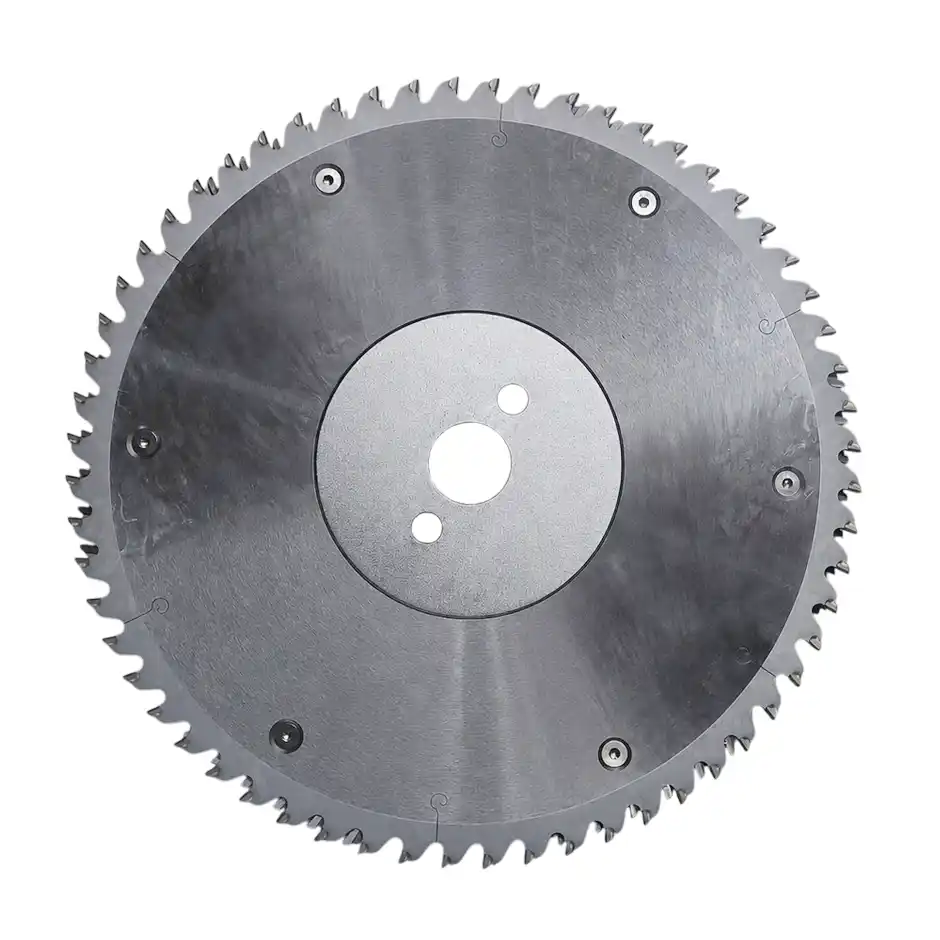
Squaring / Hogging
Segment Hoggers for Trimming Panels
PCD segment hoggers for double-end tenoners and squaring lines — they hog the squaring allowance off the panel edge in one fast, chip-free pass ahead of the trim saw and edge bander.
View specifications →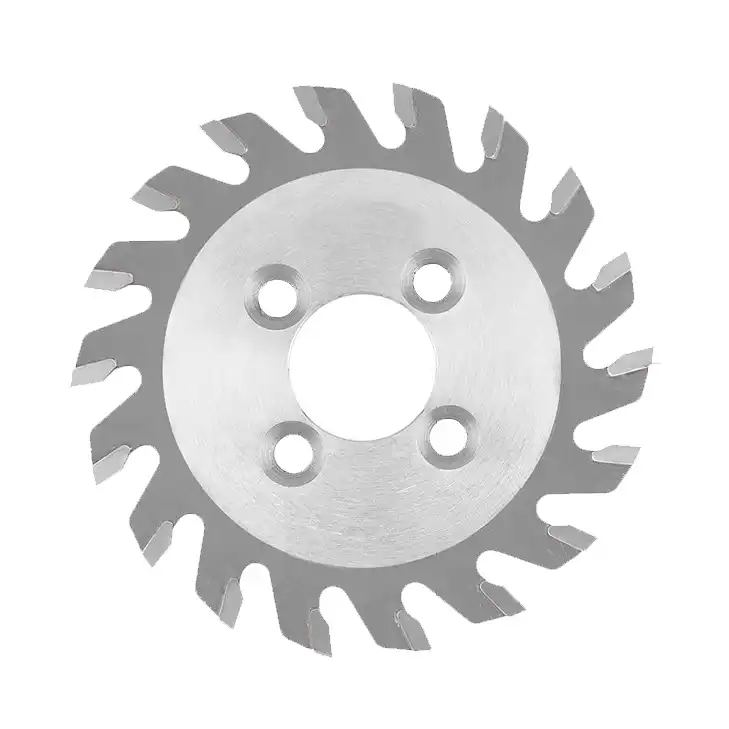
CNC Machining Center
Grooving Saw Blades for CNC Machining Centers
Small-diameter, high-rigidity grooving blades for CNC machining centers and routers — chip-free grooves for backs and drawer bottoms in panel and solid-wood work.
View specifications →Expected Outcomes
What This Saw Blades Delivers
The gains a furniture plant can expect when sizing, scoring, and trimming run as a matched set at recommended parameters.
A matched scoring-and-sizing set removes the top- and bottom-face chipping that scraps faced parts, pushing first-pass yield up and cut-to-size rejects down.
On abrasive board, PCD holds an acceptable-quality edge far longer than carbide — so quality stays even across a run and the line stops to change saw blades far less often.
A flat, step-free edge lets banding seat without a visible glue line, lifting the perceived quality of the finished furniture.
Expert FAQ
Frequently Asked Questions
Should I run a conical or a split scoring saw blade?
It depends on your machine. Beam saws and sliding table saws with a powered scoring-unit height adjustment work best with a conical scorer — you fine-tune the score kerf simply by raising or lowering the saw blade. Older saws with no fine height control are better suited to a split (two-piece) scorer, where you add or remove shims to physically set the kerf to match the main blade.
Why is my cut clean on top but chipped on the bottom?
Bottom-face chipping is almost always the scoring saw blade. Three usual causes: the scorer and main blade aren’t on exactly the same line; the scorer’s kerf has worn narrower than the main blade so the main teeth exit outside the score; or the scoring depth is too shallow. Re-align the two for concentricity, reset the score kerf to the main kerf, and keep scoring depth around 1.5–2 mm.
Does PCD actually cut melamine better than a sharp carbide saw blade?
Not at the very first cut — a brand-new sub-micron carbide saw blade is sharper and can leave an even finer edge than PCD. The real difference is how long that quality lasts. Faced board dulls carbide quickly, and once it dulls it starts to chip; PCD holds an acceptable-quality, chip-free edge for months. So PCD’s value isn’t a better first cut, it’s identical quality from the first panel to the last with no changeover in between.
When is it worth upgrading from carbide (TCT) to PCD?
Watch your change frequency and your downtime cost. If you’re running highly abrasive particleboard, MDF, or compact laminate in volume and changing carbide saw blades more than about once a week, the lost production from each change — plus re-setting the scorer — usually outweighs the higher price of PCD. That crossover is the point to switch the high-runner stations to PCD and keep carbide for shorter or varied runs.
Get a Saw Blade Plan
Every chipped face and every saw blade change is margin off a finished part
Tell us your machines — beam saw, edge bander, double-end tenoner, CNC — plus your board types and run volumes, and we’ll build a station-by-station PCD-and-carbide saw blades plan around them.