
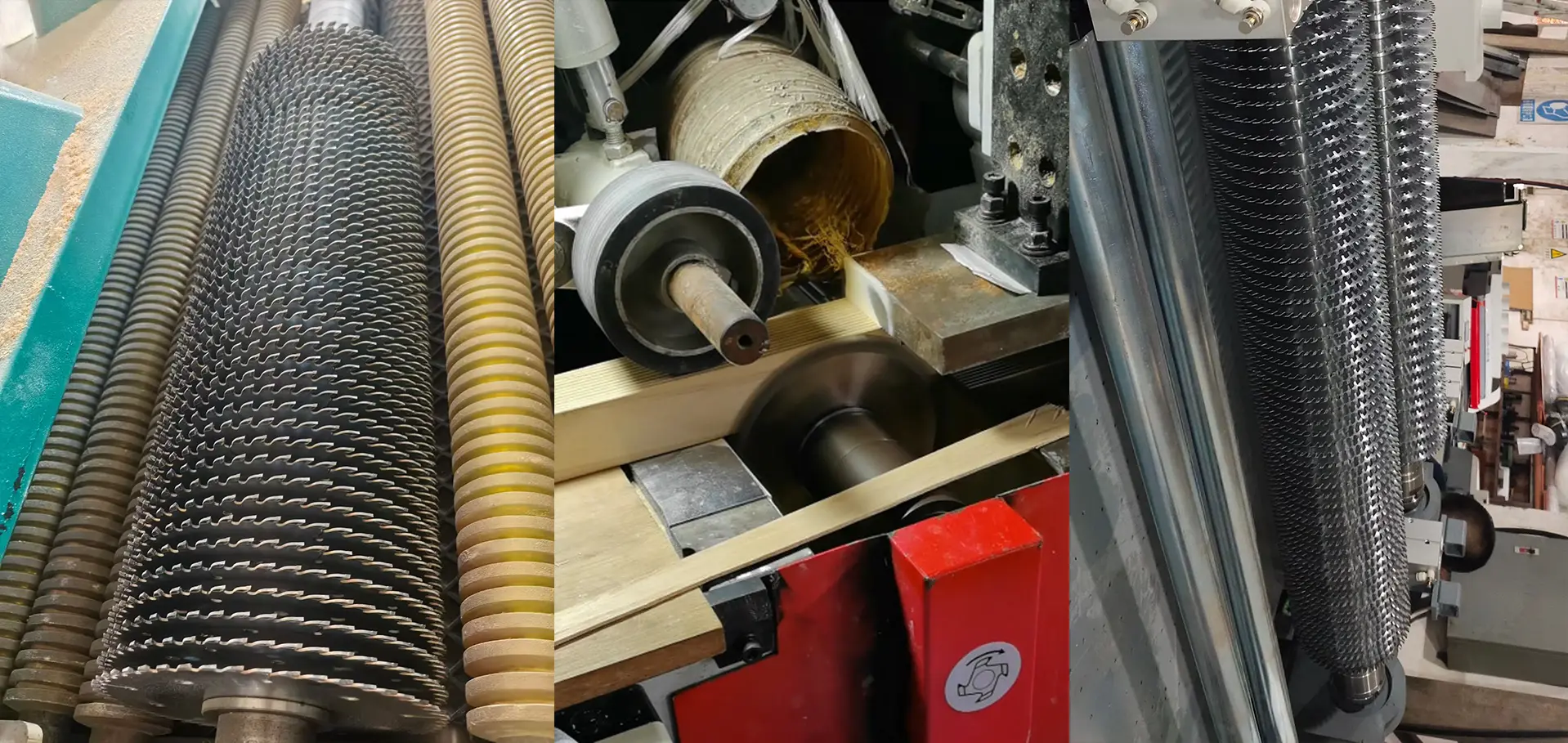
Secondary Hardwood Processing Solutions
Maximum Yield in Secondary Hardwood Cutting
Turn sawdust back into profit. Built exclusively for kiln-dried, high-value hardwood and high-frequency short-stock cutting — cut kerf waste, kill blade snaking, and recover hidden margin from every board foot of noble wood.
The Cost of a Millimeter
In High-value Hardwoods, Your Real Cost Is the Dust
When the wood is this expensive, every millimetre of kerf you don’t remove is finished product you get to sell.
The Financial Case
Rip a long board into finished 20 mm strips. A standard 3.2 mm kerf consumes 23.2 mm of stock per strip; our 1.2 mm kerf consumes just 21.2 mm.
- ~9% more finished strips from the very same board, with no extra raw material.
- On noble hardwood, the wood saved in the first week of running can pay back the whole saw blade set.
- On high-frequency short-stock cutting, the saving compounds with every additional cut.
The Physics Case
Going from a 3.2 mm to a 1.2 mm kerf cuts the volume of wood you have to turn into dust by roughly 60% per cut.
- Cutting resistance drops sharply, so spindle-motor load and current fall with it.
- Lower load means less heat, lower power draw, and slower fatigue on spindle bearings and feed drives.
- The machine runs cooler and quieter at the same feed rate — the thin kerf protects the saw, not just the wood.
Industry Challenges
Three Failure Modes That Kill Thin-Kerf Yield
Pushing the kerf to its limit only pays if the saw blade stays straight, free, and cool. In dense, dry hardwood, three things go wrong — and we engineer against all three.
Deflection & Washboard Defects
Chasing the thinnest kerf drives the plate toward its rigidity limit. Run too thin into dense dry hardwood without enough side stiffness and the blade snakes, leaving washboard marks on the face — downgraded product and costly extra sanding.
Binding from Stress Release
When dried hardwood is gang-ripped, internal stress lets go and the wood squeezes inward. A thin saw blade has very little side clearance to give, so it can be pinched and locked in an instant — overloading and stalling the machine.
Pitch Burn & Thermal Distortion
Even dry hardwood holds some pitch. In a narrow kerf, poor chip flow sends friction heat soaring — pitch carbonizes onto the plate (a “burned” blade), and local heat expands the thin body, destroys its tension, and scraps it.
Our Technical Approach
How We Make a Razor-Thin Saw Blade Behave
Carbide Rakers & Hydrodynamic Chip Flow
Defeats binding and burn in deep cuts. On the multi-rip saw blades we set precision carbide rakers into the thin body. They don’t cut the wood — they act as a physical scraper that shaves the kerf wall clear when the wood springs back, breaking direct steel-to-wood contact, while the airflow they drive forces pitch-laden dust out of the narrow kerf to keep the plate cool.
FEM Stepped-Hub Body for Axial Rigidity
Defeats deflection and washboard. To make a sub-millimetre rim behave like a stiff plate, we keep full thickness in the hub area near the flange and thin down only at the cutting edge — without touching the effective cutting depth or the thin kerf. That stepped-hub architecture gives the saw blade the axial stiffness to stop snaking dead.
Sub-Micron Carbide & Mirror Side Grinding
Defeats rough faces and the need to re-sand. For crisp, brittle hardwood fibre we run high-crystallinity ultra-fine-grain carbide, then mirror-grind the side faces and pare the side clearance to a minimum. The tooth burnishes the cut as it passes, leaving a face clean enough to go straight to assembly.
Estimate Your Savings
Short-Stock Material Yield Calculator
Plan A
Cutting Plan A
Workpiece Count
-
Whole pieces per bar
Material Utilization
-
Good length / raw length
Plan B
Cutting Plan B
Workpiece Count
-
Whole pieces per bar
Material Utilization
-
Good length / raw length
Comparison
Plan B Compared With Plan A
Calculate both plans above to see the difference. Positive values mean Plan B performs better than Plan A.
Workpiece Count Change
-
Pieces and percentage change
Utilization Change
-
Percentage points and relative change
Recommended Tooling
A Thin-Kerf Saw Blade for Every Secondary Cut
From heavy multi-rip to single-blade short-stock work — matched to your stock thickness and stress.
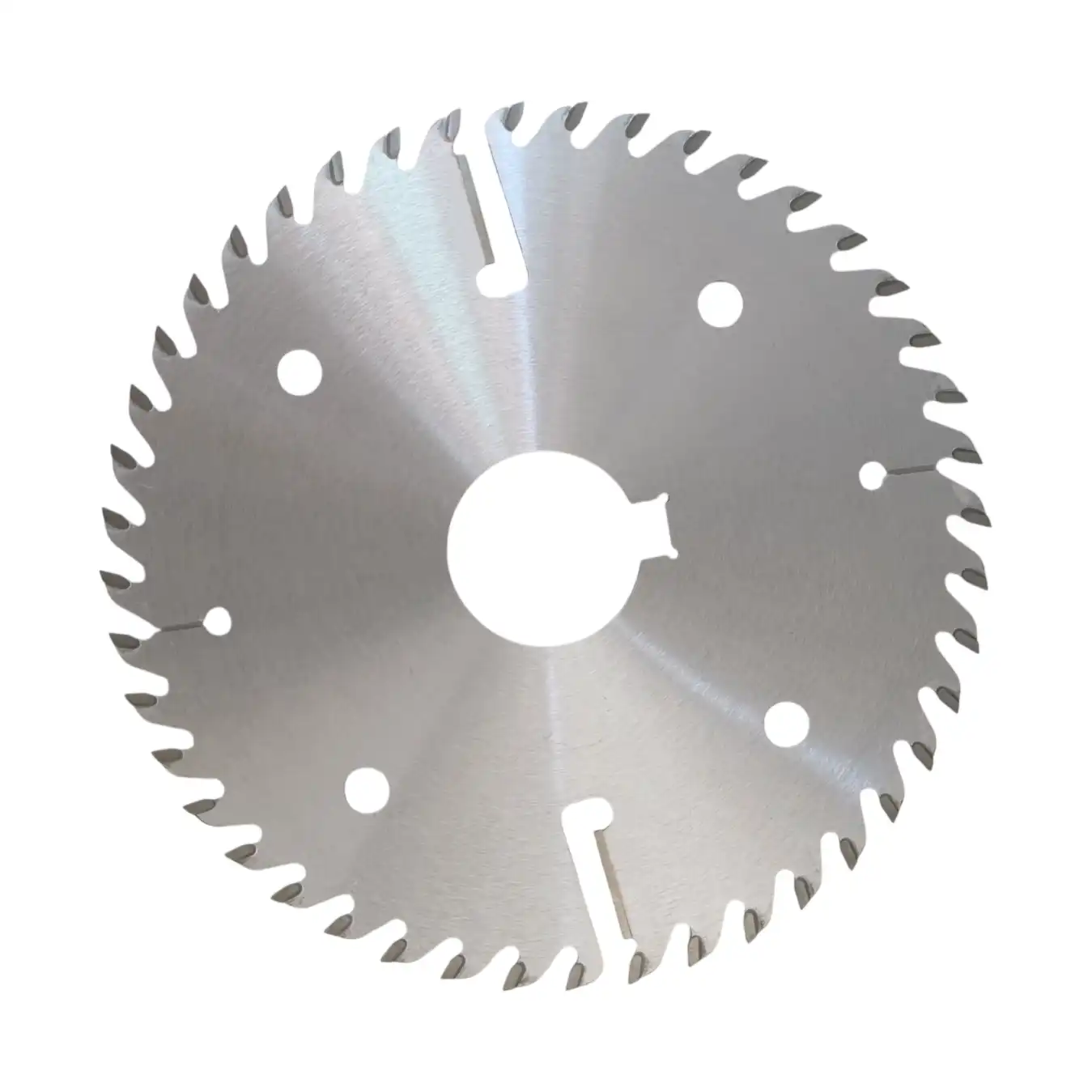
Heavy Multi-Rip / With Rakers
Thin-Kerf Multi-rip Blades with Rakers
For deep, high-stress ripping of thicker hardwood stock. Carbide rakers force the kerf walls open and clear pitch-laden dust, giving unmatched protection against binding and burn when several blades run at once.
Kerf range ~1.5–5.5 mm
View specifications →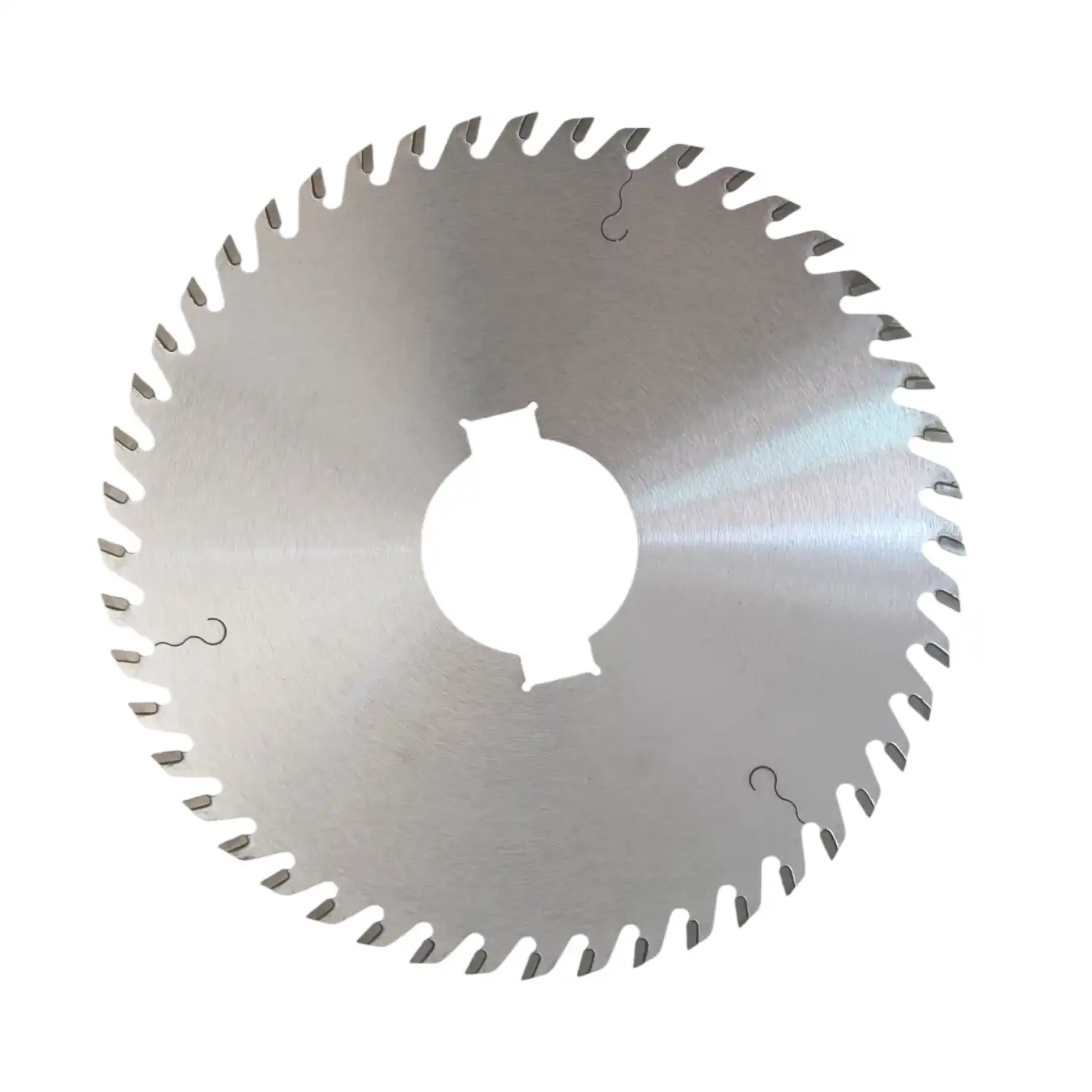
Precision Multi-Rip / No Rakers
Ultra-Thin-Kerf Multi-rip Blades
For thinner stock with lower internal stress — shutter slats, instrument blanks, premium flooring lamellas. No rakers, the thinnest practical kerf, and a near mill-finish face for maximum yield where stress release is gentle.
Kerf range ~1.0–2.5 mm
View specifications →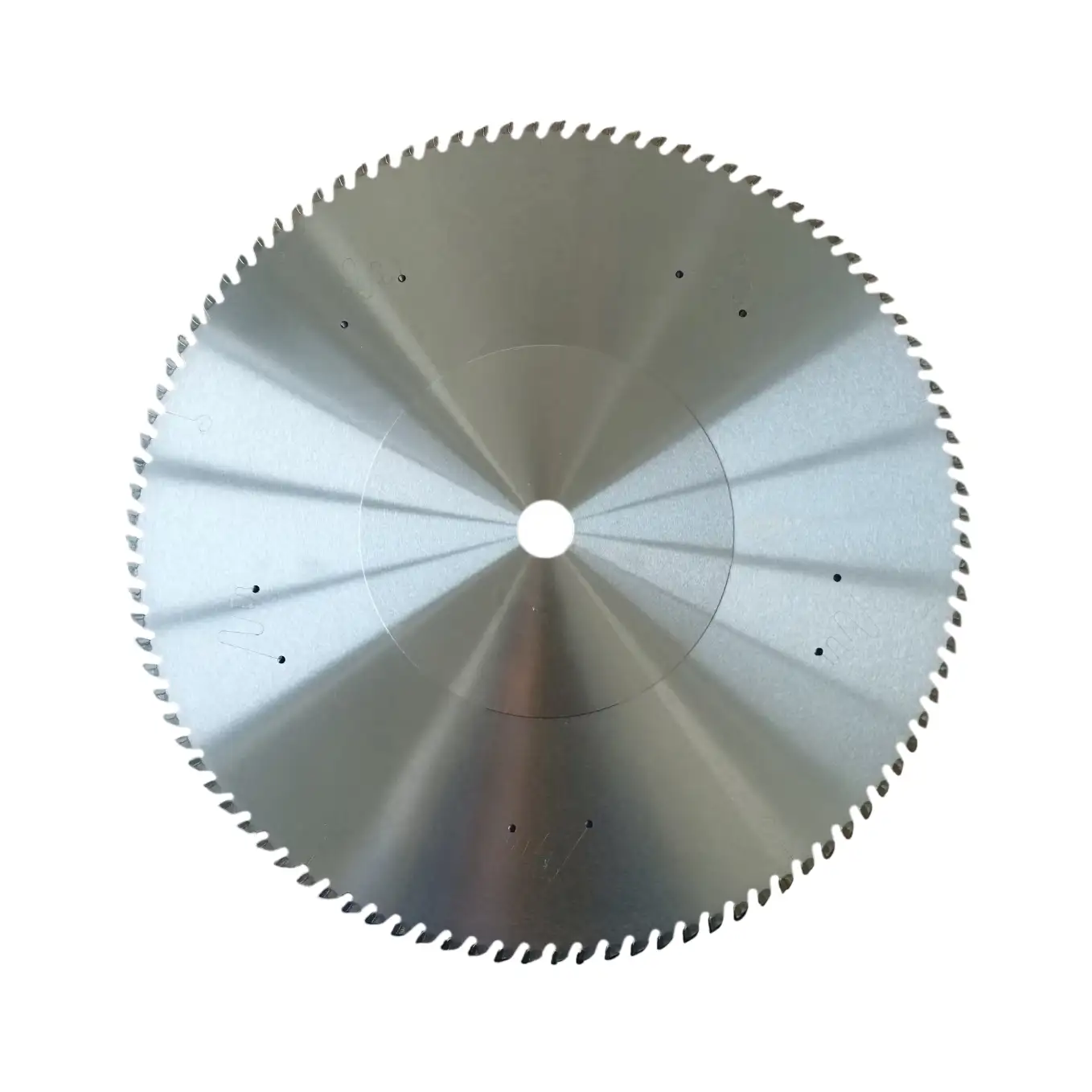
Single-Blade / High-Frequency Short Stock
Ultra-Thin-Kerf Circular Saw Blades
Single-arbor precision cutting for short, high-value stock — wooden craft parts, premium toys, homeware, and model-aircraft components. Every stroke saves the most costly wood and leaves a sanding-free face.
Kerf down to ~0.5–1.2 mm
View specifications →Expected Outcomes
What Thin-Kerf Saw Blades Put Back in Your Pocket
The gains a secondary hardwood shop can expect when it runs the right thin-kerf saw blade at recommended parameters.
A narrower kerf converts more of every expensive board into sellable product instead of dust — the saving that often repays the blade set within the first week.
A stiff stepped-hub body and mirror-ground sides hold a straight, clean cut, minimizing rejects and removing a secondary sanding step on many parts.
Roughly 60% less material removed per cut means lower spindle load, lower current, and slower wear on bearings and feed drives — the machine runs cooler at the same feed.
Expert FAQ
Frequently Asked Questions
When should I choose an ultra-thin gang-rip saw blade with rakers versus without?
It comes down to depth of cut and how much stress is in the wood. If you’re ripping thicker hardwood where internal stress releases hard and pinches the blade, you want the version with rakers — they open the kerf wall, aid chip clearance, and carry heat away. If you’re cutting thinner stock with little stress and you want the most flawless possible face, the version without rakers gives you the thinnest kerf and the cleanest cut.
Can I use these ultra-thin saw blades on wet or green wood?
No — and it’s important. These saw blades are a yield tool built specifically for kiln-dried, high-value wood (typically below about 12% moisture). Wet, green fibre is full of water and very springy; the swelling and squeeze as you cut will heat-distort a thin body almost immediately. For green or wet stock, use our standard kerf multi-rip saw blades or heavy-duty range built for primary log processing instead.
How much power do I really save going from a 3.2 mm to a 1.2 mm kerf?
Cutting resistance scales with how much material you remove, and a 1.2 mm kerf removes roughly 60% less wood per cut than a 3.2 mm kerf. In practice that means a meaningful drop in the torque the spindle has to deliver, lower peak power on automated lines, and noticeably less fatigue on the spindle bearings and feed motors over time. The exact figure depends on your species, feed rate, and machine.
Get a Yield Plan
Every millimetre of kerf in noble hardwood is profit going to the dust hopper
Send us your stock thickness, species, finished sizes, and machine — gang-rip or single-blade — and our engineers will spec the thinnest kerf you can run stably, and show you the yield it recovers.