Estimate your material savings: See how a thinner kerf increases workpiece yield with our Short-Stock Material Yield Calculator.
Typical Applications
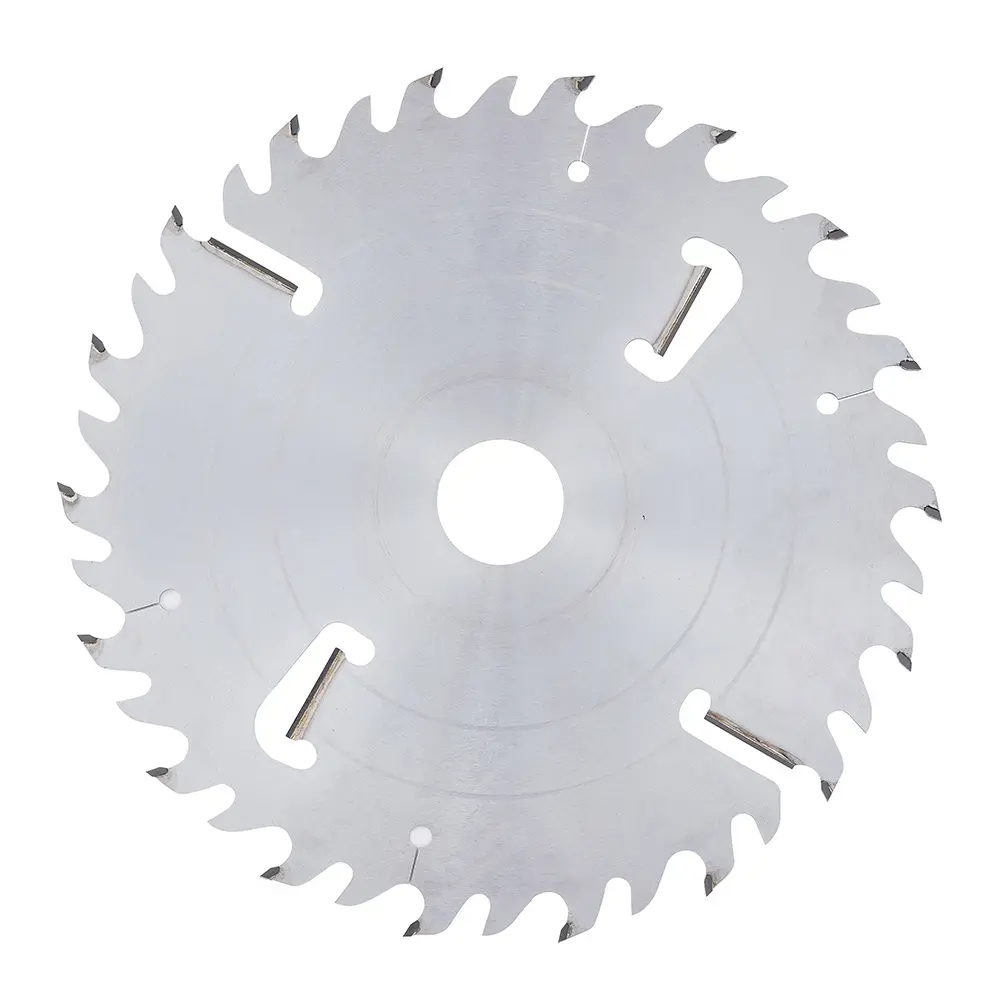
- Multi-rip (gang rip) production lines for softwood and hardwood strip cutting.
- Yield-focused operations that need a balanced thin kerf combined with better chip breaking and evacuation.
- Continuous cutting applications where stable slot cleaning and consistent performance are important for maintaining process reliability.
Key Performance Advantages
- Thin kerf design increases usable output from each board and helps reduce material waste compared to conventional multi-rip saw blades.
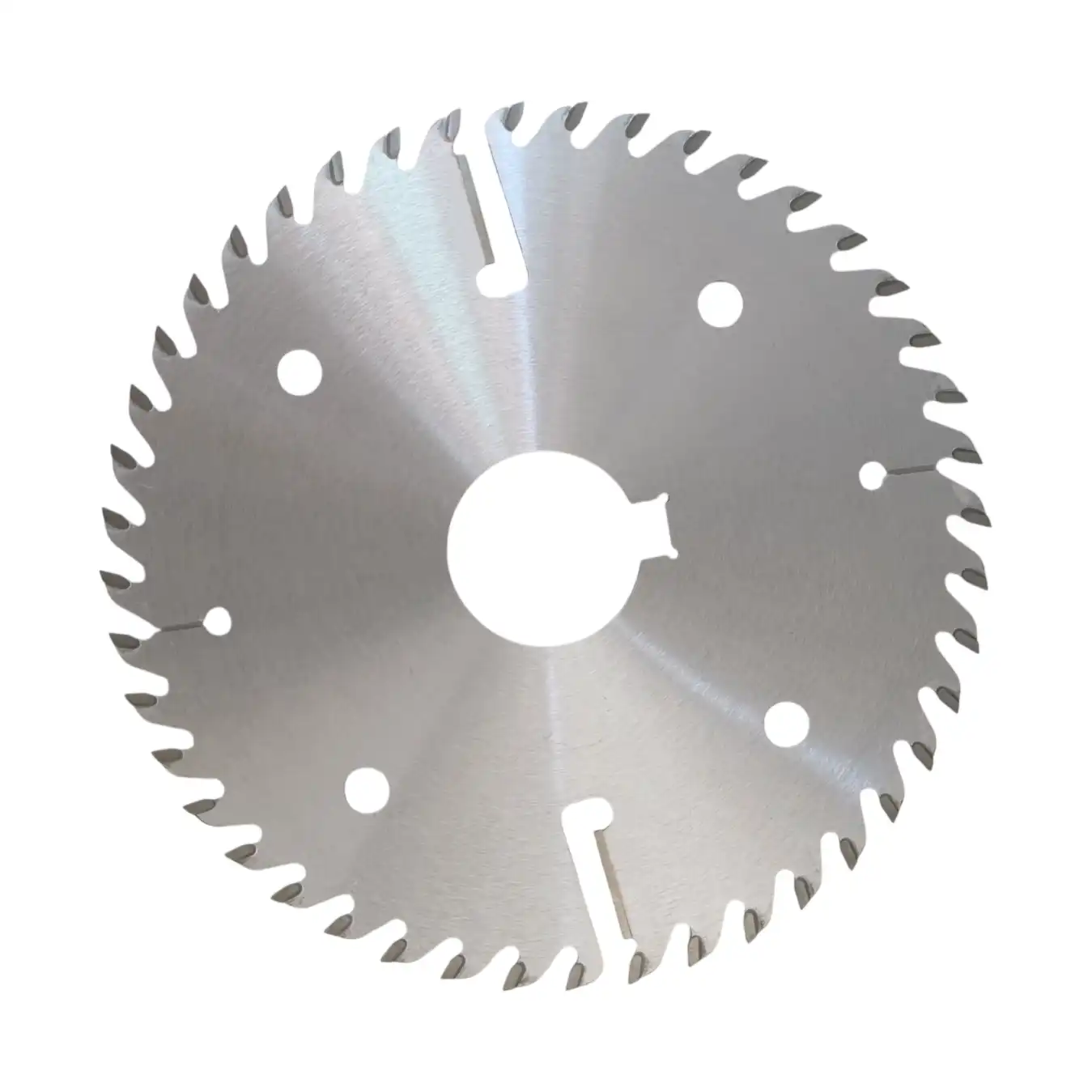
- Integrated rakers improve chip control and keep the cutting path cleaner throughout long production runs.
- Lower cutting resistance supports efficient production with reduced power consumption.
- Teeth are manufactured from premium ultra-fine grain carbide, delivering good wear resistance and clean cutting edges when processing a variety of wood species.
- The saw body is precision-made from high-quality tool steel, providing strong rigidity and reliable performance under multi-blade gang rip conditions.
- Balanced plate design helps maintain stable cutting behavior across multiple saw blades on the same arbor.
Problems This Circular Saw Blade Helps Solve
- Material waste and low yield resulting from wider-kerf tooling commonly used in multi-rip operations.
- Chip congestion and packing that affects cut stability and surface quality during extended production runs.
- Higher processing cost per cubic meter due to suboptimal material recovery rates.
- Profit loss when raw timber prices increase, as every millimeter of extra waste impacts overall margins.
- Unstable performance and frequent adjustments caused by poor chip evacuation in gang rip setups.
Application Notes
- Match saw blade diameter, kerf, and side clearance precisely across the full multi-rip set for uniform cutting performance.
- Set feed and speed so the rakers can clear chips effectively without overloading the teeth or causing heat buildup.
- Maintain strong extraction to keep chip flow stable, especially at higher throughput rates.
- Regrind before edge wear becomes severe to protect material yield and maintain consistent cut accuracy.
- Regularly inspect saw blade tension and arbor condition to ensure long-term stability in continuous multi-rip production.