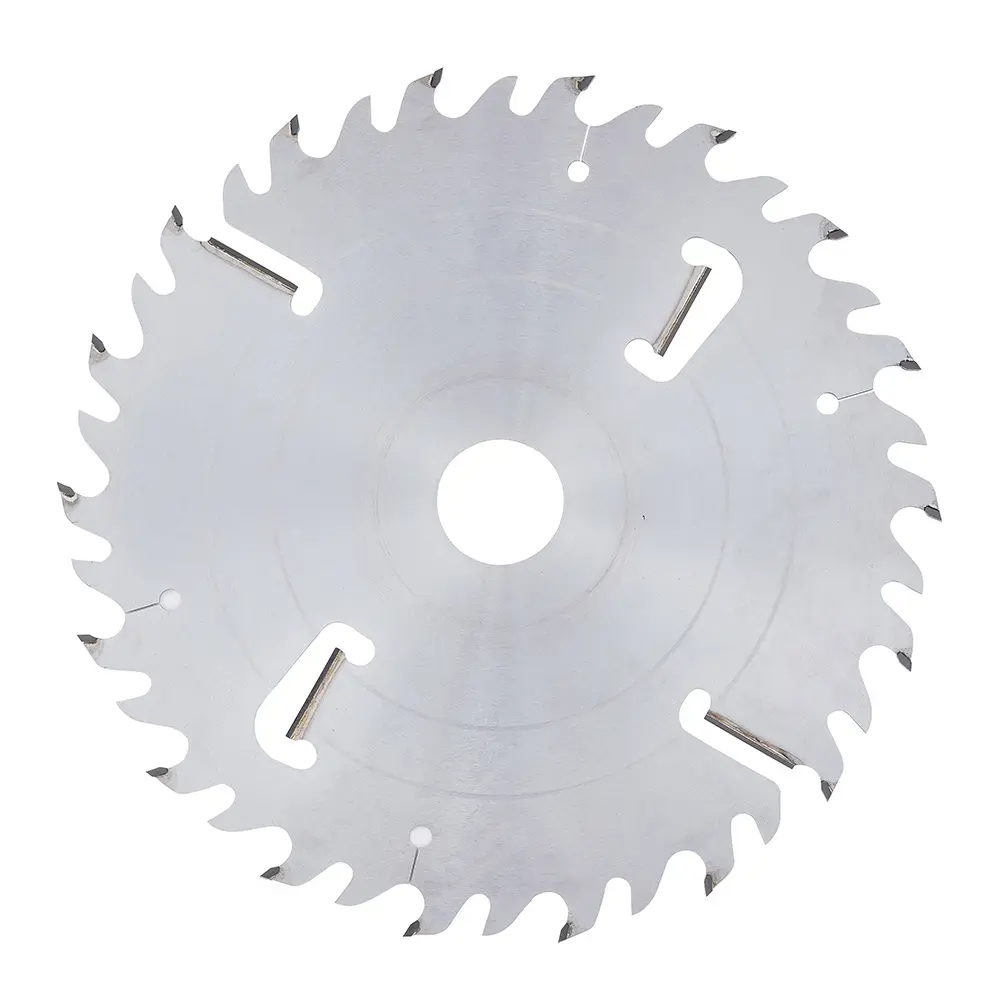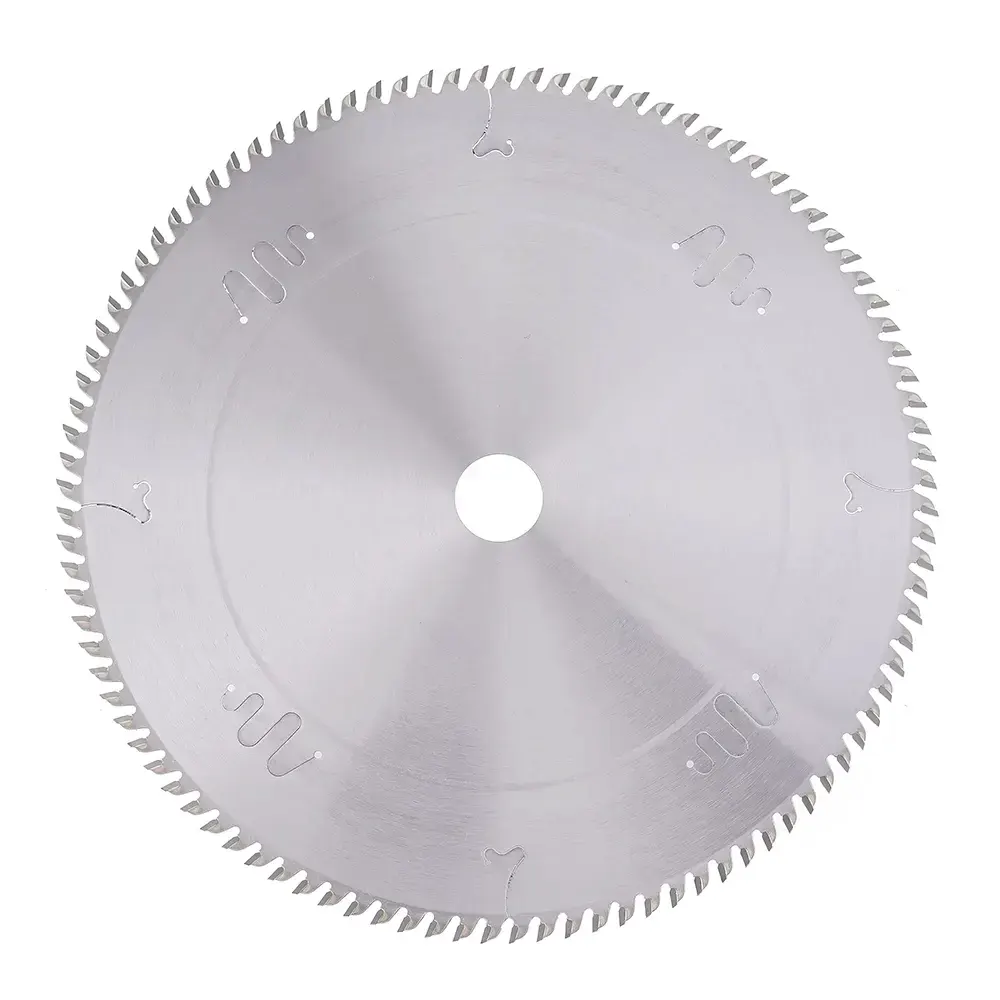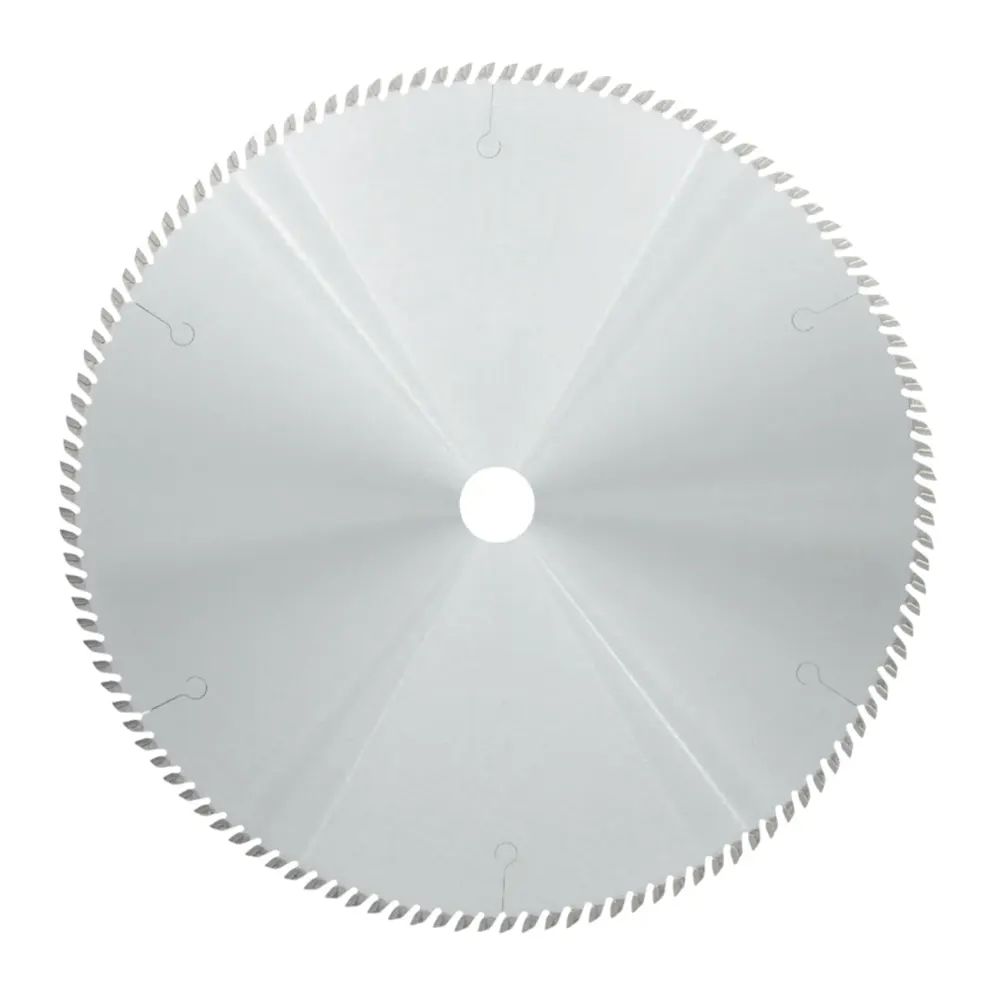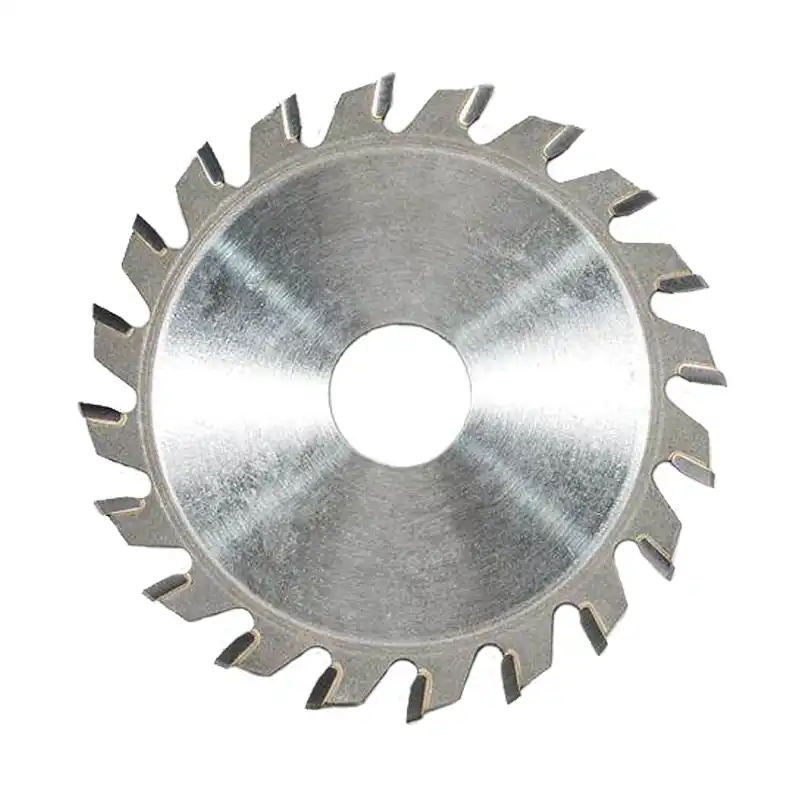
Typical Applications
- Edge trimming (trimming) on automated plywood production lines, where multiple circular saw blades trim all four edges of green or hot-pressed plywood panels to square them to the correct dimension.
- Sizing (cut-to-length) on plywood production lines, cutting full-size panels to finished sheet dimensions.
- Downstream plywood processing operations — panel sizing on sliding table saws and table saws at furniture, flooring, and construction component manufacturers.
- Suitable for standard plywood, film-faced plywood, melamine-overlaid plywood, and other engineered wood panels with glue-bonded veneer construction.
Key Performance Advantages
- Tooth geometry and carbide grade optimized for the resin-rich glue lines in plywood, resisting the gum buildup that causes rough cut surfaces, burring, and premature edge wear in standard circular saw blades.
- Anti-stick surface treatment (polished finish or chrome plating) on the blade body and tooth flanks reduces resin adhesion and keeps the cutting edge clean throughout the production run.
- Available in ATB, 3L1R, and 3R1L tooth profiles to suit different feed directions, panel constructions, and required cut-face quality on production lines and downstream processing machines.
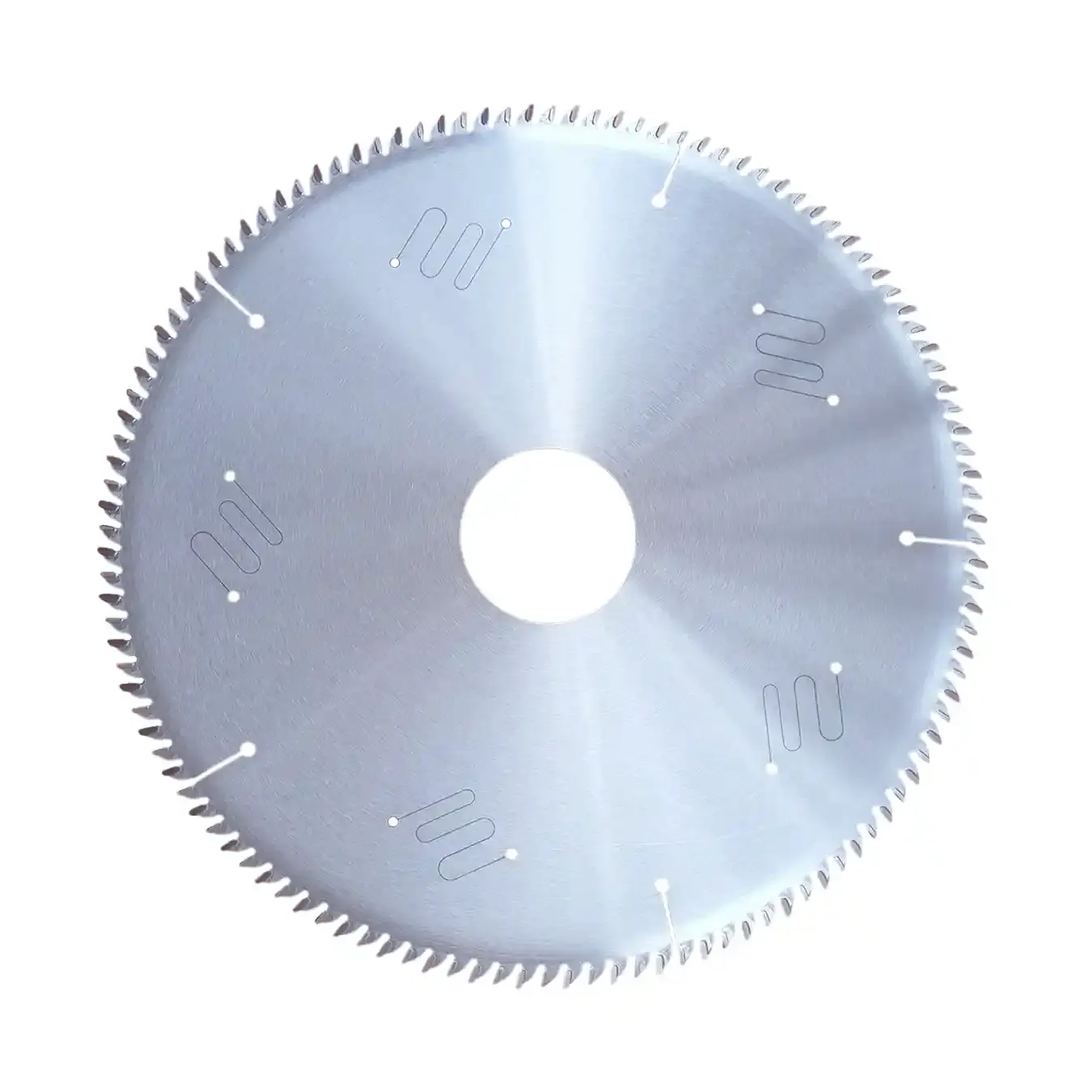
- Anti-vibration expansion slots with optional TPU filler and precision tensioning maintain blade stability at the high rotational speeds typical of plywood production line trimmers, delivering consistent cut quality and reducing noise.
- Precision-ground carbide tips stay sharp longer between resharpening cycles, lowering cost per cut in high-throughput production environments.
Problems This Circular Saw Blade Helps Solve
- Gum and resin buildup on the circular saw blade body and cutting edges, leading to rough cut surfaces, fuzzy edges, and burning on the cut face.
- Premature tooth wear or chipping caused by the alternating hard glue lines and soft veneer layers in plywood construction.
- Excessive downtime from frequent blade changes on high-speed production line trimmers running continuous shifts.
- Poor edge quality that increases the reject rate or requires additional sanding and finishing after sizing.
Application Notes
- Use moderate feed speed matched to panel thickness and glue content; too low a feed rate increases dwell time at the cutting edge and accelerates resin buildup.
- Clean the circular saw blade regularly with a resin-dissolving solvent to remove gum deposits before they harden and cause unbalance or vibration.
- Resharpen on schedule — a dull circular saw blade generates more heat, accelerating resin adhesion and increasing the risk of delamination at the cut edge.
- Check arbor runout and clamping flatness on production line trimmer spindles, as slight misalignment is amplified at high rotational speeds and causes uneven tooth wear.