
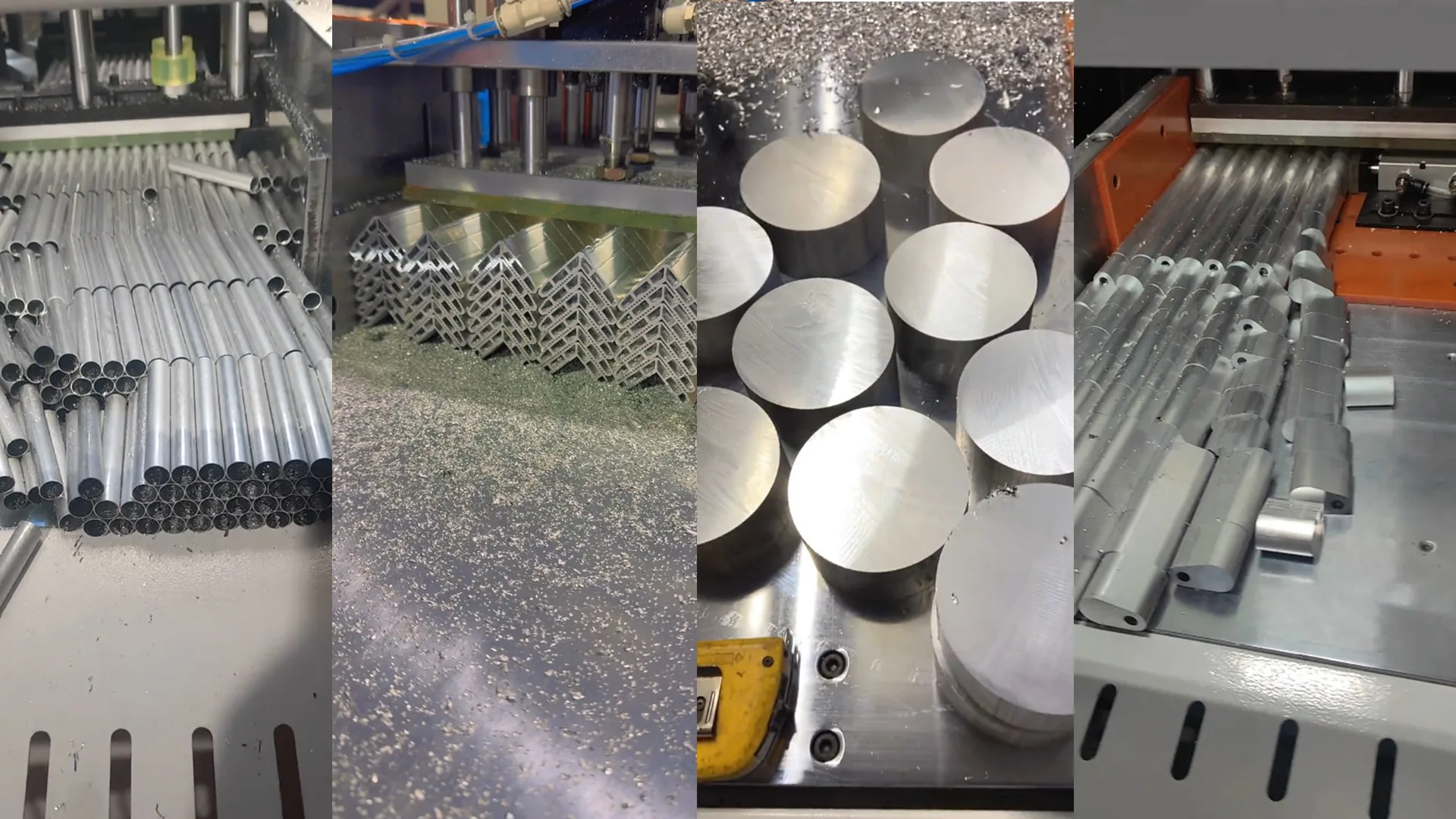
Short-Piece & High-Yield Cutting
Ultra-Thin Aluminum Sawing Solutions
Maximize yield in short-piece cutting — engineered to cut kerf waste by up to 50%, eliminate secondary CNC milling, and hold ±0.05 mm precision on solid billet, high-value profiles, and honeycomb-core foil blocks.
Industry Challenges
Where Short-Piece Cutting Quietly Burns Profit
Slicing a 6-metre bar into 20 mm parts means hundreds of cuts per length, and every one of them is a chance to lose material, accuracy, or a finished face. These are the four problems that decide your margin.
Kerf Waste in High-Frequency Cutting
Short-length cutting is high-frequency cropping: turning one 6000 mm profile into 20 mm parts takes nearly 256 cuts. A 3.5 mm kerf shears expensive aluminum into swarf on every stroke, and over a 256‑cut run that kerf width converts 256 × 3.5 mm — nearly 0.9 meters — of solid aluminum into waste.
Thin-Blade Deflection & Lost Tolerance
A thinner saw blade saves material, but thin also means a sharp drop in rigidity. Cutting into solid bar, an ordinary thin blade deflects under cutting load or "dishes" as it heats, leaving tapered ends and wavy faces — and length tolerance that can never be held inside the ±0.05 mm the job demands.
Harmonics, Burrs & Part Ejection
Very short offcuts are too light to damp the shock of each cut with their own mass. Without the right tooth form and body damping, high-frequency harmonics tear the edges into burrs and can snatch and eject the part — a real safety hazard that also shatters carbide tips.
The Hidden Cost of Secondary Machining
Conventional cut-off leaves rough, saw-marked faces. To meet assembly or finishing specs, plants bolt on a CNC milling step just to face the ends — buying the machine, giving up floor space, paying an operator, and stretching lead time, all on top of the cut you already paid for.
Our Technical Approach
How We Make Thin Behave Like Rigid
FEA-Optimized Stepped-Hub Body
Defeats thin-blade deflection and lost tolerance. A stepped-hub body keeps full thickness around the flange for absolute rigidity, then thins down to a precision-ground rim only where the teeth actually cut. Combined with micron-level dynamic roll-tensioning, it holds ±0.05 mm cut-to-length accuracy at full spindle speed.
Extreme Kerf-Reduction Engineering
Defeats kerf waste. Premium silver brazing and sub-micron tungsten carbide let us take the kerf down by up to 50% without giving up tip life. The high impact toughness of the carbide means the blade stays thin and durable at once, pushing every cut to its physical minimum and lifting raw-material yield.
Anti-Tearing Geometry & Mirror-Grade Side Grinding
Defeats burrs and secondary milling. No-mill results come from how the side of the tooth finishes the face: a special grind plus 800-grit-and-finer diamond side grinding leaves the side clearance mirror-smooth, so the tip polishes the face as it exits the cut — a burr-free, scratch-free, mirror-grade kerf straight off the saw.
Resonance-Absorbing Damping Slots
Defeats harmonics and chatter marks. Resin-filled damping slots, placed from acoustic-spectrum analysis, soak up the high-frequency flutter generated when cutting thin walls and small offcuts. The cut stays dead steady, killing surface chatter and part-ejection risk at the source.
Estimate Your Savings
Short-Stock Material Yield Calculator
Plan A
Cutting Plan A
Workpiece Count
-
Whole pieces per bar
Material Utilization
-
Good length / raw length
Plan B
Cutting Plan B
Workpiece Count
-
Whole pieces per bar
Material Utilization
-
Good length / raw length
Comparison
Plan B Compared With Plan A
Calculate both plans above to see the difference. Positive values mean Plan B performs better than Plan A.
Workpiece Count Change
-
Pieces and percentage change
Utilization Change
-
Percentage points and relative change
Recommended Tooling
Ultra-Thin Saw Blades for Every Short-Piece Job
Solid bar, thin-wall profile, tube, or honeycomb foil block — matched to the right ultra-thin kerf.
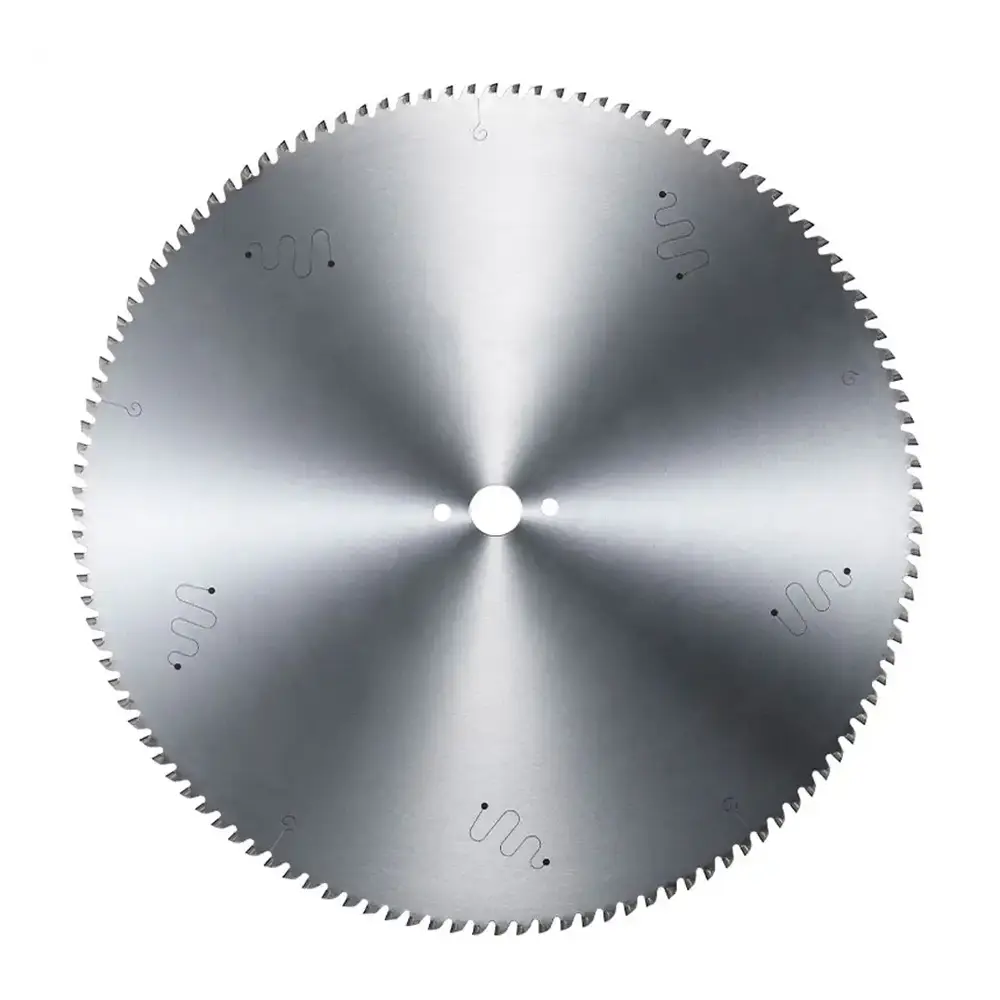
Solid Billet & Profile / Cut-to-Length
Ultra-Thin Kerf Saw Blades for Aluminum & Non-Ferrous Metals
High-rigidity, ultra-thin-kerf TCT blades for short-piece cutting of solid aluminum bar (6061/7075), thin-wall profiles, and tubes. Built to deliver mill-finish, deburring-free faces for 3C enclosures, heat sinks, and precision extrusions.
View specifications →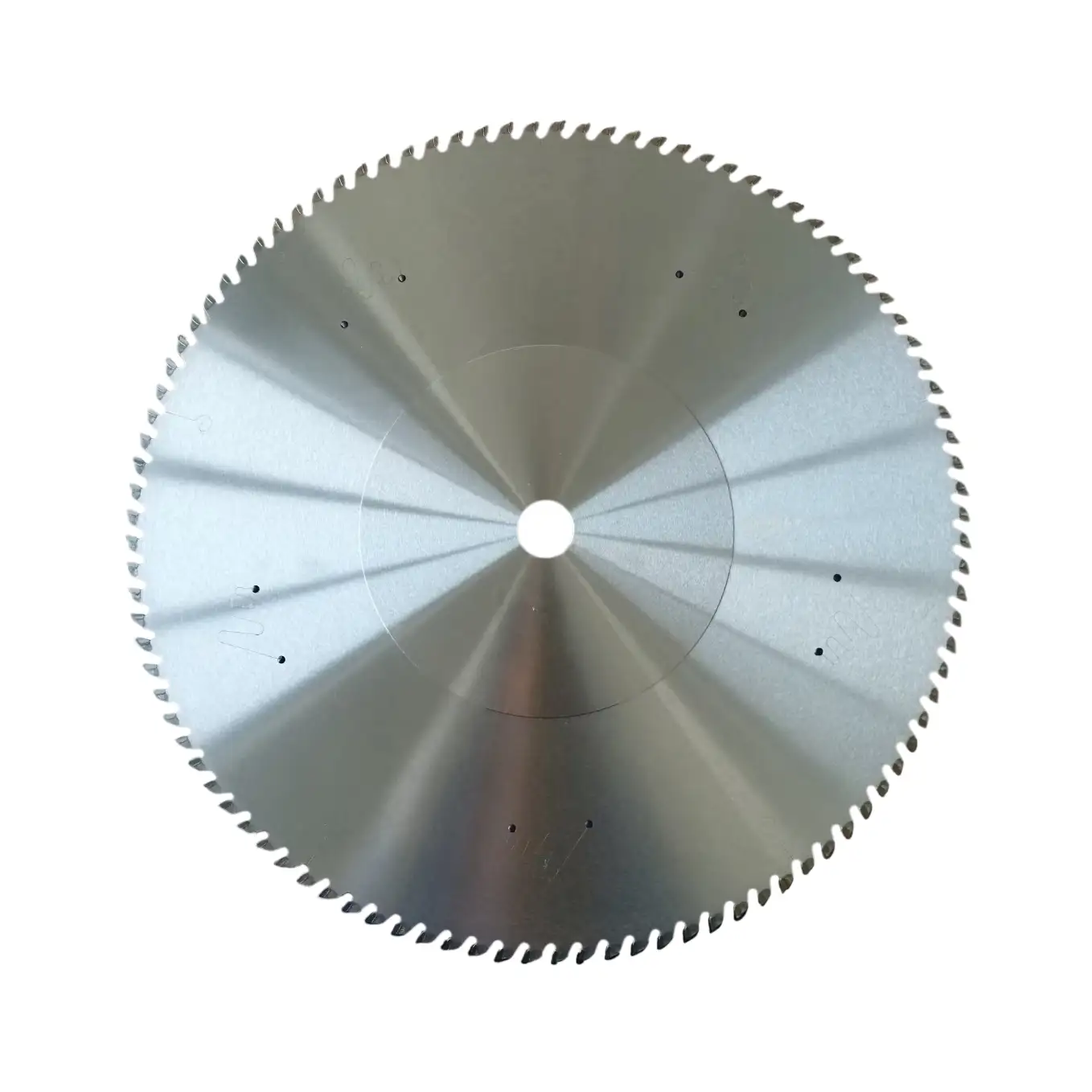
Honeycomb Core / Foil-Block Slitting
Ultra-Thin Kerf Saw Blade for Aluminum Honeycomb Core
Purpose-built for slitting compressed aluminum foil blocks into strips in honeycomb core and panel production. Kerf options down to 1.5 mm at 305 mm diameter keep foil loss to a minimum and raise yield on high-frequency cuts.
View specifications →Expected Outcomes
The Numbers This Tooling Puts Back in Your Pocket
Industry-typical gains when you switch to ultra-thin kerf saw blades and run them on properly maintained, precision-grade saws.
Cut a 6000 mm profile into 20 mm parts: a 3.5 mm kerf gives about 255 pieces, a 2.0 mm kerf about 272. That is 17 extra finished parts per bar — a 6.7% gain that drops straight to profit.
A mirror-grade cut means parts go straight from the saw to finishing or assembly. No secondary milling, no extra labor, no floor space, no added machine maintenance.
No more rework: long and short parts alike stay inside ±0.05 mm length tolerance, cut after cut, so downstream automation stays fed without rejects.
Expert FAQ
Frequently Asked Questions
Can I run an ultra-thin saw blade on my older standard cut-off machine?
We don’t recommend it. Ultra-thin saw blades are extremely sensitive to spindle runout. If your machine has more than about 0.01 mm of runout, worn or undersized flanges, or imprecise guideways, the blade will deflect at speed — giving uneven cuts and easily chipping the thin carbide tips. An ultra-thin saw blade only performs on a precision-grade, well-maintained saw.
Does an ultra-thin saw blade overheat and lose stability when cutting solid aluminum bar?
It can — a thinner plate loses stiffness more quickly as temperature rises. That’s why minimum quantity lubrication (MQL) is mandatory for high-frequency solid-bar cutting. Cutting oil has to be aimed precisely at the tooth rake to carry heat away and lubricate the side clearance the instant the tip engages; without it you risk chip welding and a loss of blade stability.
How do you achieve a mirror-like finish without secondary milling?
Three things together: (1) very low cutting vibration, from precision flanges, true spindle and guideways, and resin-filled damping slots; (2) razor-sharp side edges with a small side-clearance angle that shave and smooth the face as the tooth exits; and (3) a tooth count matched to the section, so the right number of teeth stay engaged through each cut and nothing gets dragged or torn.
Get a Cutting Plan
Every millimetre of kerf is eating your margin
Stop funding the scrap bin and start optimizing your yield. Send your cut length and profile specs to our tooling engineers, and we’ll calculate the exact ROI of an ultra-thin sawing solution for your line.