Estimate your material savings: See how a thinner kerf increases workpiece yield with our Short-Stock Material Yield Calculator.
Typical Applications
- Slitting compressed multi-layer aluminum foil blocks into strips before expansion into honeycomb core sheets.
- Continuous strip cutting for honeycomb core lines where strip width defines expanded core thickness.
- Upstream cutting process for aluminum honeycomb panels later bonded with wood veneer, paper board, plastic sheet, or aluminum sheet facings.
- Precision cutting in decorative, construction, and furniture board manufacturing where lightweight, recyclable, and moisture-resistant panel structures are required.
Key Performance Advantages
- Ultra-thin kerf design is the core advantage for honeycomb production economics.
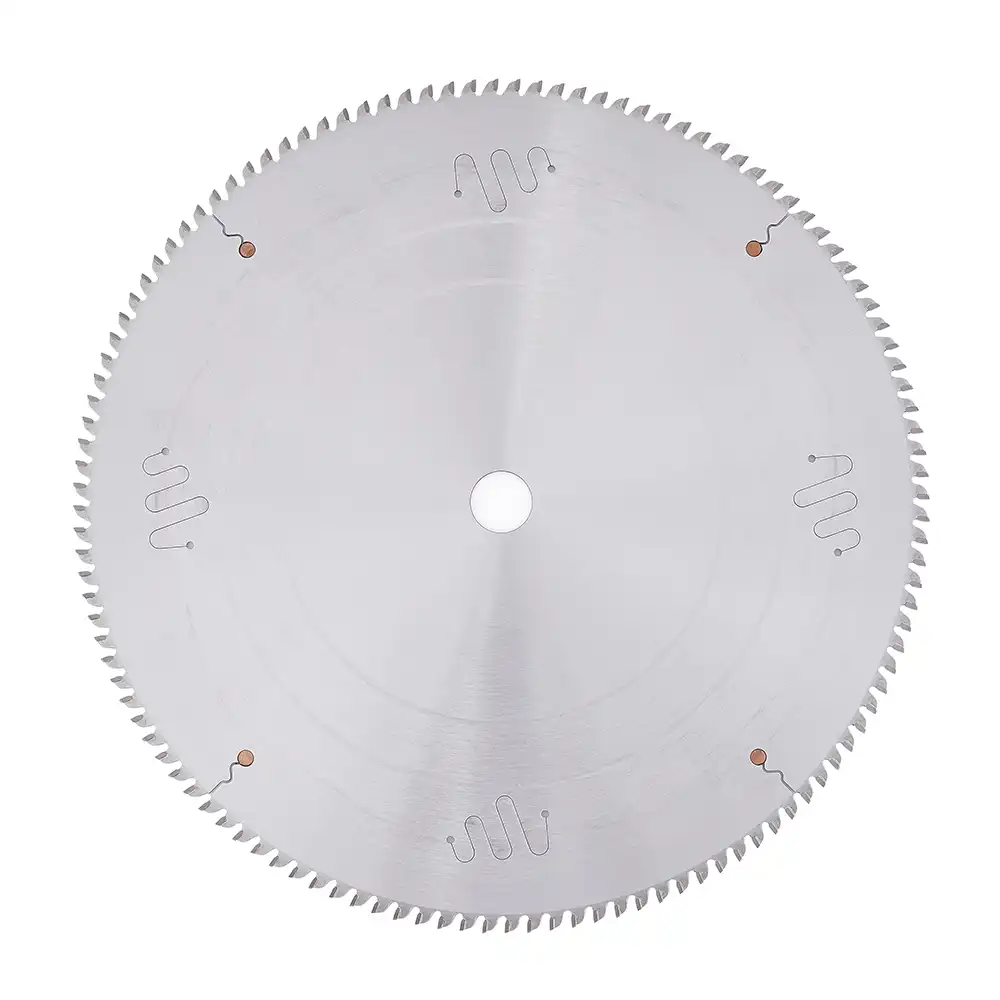
- At 305 mm diameter, optional kerf values of 2.0/1.8/1.5 mm provide a major material-yield benefit versus common 3.0 mm kerf blades.
- Lower kerf means less aluminum removed in every cut, which becomes a significant cost advantage when many slitting passes are required.
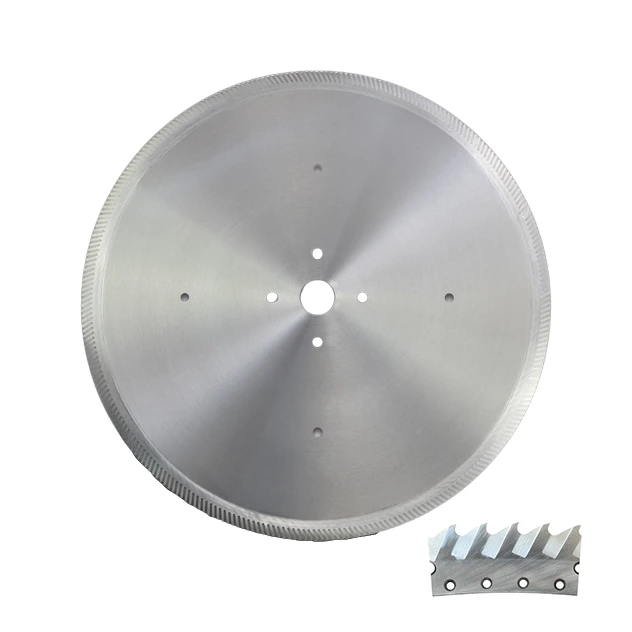
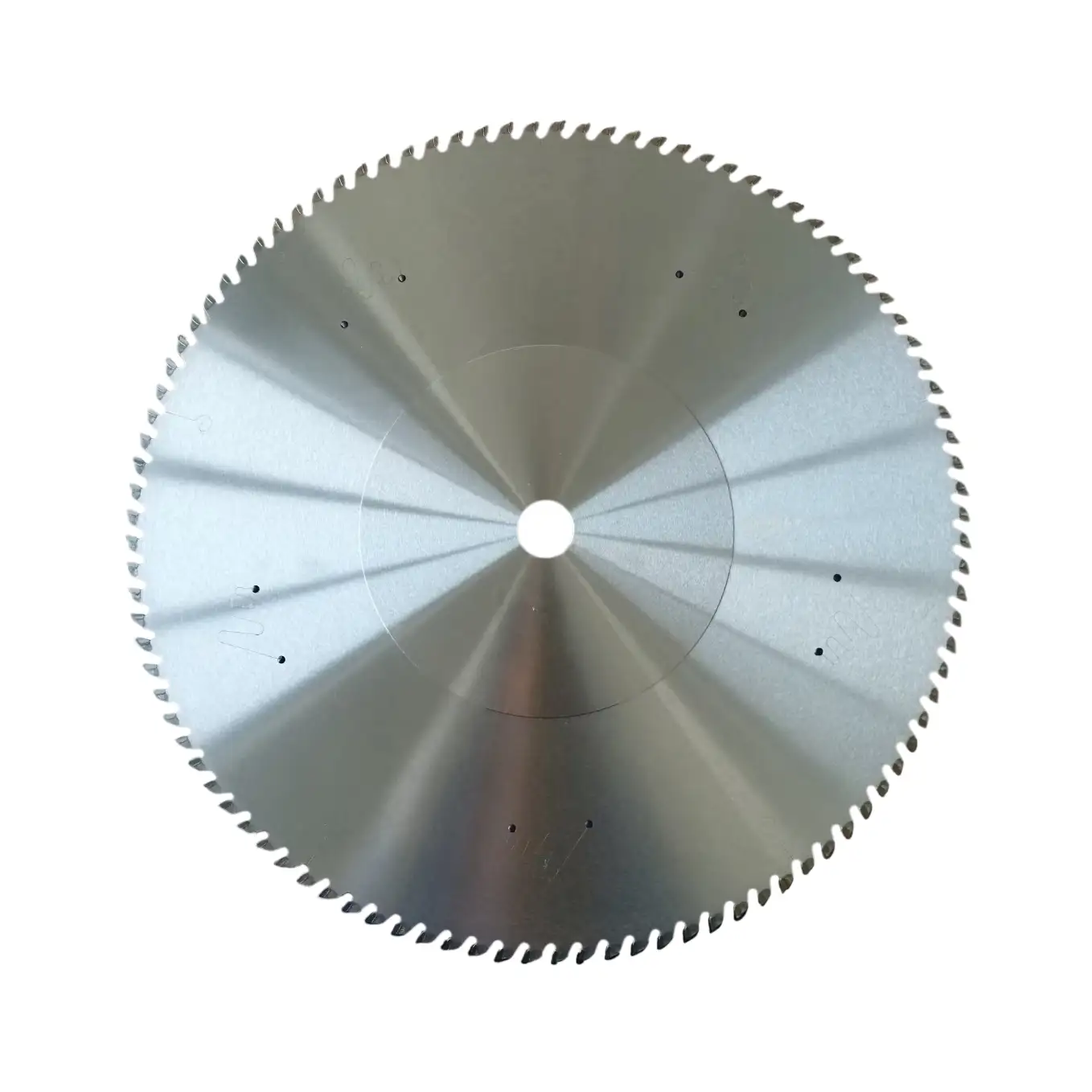
- Stable plate design and TCG tooth geometry support clean slitting, controlled burrs, and reliable strip-width consistency.
- Better yield and lower cutting resistance help improve line efficiency while reducing total blade-related cost per square meter of panel output.
Problems This Circular Saw Blade Helps Solve
- Excessive aluminum waste caused by wide kerf during repeated strip cutting of foil stacks.
- Reduced output yield in thin-core panel production where every fraction of a millimeter impacts material utilization.
- Poor strip width consistency that affects subsequent expansion quality of the honeycomb core.
- Burr formation and edge deformation that increase downstream bonding and panel-quality risks.
- High per-panel production cost due to unnecessary kerf loss and unstable cutting performance.
Yield-Oriented Configuration Notes
- Ultra-thin kerf options are available for 305 mm diameter: 2.0 mm, 1.8 mm, and 1.5 mm.
- Compared with a common 3.0 mm kerf, thinner kerf significantly reduces aluminum loss in repeated strip cutting, improving honeycomb core yield and lowering cost per panel.
- Typical final panel thicknesses in furniture, decorative, and architectural use are relatively thin, so strip cutting cycles are high and kerf savings accumulate quickly.
- Specifications can be tailored to customer line speed, strip width target, foil stack structure, and arbor/pinhole requirements.
Quantifiable Yield Example (305 mm)
For fast sales communication, you can use this quick comparison for slitting compressed foil blocks:
| Kerf (mm) | Material loss per cut (relative) | Material loss over 1,000 cuts | Loss reduction vs 3.0 mm |
|---|---|---|---|
| 3.0 | baseline | 3,000 mm (3.0 m) | 0% |
| 2.0 | -1.0 mm/cut | 2,000 mm (2.0 m) | 33.3% less loss |
| 1.8 | -1.2 mm/cut | 1,800 mm (1.8 m) | 40.0% less loss |
| 1.5 | -1.5 mm/cut | 1,500 mm (1.5 m) | 50.0% less loss |
- Single-cut view: 1.5 mm kerf saves 1.5 mm versus 3.0 mm kerf each pass.
- 1,000-cut view: 1.5 mm kerf saves 1,500 mm (1.5 m) of cumulative slit-width loss versus 3.0 mm kerf.
- In honeycomb-core production, strip cutting is repeated many times, so this kerf gap directly converts to better aluminum utilization and lower panel cost.
- Actual savings vary by strip-width target, edge-trim allowance, and line setup.
Application Notes
- Select kerf based on your strip-width target and yield objective; for high-cut-count production, even 0.5 mm kerf reduction can create meaningful cost savings.
- Verify arbor fit, runout, and clamping stability before thin-kerf operation to maintain strip accuracy and avoid vibration marks.
- Use suitable lubrication/cooling and chip evacuation to minimize aluminum adhesion on tooth edges during continuous slitting.
- Match feed speed and spindle speed to foil stack density and adhesive condition after pressing.
- Inspect edge quality and blade sharpness frequently; timely regrinding is critical to keep burrs low and expansion quality stable.