
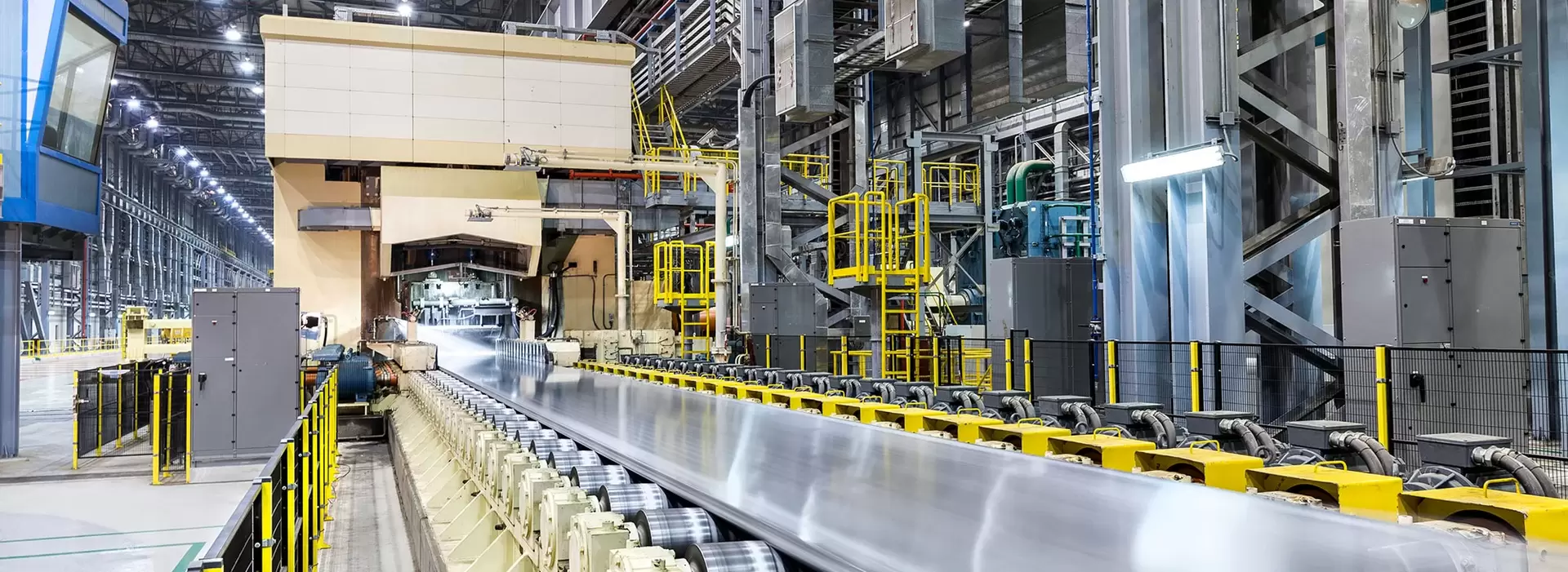
Aluminum Rolling Mill Solutions
Heavy-Duty Aluminum Ingot & Plate Sawing Solutions
Engineered for high feed rates, massive chip evacuation, and rock-solid stability in aluminum rolling mills, casthouses, and service centers — built to keep highly automated lines running with longer saw blade life and minimal downtime.
Industry Challenges
The Real Problems of Sawing Heavy Aluminum
Cutting ingots and plate that are tens to hundreds of millimeters thick is nothing like cutting thin-wall profiles. These are the four production hazards our blades are designed to defeat.
Chip Welding & Galling (Built-up Edge)
Deep cuts keep each tooth buried in the aluminum far longer, generating intense friction heat that melts swarf and welds it onto the carbide tips. Once a built-up edge forms, the blade loses its cutting ability instantly and can stall the saw motor, forcing an unplanned stop.
Saw Blade Deflection in Deep Cuts
On 700–1000 mm+ blades running heavy depths of cut, a steel core that lacks rigidity or heats unevenly will twist and wander. The result is non-square end faces and deep saw marks — enough to scrap expensive aerospace and industrial plate.
Inefficient Chip Evacuation
Thick-section sawing produces an enormous volume of swarf. If the gullet is undersized, chips are crushed and re-cut inside the narrow kerf, creating piercing noise and dramatically accelerating tip wear.
Long, Stringy Chips
Long curled chips tangle and pile up inside the line and equipment, where they are difficult for the dust extraction system to handle. They block conveyors and ductwork and force the line to stop for manual cleaning.
Our Technical Approach
Hard-Engineered Answers to Each Failure Mode
Optimized TCG Geometry & Ultra-Fine Ground Face
Defeats chip welding. A triple-chip grind (TCG) built for heavy aluminum spreads the cutting load evenly, while the carbide rake face is micro-ground with high-grit diamond wheels to a mirror finish. This ultra-low-friction face speeds chip flow and stops built-up edge at the source.
Premium 80CrV2 Steel Body with Dynamic Tensioning
Defeats deflection and uneven cuts. Bodies are precision laser-cut from top-grade 80CrV2 tool steel and multi-stage heat treated. Every large-diameter saw blade is precision roll-tensioned by senior technicians, so it runs perfectly true under high-speed centrifugal load for a smooth, mark-free end face.
Oversized Gullets & Laser Expansion Slots
Defeats poor chip evacuation and noise. Deep, oversized gullets clear large volumes of chips from the kerf in a single pass. Copper-plugged laser expansion slots and TPU-filled anti-vibration slots absorb resonance, cutting saw noise by 10–15 dB while keeping heat buildup in check.
Optimized Tooth Design Against Long Chips
Defeats stringy swarf. Tuned tooth geometry breaks the cut into short, manageable chips and eliminates the long curls that clog conveyors and dust ducting — so the line keeps running, output goes up, and cost per cut comes down.
Recommended Tooling
Large Circular Saw Blades for Aluminum Ingots & Billets
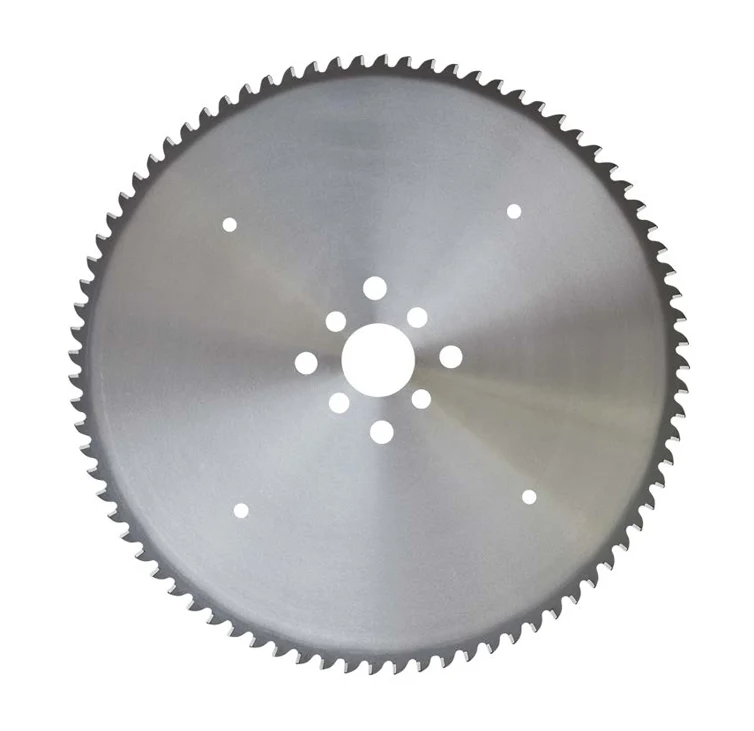
The product line behind this solution: large-diameter TCT saw blades for segment-cutting aluminum and copper-alloy ingots, billets, logs, slabs, and heavy plate on high-output production lines.
Diameter range
660 mm up to 2200 mm (2500 mm available on request).
Body & tips
80CrV2 tool-steel body with tungsten carbide TCG tips.
Built for heavy sections
Round ingots up to 700 mm diameter and flat ingots/slabs up to 700 mm thick, plus rolled plate of every grade and thickness.
Configurable
Expansion slots with or without copper plugs, polished finish, visible or concealed tension ring, and TPU-filled anti-vibration design.
Expected Outcomes
What These Saw Blades Deliver on the Line
Industry-typical gains when you switch to our heavy aluminum tooling and recommended cutting parameters.
Resharpening intervals extended by 20–50%, sharply cutting the production losses caused by stopping the line to change blades.
Dependable cut accuracy and clean, consistent end faces with no visible saw marks or edge burrs — raising pass rates and reducing scrap.
Lower cutting resistance drops the main spindle motor current, easing the load on the saw and extending equipment life.
Expert FAQ
Frequently Asked Questions
Can your saw blades cut 7075 aerospace-grade aluminum as effectively as 6061?
Yes. 7075 is much harder (it contains zinc and copper) and demands extreme tip wear resistance, so we run sub-micron grain carbide tips engineered for high-strength alloys. We do recommend a slightly lower feed rate and increased coolant flow when cutting 7075.
Is MQL (minimum quantity lubrication) required for thick aluminum plate sawing?
Absolutely — we strongly recommend MQL or generous flood coolant. Even with our anti-stick rake-face design, external lubrication is essential for carrying away deep-section heat and preventing catastrophic chip welding once you go beyond about 100 mm of solid aluminum.
How many times can a heavy-duty aluminum saw blade be resharpened?
If the saw blade is removed before the carbide tips are badly dulled or chipped, our large-diameter saw blades typically support up to about 10 professional resharpenings — greatly lowering the plant’s total consumable cost.
Get a Cutting Plan
Stop losing margin to scrap and unplanned downtime
Send us your saw model and material specs, and our tooling engineers will build a customized cutting solution for your ingots, billets, and rolled plate.