
Full-Line Tube & Pipe Mill Solutions
Keep Your Tube Mill Running: Zero Unplanned Stoppages
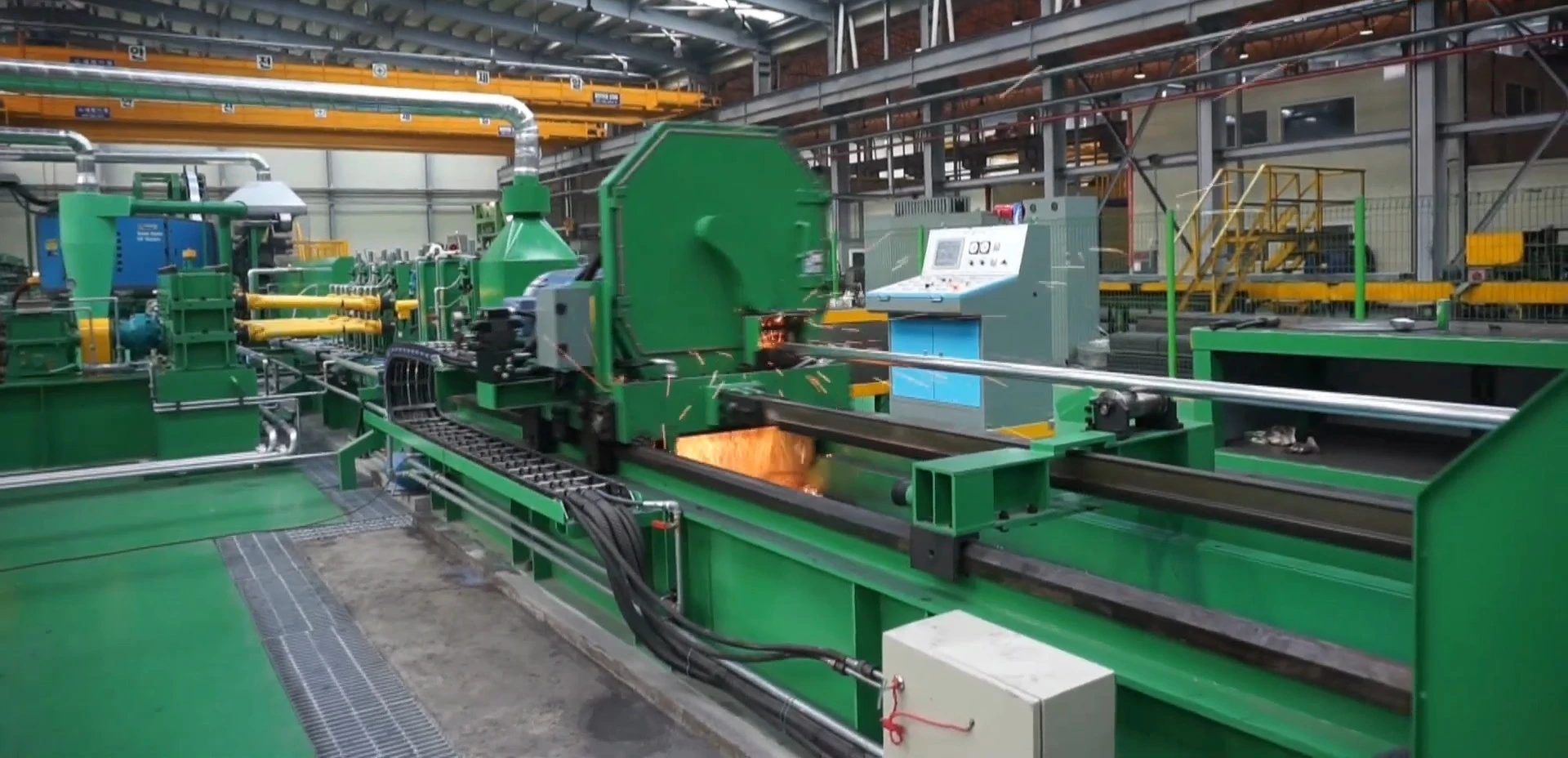
The saw is the heartbeat of a continuous tube mill line. From ultra-high-speed ERW flying cut-off to the cold finishing of seamless API casing, a cutting bottleneck means catastrophic downtime and expensive scrap. We engineer the full range of blades — TCT and HSS flying saws, cold and hot friction saws, and heavy cold saws to 2200 mm — so blade life synchronizes with your maintenance shifts, not unplanned stoppages.
Why the Saw Decides Your Uptime
We Don’t Just Supply Saw Blades — We Optimize Your Mill’s Throughput
A tube mill is one long, synchronized line. By matching tooth geometry and matrix metallurgy to the exact physical state of your tube, we keep the whole line moving — and keep the cost out of every step after the saw.
The Economics: Mill Uptime Is the Only Metric
The saw runs at the end of a high-value, continuous process. When a saw blade chips, deflects, or has to be changed unexpectedly, you don’t lose one cut — you slow or stop the entire mill behind it.
- A saw blade change is a line stop: tens of metres of tube per minute are scrapped or held while the saw is down.
- Predictable, scheduled blade life lets you change between coils or campaigns — never mid-run.
- We eliminate secondary deburring and stabilize tube-end geometry, taking labour and scrap out of every stand downstream.
The Physics: Right Blade for the Tube’s Physical State
Cold thin-wall, red-hot seamless, and heavy-wall API pipe are three completely different cutting problems. The winning saw blade isn’t one material — it’s the right metallurgy and geometry for each state.
- Welded mills choose one cut-off route: TCT, coated HSS, or cold friction — matched to product, finish, and line speed.
- Seamless mills run two in sequence: a hot friction saw crops red-hot pipe at the mill, then a heavy cold saw finishes it square.
- Get the match right and the cut stays square, burr-free, and on schedule — cut after cut.
Industry Challenges
Three Failure Modes That Stop a Tube Mill
On a continuous rolling and finishing line, blade failure, forced stoppages, and scrap almost always trace back to one of these three physical root causes.
Catastrophic Weld-Seam Impact
On a high-frequency ERW line, the inner burr and any un-scarfed residual weld are far harder than the parent tube. As the flying saw tracks and cuts on the run, the teeth take a violent alternating impact against that hard seam on every revolution — the classic trigger for micro-chipping that scraps a whole blade in an instant.
Tube-End Deformation & Heavy Burrs
When parting thin-wall tube — fluid-service pipe, automotive structural sections — too little body rigidity or too much cutting force leaves coarse burrs or crushes the tube end out of round. That forces an extra facing operation, wasting both material and labour the mill never priced in.
Deflection & Choked Gullets on Heavy Walls
Cold-finishing heavy-wall seamless and large-diameter pipe — API OCTG, bearing tube — throws off a huge, continuous chip. If the gullet can’t clear it, the packed chip generates massive lateral pressure that deflects even a 2 m blade mid-cut, destroying perpendicularity and failing API tolerance.
Our Technical Approach
Four Engineered Routes, Matched to the Cut
Precision Geometry & High-Rigidity Plate — TCT Flying Saw Blades
For high-speed, high-volume welded lines, our TCT flying saw blades (≤ 700 mm) run on a premium high-strength alloy body. Severe dynamic-tension calibration holds the plate dead flat with zero in-plane wander at line speeds up to ~350 m/min — several times a traditional HSS flying saw blade — while a progressive, chip-splitting tooth form drives cutting resistance down for deformation-free, burr-free tube ends.
Elastic Toughness & Multi-Regrind — Coated PM-HSS
For older mills with mechanical play or axial run-out, and for thin-wall work, we use PVD-coated powder-metallurgy HSS. Its high flexural elasticity simply absorbs the line’s vibration instead of chipping out, protecting cut quality on thin wall — and the body regrinds a dozen times or more, driving the cost-per-cut to the floor.
Multi-Step Chipbreakers & Tension Calibration — Heavy Cold Saw Blades
For cold finishing of heavy-wall seamless tubes, our giant TCT saw blades (to 2200 mm) carry a stepped, chip-breaking tooth that tears one wide chip into three or four narrow ribbons so the gullet always clears. Combined with dynamic-tension balancing, the body stays rock-solid under huge feed force and the cut stays perpendicular to API tolerance.
Calculated Frictional Melting & Thermal-Shock Protection — Friction Saw Blades
For cropping red-hot seamless pipe at the SRM exit (750–800 °C), and for high-speed commodity carbon tube like scaffolding, we deploy friction saws. Running above 100 m/s, the blade melts its way through the steel; a high-toughness, heat-crack-resistant special alloy body withstands the violent thermal cycling without cracking.
Product Ecosystem
Welded Tube Mills (ERW / HF): Choose One Cut-off Route
TCT, coated HSS, or cold friction — one technology per line, matched to your product, finish requirement, and mill speed.
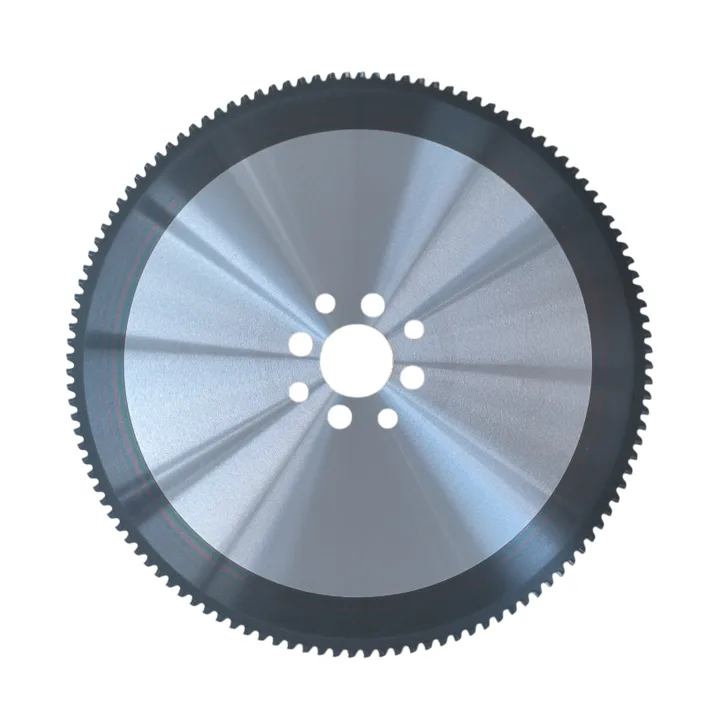
TCT Flying Saws · 250–700 mm
Cold Saw Blades for Flying Cut-off
PVD-coated carbide for high-speed ERW lines cutting tube without a heavy inner scarf, typically over 3 mm wall. High fracture toughness rides the tracking carriage and the interrupted cut for burr-free, mirror-finish ends at full mill speed.
Welded tube, no heavy inner scarf · 180–450 m/min
View specifications →TCT Flying Saws · 250–700 mm
Cold Saw Blades for Flying Cut-off with Inner Scarf
A reinforced tooth geometry and fine-grain carbide for welded tube that still carries an inner scarf or weld bead. The armored edge takes the repeated impact of the harder weld zone without micro-chipping or burring the bore.
Welded tube with inner scarf / weld bead · 250–450 m/min
View specifications →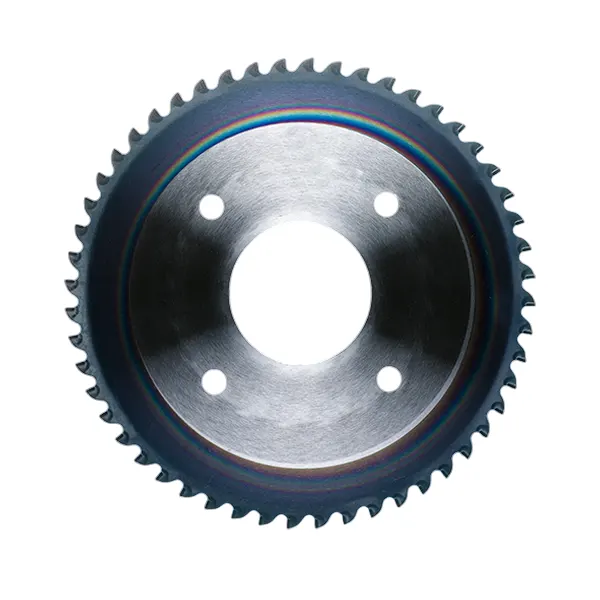
TCT Flying Saws · 250–700 mm
Cold Saw Blades for Orbital Flying Cut-off
Carbide blades for orbital machines that rotate the saw around large-diameter tube to keep the cut square. Built to hold a deformation-free end at speed on big sections where a conventional flying saw runs out of diameter.
Large-diameter welded tube · orbital lines · 250–400 m/min
View specifications →
Coated HSS Flying Saws · 250–600 mm
HSS Saw Blades for Carbon Steel & Aluminum Tube
PM-HSS (M2 / DMo5) flying-saw blades with a PVD coating for thin-wall carbon, mild-alloy, and aluminum tube. The elastic toughness of HSS absorbs the resonance of older mills without chipping, and the body regrinds many times for the lowest cost-per-cut.
Thin-wall carbon / aluminum tube · ≤ 550 MPa
View specifications →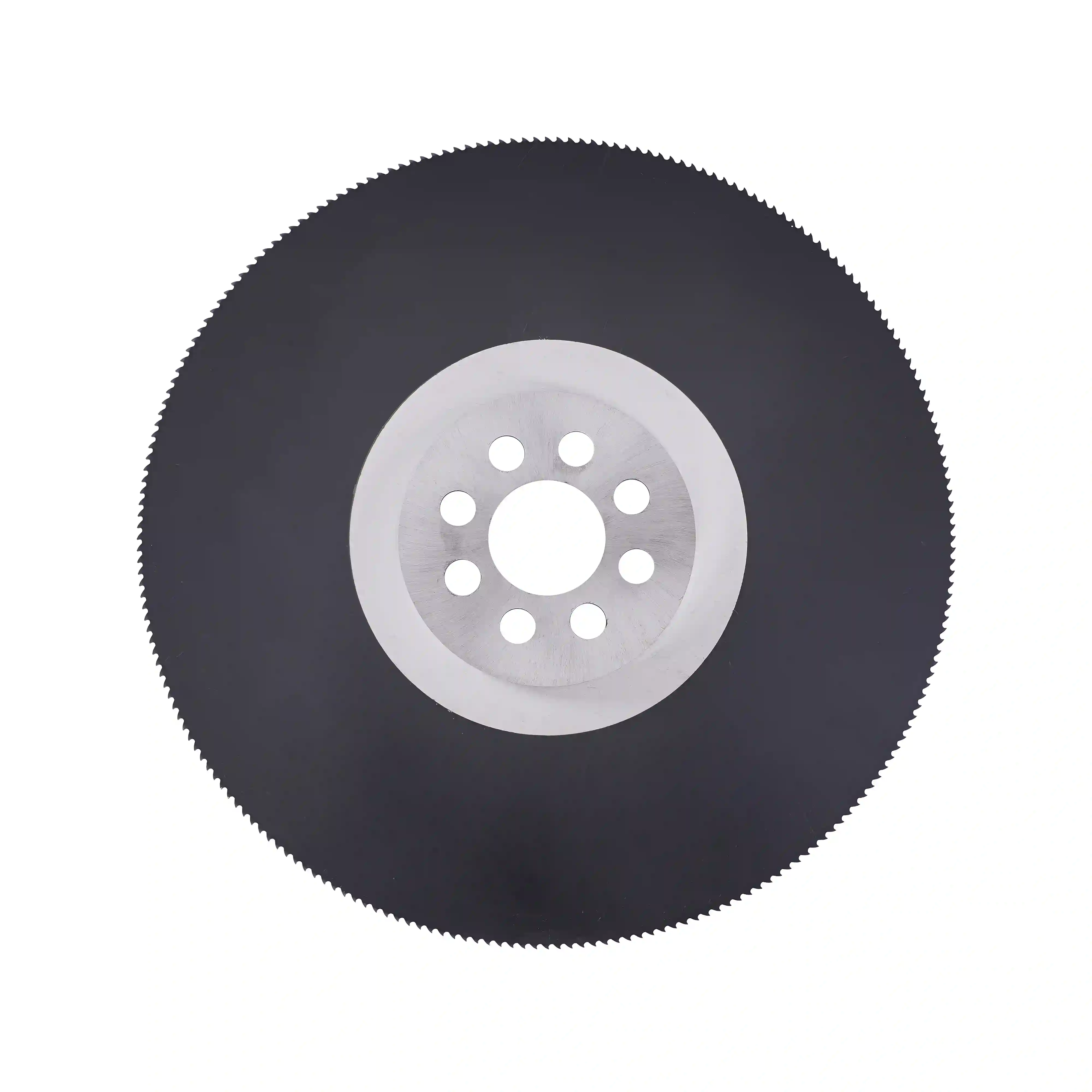
Coated HSS Flying Saws · 250–600 mm
HSS Saw Blades for Stainless & Medium-Tensile Steel
A cobalt HSS grade (M35 / Co5) for the more demanding end of welded production — stainless and medium-tensile steel tube. More heat and edge strength than M2 for the work-hardening alloys, with the same vibration tolerance and multi-regrind economy.
Stainless / medium-tensile welded tube · 550–700 MPa
View specifications →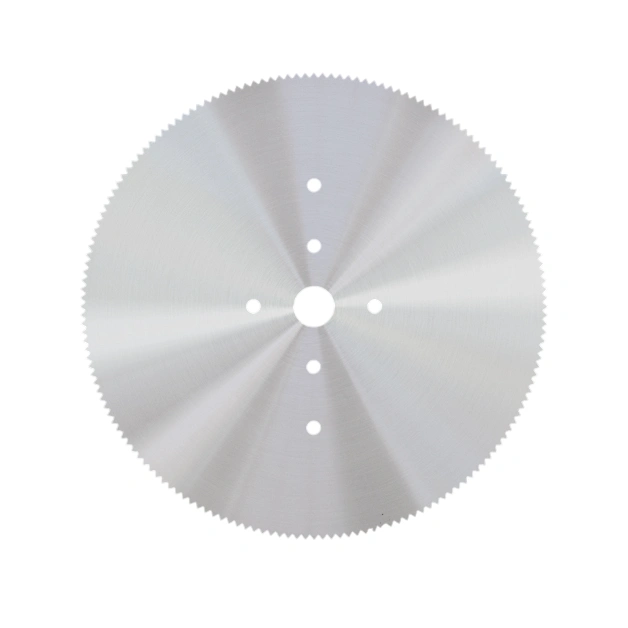
Cold Friction Saws
Cold Friction Circular Saw Blades
Through-hardened spring/tool-steel blades that cut by frictional heat at very high peripheral speed. The lowest-cost, highest-volume route for commodity welded tube and cold-formed section where a mirror finish and tight tolerance are not required.
Structural & scaffolding tube · workpiece ≤ 250 °C
View specifications →Seamless Pipe Mills: Hot Crop, Then Cold Finish
A hot friction saw crops the red-hot pipe at the mill, then a heavy-duty cold saw finishes it square to tolerance.
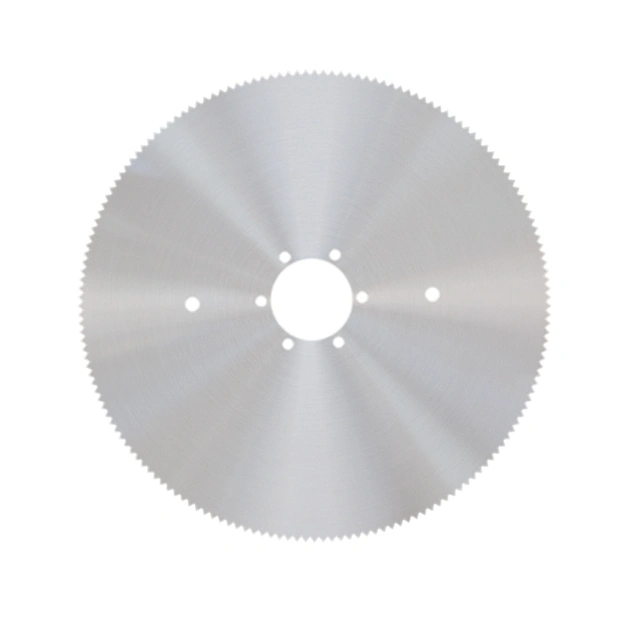
Hot Friction Saws · SRM Exit
Hot Friction Circular Saw Blades
Special heat-crack-resistant alloy-steel bodies for cropping red-hot seamless pipe and billet straight off the line at 750–800 °C. Running well above 100 m/s, the blade melts its way through the section and shrugs off violent thermal-shock cycling.
Red-hot seamless pipe / billet · ≥ 750 °C
View specifications →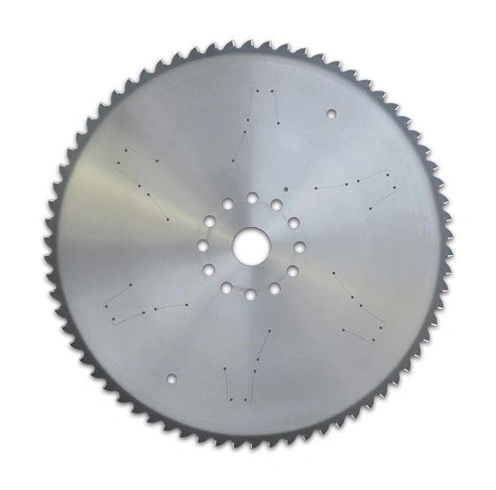
Heavy-Duty Cold Saws · 700–2200 mm
Cold Saw Blades for Seamless Steel Tube
Large-diameter carbide blades for the cold finishing and bundle cut-off of seamless carbon and alloy pipe. A massive, dynamically tensioned body and chip-splitting tooth deliver the chip evacuation and perpendicularity that API and bearing-tube tolerances demand.
Seamless carbon / alloy pipe · API & bearing tube
View specifications →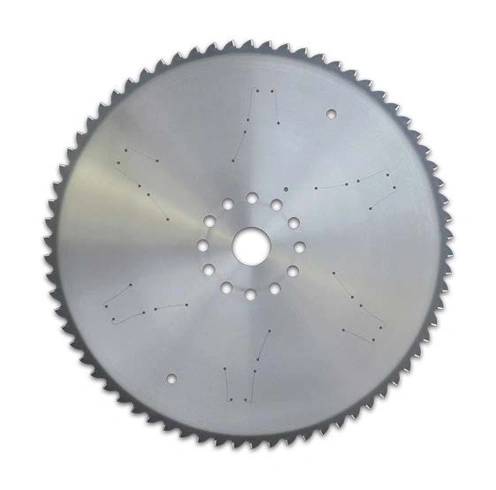
Heavy-Duty Cold Saws · 700–2200 mm
Cold Saw Blades for Stainless Steel Seamless Tube
A carbide grade and tooth geometry tuned for the work-hardening and adhesion of austenitic, duplex, and ferritic stainless seamless pipe. Resists built-up edge to hold a clean, burr-free, square face on heavy-wall stainless.
Seamless stainless pipe · austenitic / duplex / ferritic
View specifications →Expected Outcomes
What This Saw Blade Program Delivers
The gains a tube or pipe mill can expect when the blade is matched to the line speed, wall thickness, weld condition, and temperature of the cut.
Predictable, weld- and shock-resistant saw blade life lets you change on schedule between coils or campaigns — so the saw stops feeding the mill on your terms, not in the middle of a run.
Rigid, dynamically tensioned bodies and chip-splitting geometry deliver burr-free, perpendicular tube ends — eliminating secondary facing and holding API and line-pipe tolerance straight off the saw.
From multi-regrind PM-HSS on commodity tube to chip-splitting heavy carbide on API pipe, every route is matched to drive tooling cost down without compromising the cut your contract requires.
Expert FAQ
Selection & Process Diagnostics
Our ERW line runs standard mild steel under 3 mm wall. Should we put HSS or TCT on the flying cut-off?
It comes down to the age and stability of your mill. If your flying carriage is a modern, high-rigidity unit that can hold high spindle speeds, go TCT — you’ll reach the fastest line speeds and completely burr-free, mirror-finish ends. If the mill is an older model with noticeable mechanical resonance or spindle play, coated PM-HSS is the safer and more economical choice: HSS has the elastic toughness to absorb that vibration without catastrophic chipping, and it regrinds many times over.
We’re getting angled cuts and failed perpendicularity on our heavy seamless cold-finishing line. Machine or saw blade?
In most heavy-wall work this is blade deflection from chip clogging, not a feed problem. A standard tooth form makes one wide, continuous chip that packs tightly into the gullet, and that packed chip generates immense lateral pressure that bends the giant blade mid-cut. Our heavy-duty TCT cold saw blades solve it with a multi-step chipbreaker geometry that splits the chip into several narrow strips, freeing the gullet so the body stays flat under heavy feed and holds perpendicularity to API tolerance.
When should a tube mill choose a cold friction saw blade over an HSS or TCT cold saw blade?
Cold friction saws are the champions of raw volume and minimal tooling overhead on commodity tube — structural and scaffolding pipe. If your goal is extreme line speed at the absolute lowest cost-per-cut and you don’t need a mirror finish or a tight tube-end tolerance, friction sawing is unbeatable. But if your contract calls for premium, burr-free ends — automotive, machinery, or high-pressure fluid tube — you need HSS or TCT cold cutting instead.
On a seamless line, where does the hot friction saw fit versus the cold saw?
They work in sequence, not as alternatives. The hot friction saw lives at the front of the line, cropping the head and tail of the red-hot pipe right at the SRM exit while it’s still 750–800 °C — a job no carbide blade could survive. The heavy-duty TCT cold saw lives at the back, on the cold-finishing and cut-to-length stand, where it delivers the square, in-tolerance ends your customer inspects. A full seamless mill runs both.
What’s the difference between your two HSS flying-saw grades?
It’s the alloy, matched to the tube’s strength. The M2 (DMo5) blade is the general-purpose workhorse for carbon, mild-alloy, and aluminum tube up to about 550 MPa. The M35 (Co5) blade adds cobalt for higher hot hardness and edge strength, which is what stainless and medium-tensile steel (roughly 550–700 MPa) demand — those alloys work-harden and load the edge harder, and the cobalt grade holds up where M2 would wear early.
Get a Cutting Plan
The saw should never be the reason your mill stops
Tell us your mill type, tube sizes and wall thickness, line speed, temperature at the cut, and saw model — and our engineers will recommend the blade technology, grade, and tooth geometry that keeps your line running square and on schedule.