Typical Applications
- ERW / high-frequency welded tube mill lines: in-line cut-to-length of round, square, and rectangular carbon and alloy steel tube and pipe—the cold friction circular saw blade is the standard cut-off tool on these production lines.
- Cold-formed section production lines: cut-to-length of cold-formed angle steel, channel steel, and other structural sections at workpiece temperatures below 250 °C.
- Small rolling mill cut-off: cold cutting of hot-rolled angle steel and channel steel where the sawing machine has sufficient rigidity and workpiece clamping is reliable.
- Head and tail cropping of small-diameter medium carbon and alloy steel bar.
Key Performance Advantages
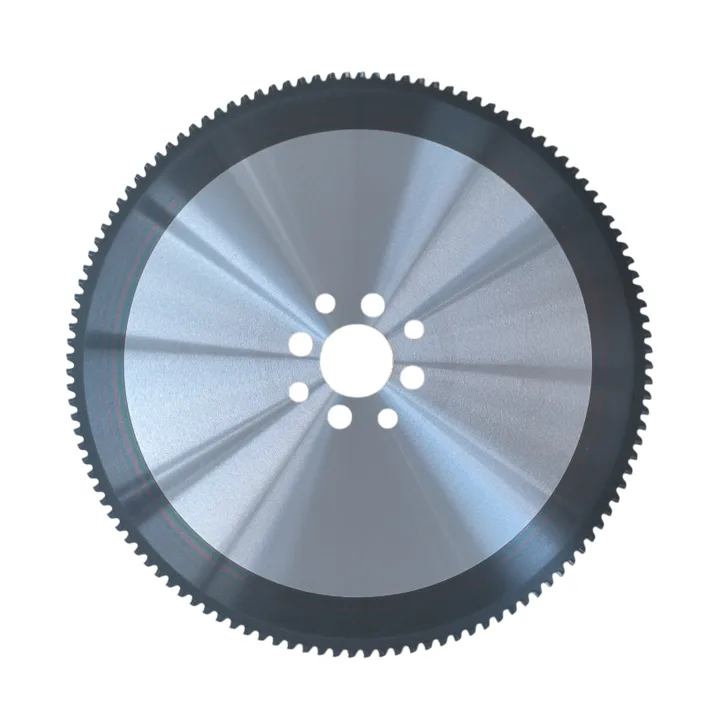
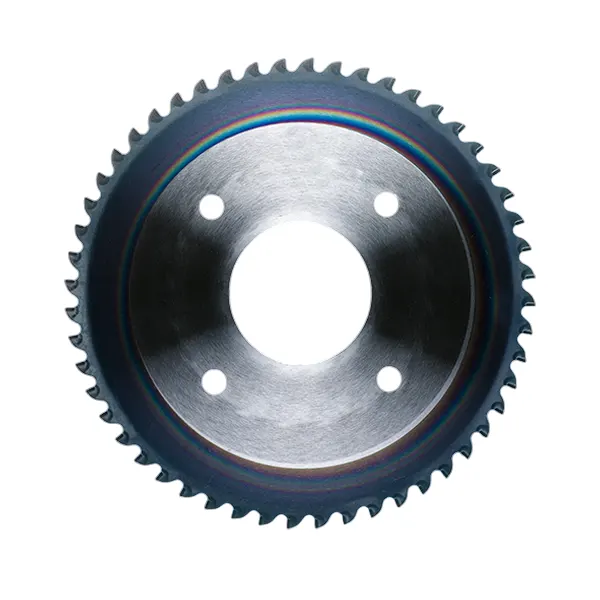
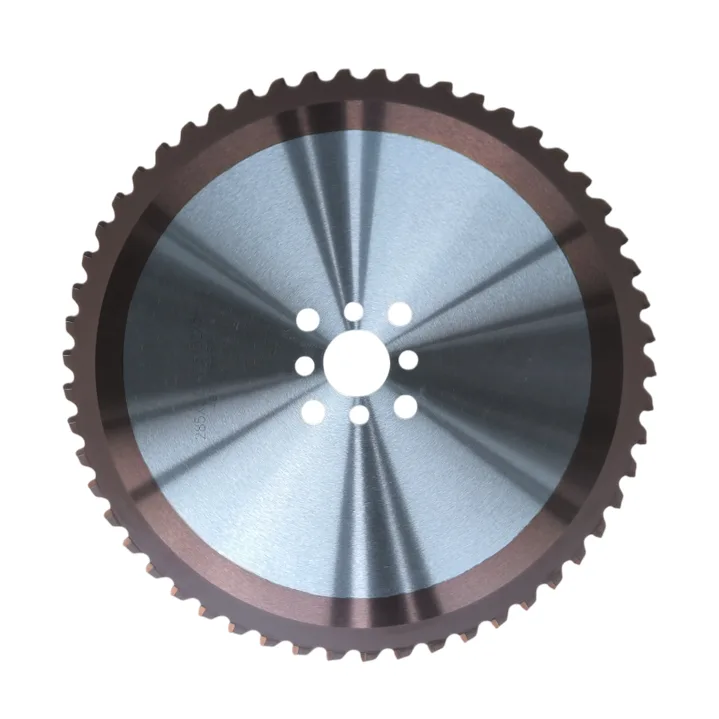
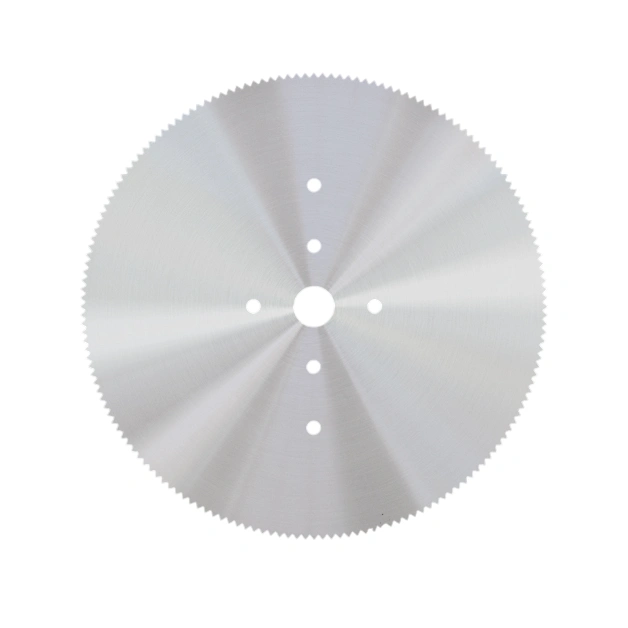
- Spring steel or low alloy tool steel body with high strength and rigidity—through-hardened for optimal balance of toughness and hardness, precision-machined, straightened, and tensioned for vibration-free cutting at peripheral speeds of 100–140 m/s.
- Body design options: flat ground (uniform thickness) or taper ground (conical, thicker at the tooth rim) for reduced friction between the saw blade body and the cut walls, particularly on thicker-walled sections.
- Tooth form options: parrot tooth (large negative rake, industry-standard for cold friction cutting of thin-wall tube); pendulum tooth (symmetric triangle, suitable for a wider range of section shapes); hardened pendulum tooth (tooth-tip hardened for increased wear resistance); asymmetric tooth (skewed triangle, for specific section and bar applications).
- Tooth geometry and pitch are selected to match the section shape, wall thickness, and material grade to ensure sufficient teeth are engaged in the cut at all times.
- Resharpening: the tooth form is restored by grinding; through-hardened construction allows repeated resharpening without loss of body integrity.
Application Notes
- Cold friction cutting is a dry process—do not apply coolant to the cutting zone during the cut; coolant in the contact area prevents the frictional heat build-up required for cutting and will cause the blade to jam.
- For larger-section workpieces, a directed flow of cooling water to flush the tooth gullets after each revolution can improve cutting performance and blade life—ensure coolant does not reach the active cutting zone.
- Peripheral speed must be maintained between 100 and 140 m/s; speeds below 100 m/s risk blade cracking and permanent deformation.
- The sawing machine must have good rigidity and sufficient main motor power; the workpiece must be securely clamped without axial movement during cutting.
- Cold friction circular saw blade specifications—diameter, kerf width, bore, tooth form, tooth pitch, and body design—can be customised to machine type and workpiece requirements. Contact us with your application details.