
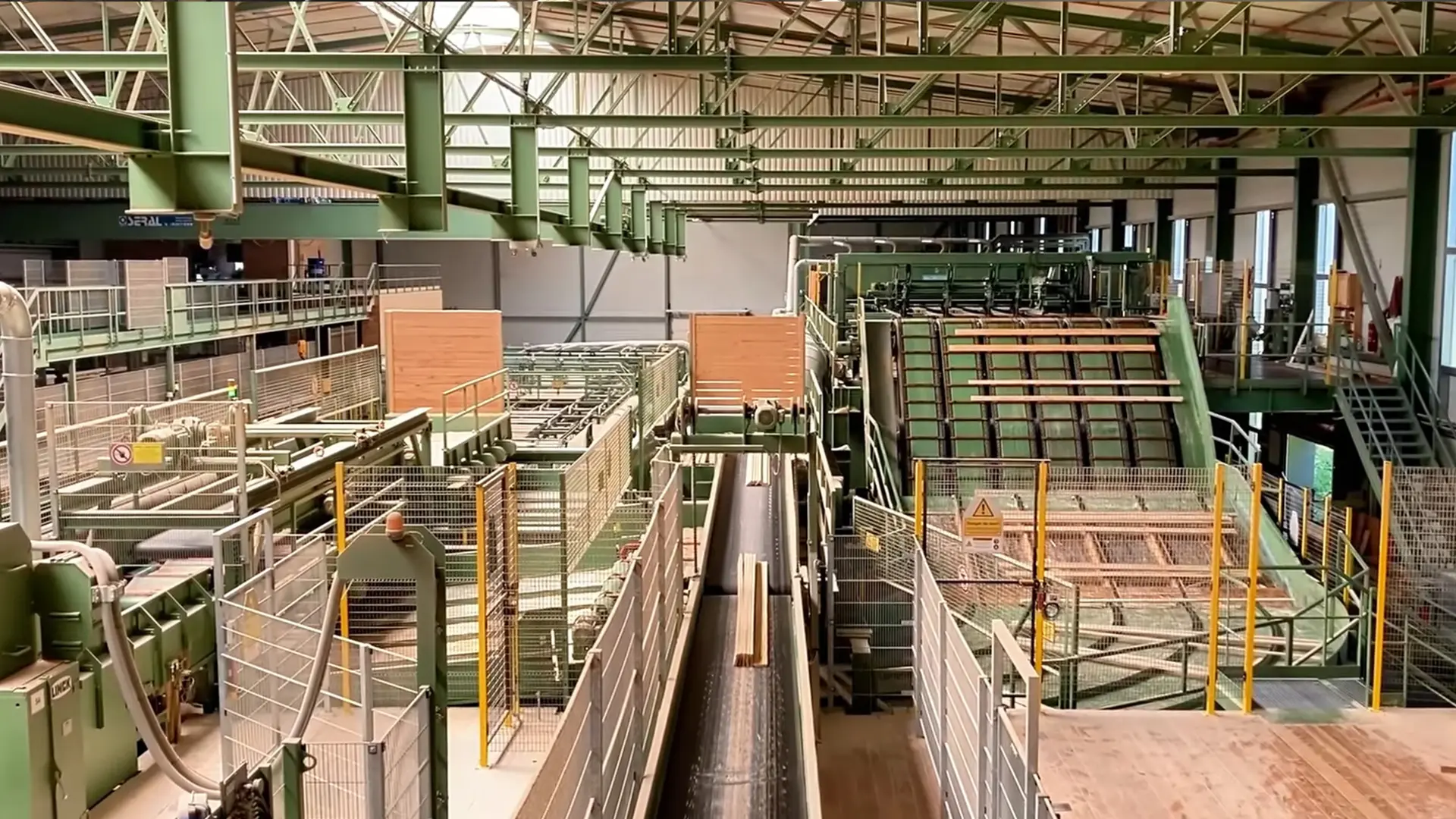
Automated Primary Sawmill Solutions
High-Yield Saw Blades for Primary Log Processing
Engineered for the full breakdown line — crosscutting, chipper-canter profiling, and pre-cut and re-cut multi-rip on Linck, EWD, HewSaw, Möhringer, SAB, and Brodbaek machines. Built to hold a straight line at high feed rates and squeeze the most lumber out of every log.
Industry Challenges
What Wrecks Saw Blades on a High-Speed Breakdown Line
Logs are living material — wet, resinous, knotty, grit-laden, and frozen in winter — and modern lines push them through at feed rates well over 100 m/min. These are the failure modes that decide your recovery and your uptime.
Blade Snaking in Deep Gang-Rip Cuts
In a multi-rip set, several blades cut a deep cant at once. As the saw releases the log’s internal growth stresses, the wood clamps the plate, and a body that has lost rigidity or tension starts to snake and wander. The result is washboarded faces, out-of-spec board thickness, and — at worst — a set of blades overheated in seconds.
Pitch Build-Up & Thermal Overload
Wet softwood and resinous species bake a hard layer of pitch and compressed fiber onto the plate sides. It packs the kerf, drives up side friction and heat, and pushes the body past its tension point — so the saw blade expands, loses its line, and starts to cut wide.
Impact from Frozen Logs & Knots
In winter, mills feed frozen logs whose ice and dense dead knots hit the teeth like hard spots. At full rim speed, an under-toughened carbide grade chips or shells off the tip — and a single failed tooth can stop an entire automated line for a tool change.
Abrasive Wear from Bark Contaminants
Bark carries sand, grit, stones, and the occasional embedded fragment straight from the forest. At the crosscut and chipper-canter, that turns cutting into a grinding contest: edges round off fast, cutting forces climb, and chip quality and motor load suffer with them.
Our Technical Approach
How We Keep Tools Cutting Straight and Lasting Longer
Carbide Rakers & Convex Plate Bodies
Defeats pitch build-up and plate rub. On the multi-rip saw blades, carbide rakers force resin-laden chips out of the kerf before they can sinter onto the plate, and act as a physical stop that keeps the steel body off the wood face. A thickened convex body adds the side stiffness needed to stay straight in deep cuts.
Tensioning & Guided / Spline Options for Straight Cuts
Defeats snaking and strip-width variation. Each body is roll-tensioned to its working RPM so it stays flat as it heats. For the most demanding gang-rip and edger lines we offer guided saw blades with a spline bore — multi-point torque transfer plus external guides hold a thin plate dead-straight at full feed.
Anti-Friction Finishes & Clean Chip Flow
Defeats heat and chip packing on fast profiling lines. Chrome-plated or polished bodies shed pitch and lower side friction, and gullet and chip-pocket geometry is sized so swarf clears the cut at high feed instead of being re-cut and re-heated — the usual cause of saw blades that "burn in" on a Linck or HewSaw line.
High-Impact Carbide for Frozen & Dirty Logs
Defeats knot impact and grit wear. For primary log work, toughness beats raw hardness: we run high-cobalt, ultra-fine-grain carbide that takes the shock of frozen knots and resists the abrasion of grit-laden bark, stretching the interval between regrinds at the crosscut and chipper-canter.
Recommended Tooling
Matched Saw Blades for Every Station on the Line
From the log deck to the final re-cut — one tooling partner for the whole breakdown line.
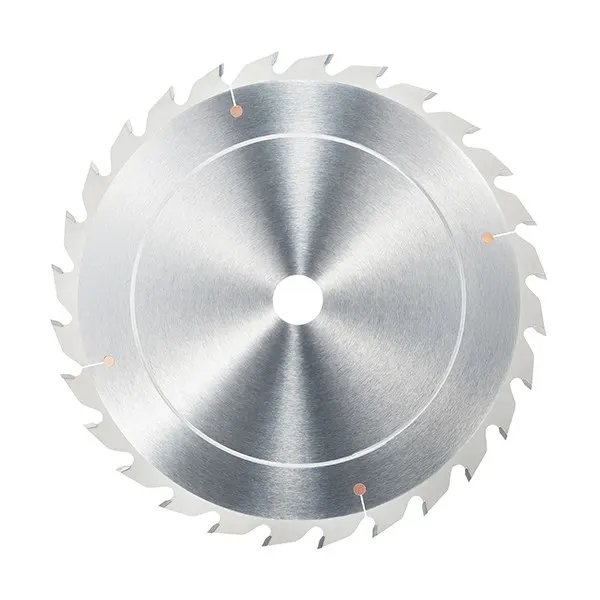
Log Infeed / Bucking
Circular Saw Blades for Log Crosscutting
Heavy-duty crosscut blades for bucking round logs to length at the front end — built with tough, ultra-fine-grain carbide to survive grit-laden bark and frozen knots without chipping out.
View specifications →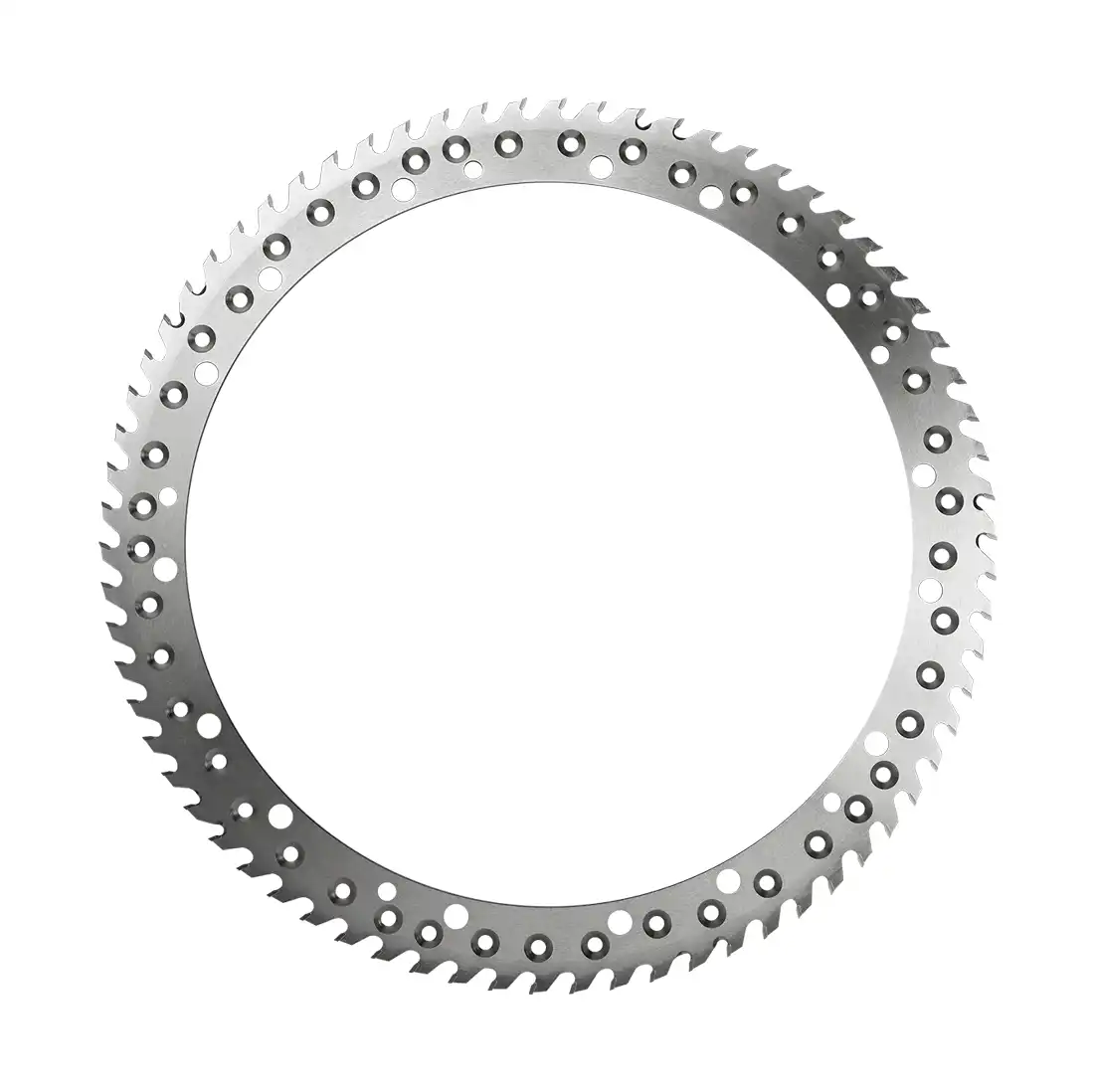
Chipper Canter
Hogger Rings for Chipping Lines
Carbide hogger rings for chipper-canter units that reduce the slab to clean chips while shaping the cant — engineered for stable chip flow and dimensional consistency on wet and dry logs.
View specifications →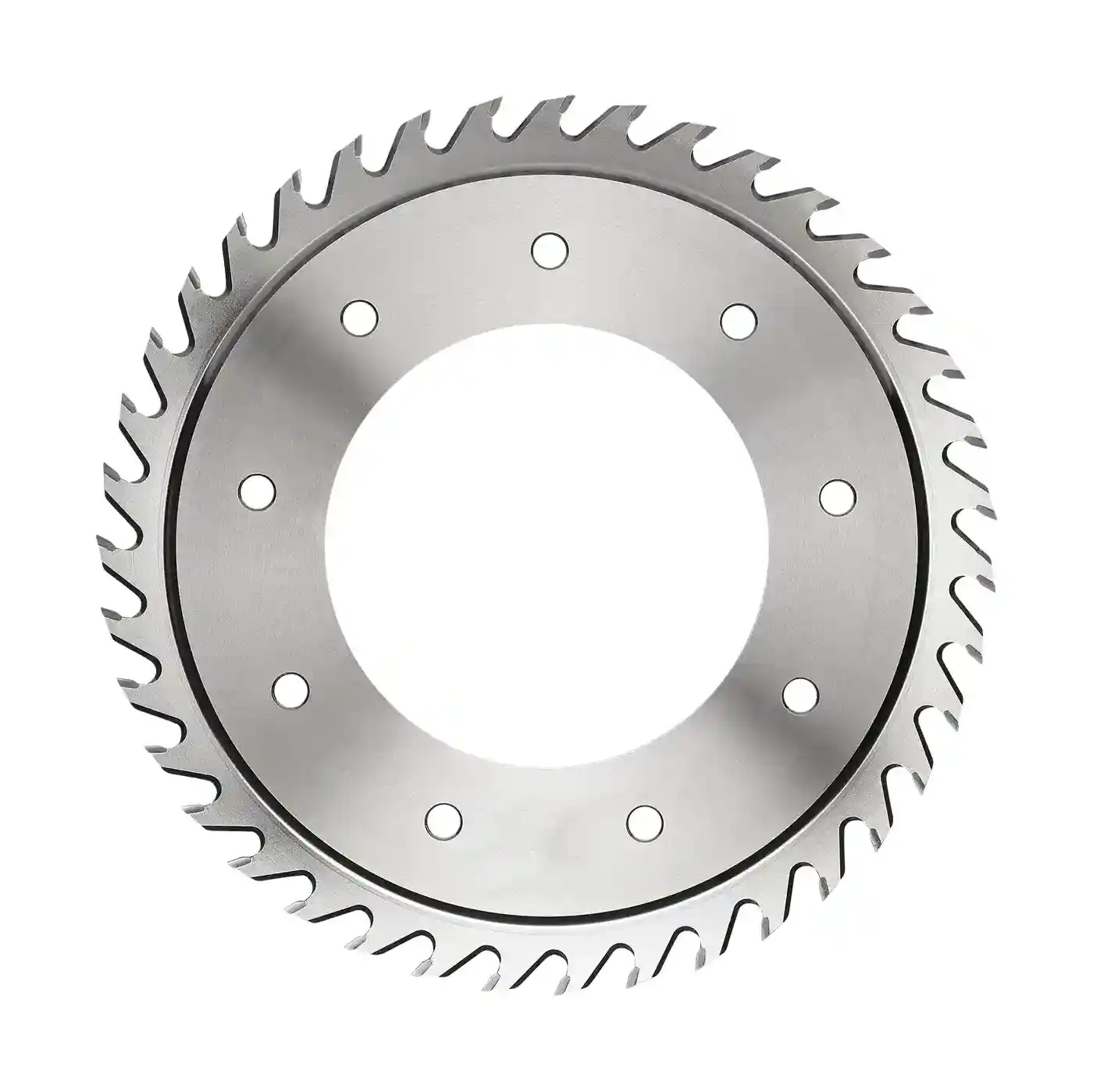
Profiling Aggregate
Hoggers for Profiling Aggregate
Carbide hoggers for the profiling aggregate — they cant and profile the log face ahead of ripping, holding profile accuracy run after run under continuous high-feed duty.
View specifications →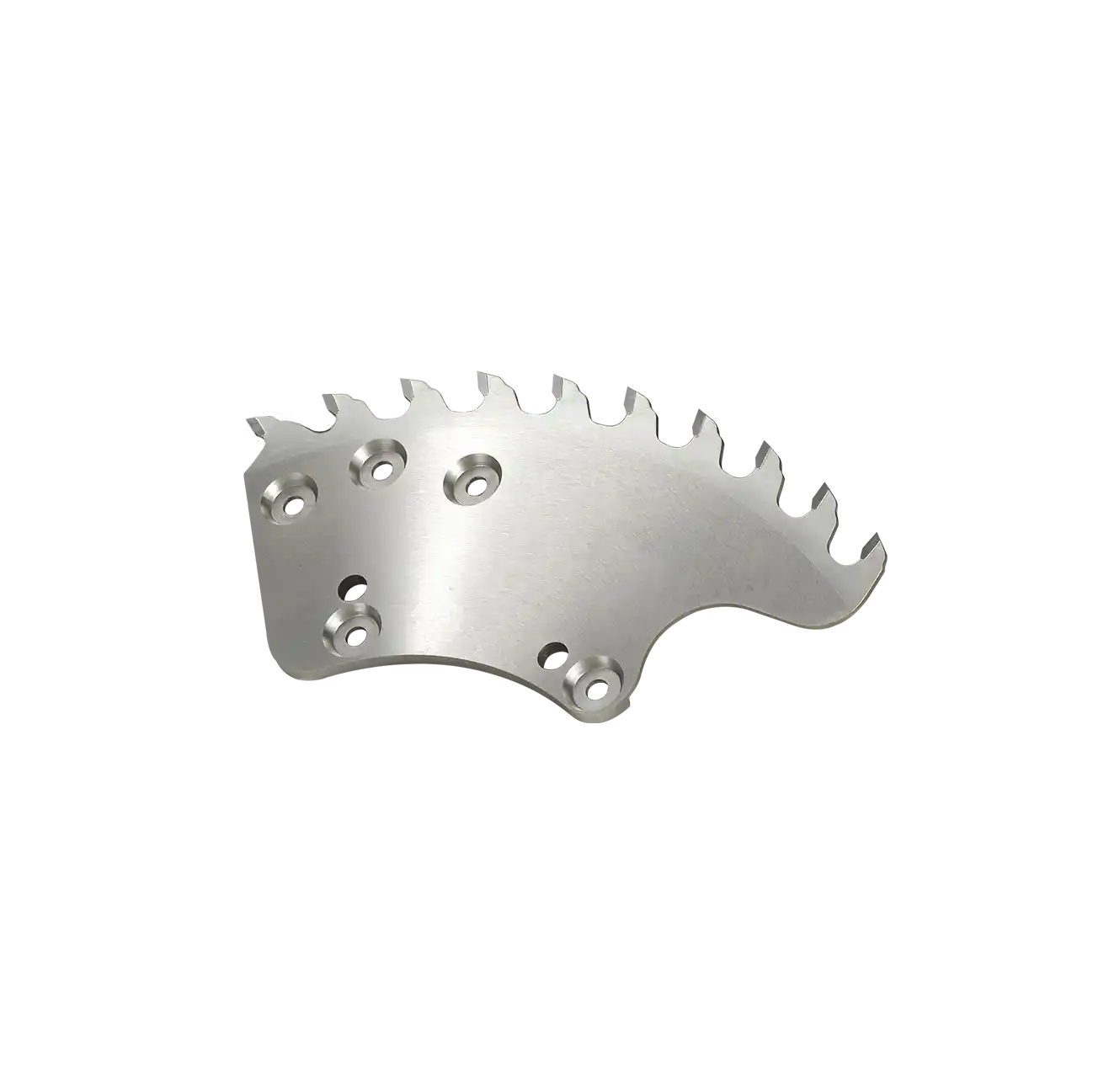
Profiling Aggregate
Segments for Profiling Aggregate
Replaceable carbide profiling segments for the same aggregates — renew only the worn segments instead of the whole tool body, keeping profiling cost per cubic metre down.
View specifications →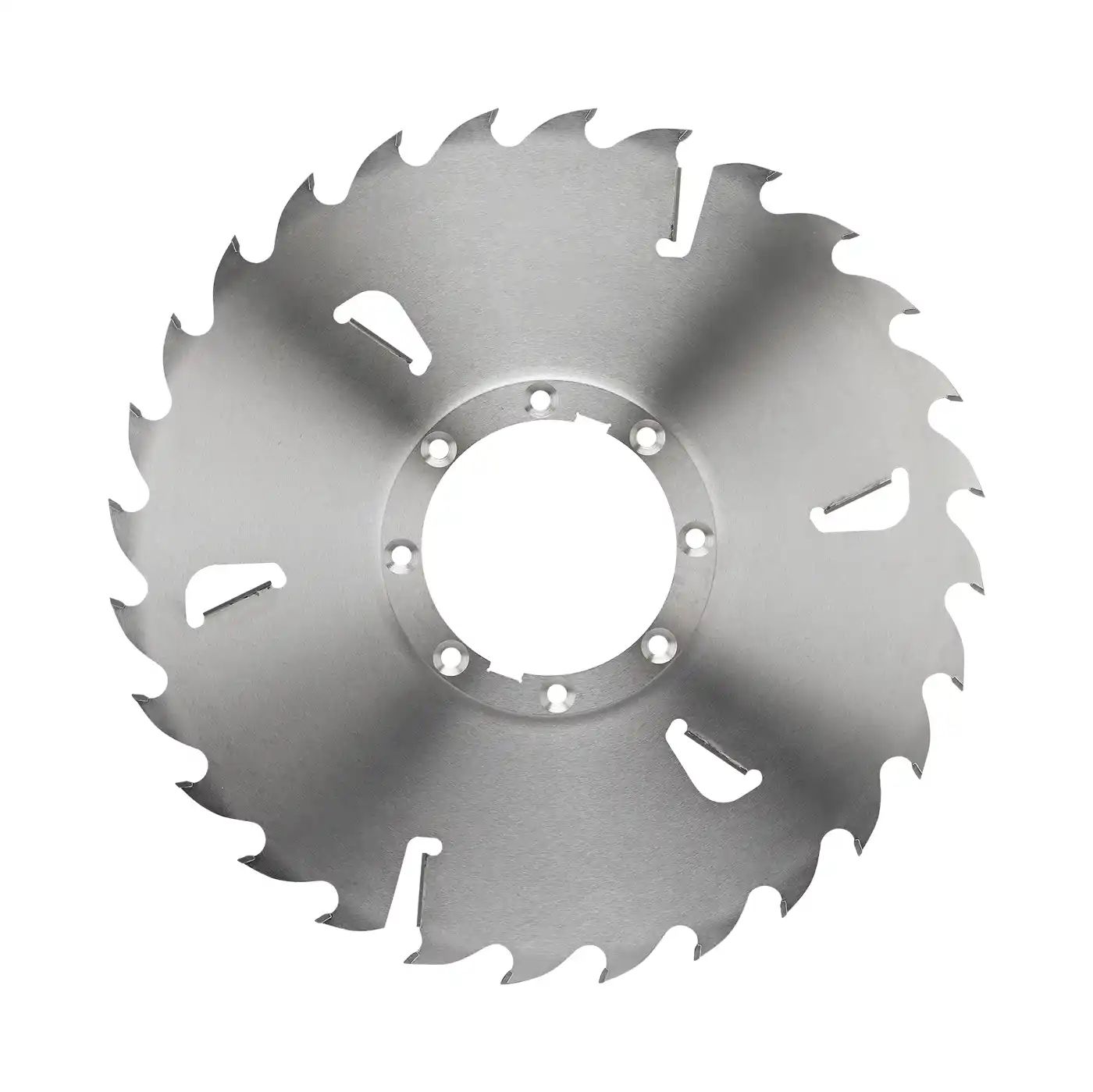
Pre-Cut Gang Rip
Pre-cut Multi-rip Saw Blades with Rakers
First gang-rip pass through the full cant. A thickened convex body plus carbide rakers keeps the plate off the wood face and holds a straight line in deep, stress-loaded cuts.
View specifications →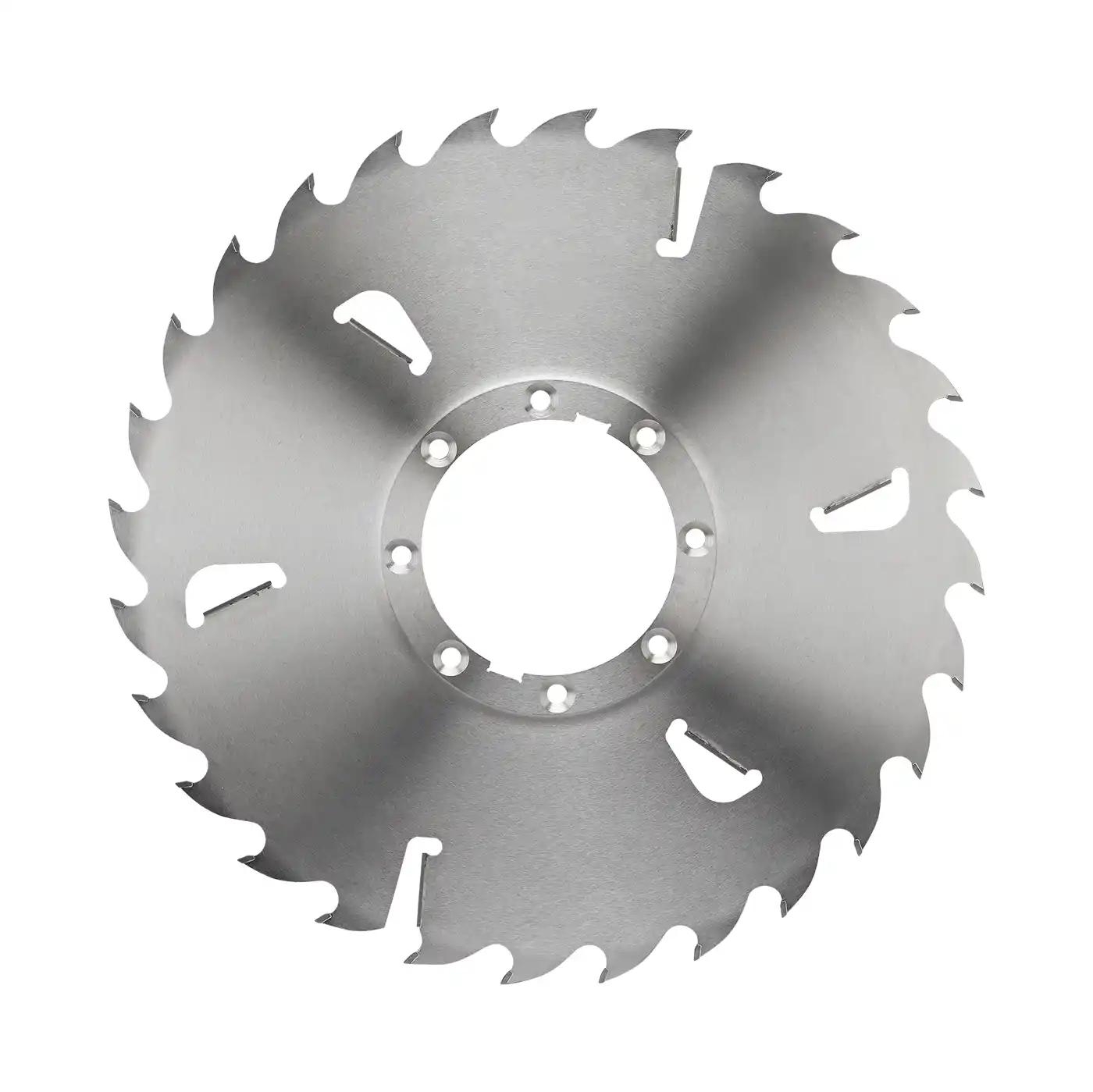
Re-Cut Gang Rip
Re-cut Multi-rip Saw Blades with Rakers
Second gang-rip pass that sizes the boards to final width. Thin-kerf bodies with rakers maximize recovery while keeping strip-width variation tight across the whole arbor set.
View specifications →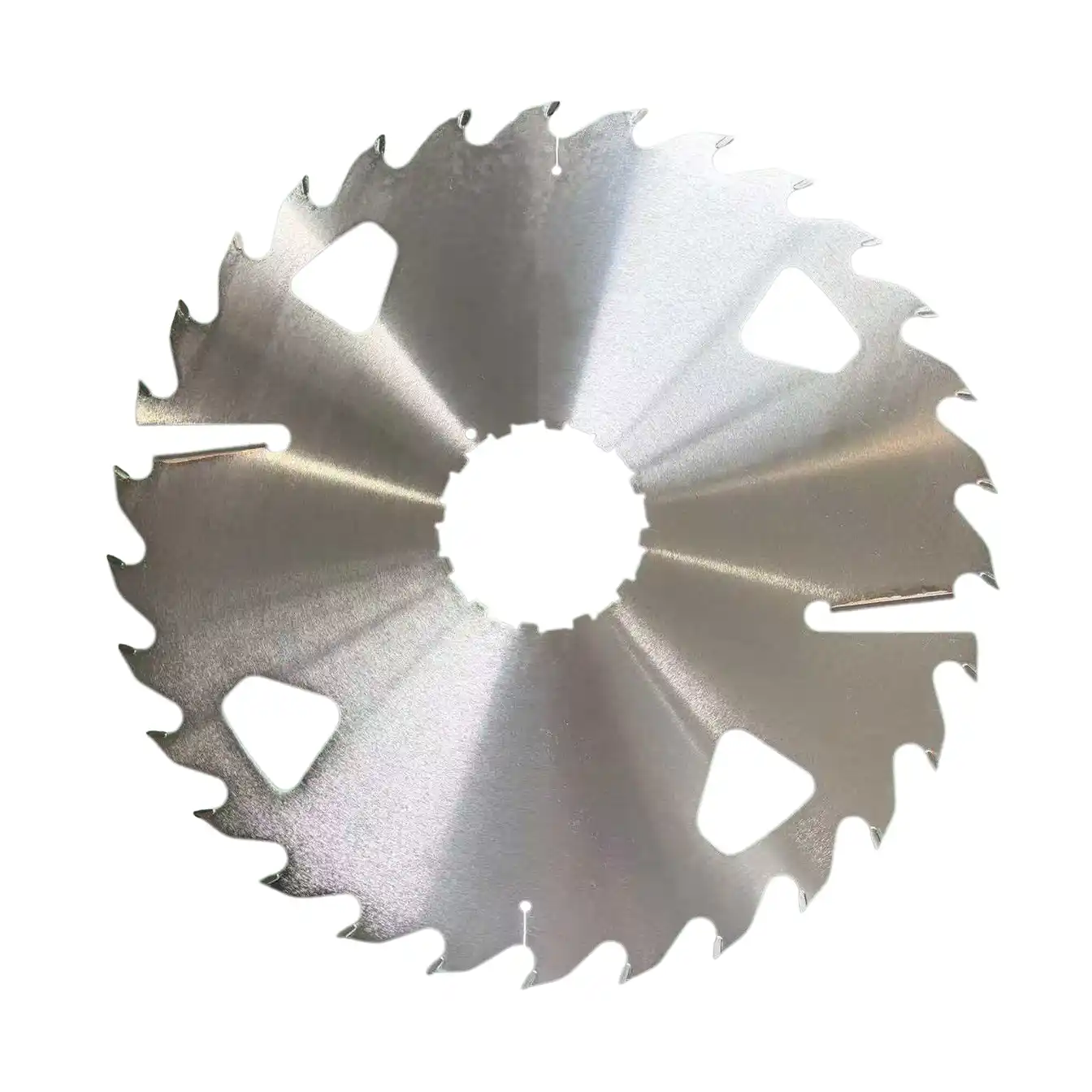
Guided Multi-Rip
Guided Saw Blades with Spline Bore for Multi-rip Saws
For guided arbor systems: a spline bore spreads drive torque over multiple contacts for a more stable run, while external blade guides hold the thin plate dead-straight at full feed.
View specifications →Expected Outcomes
What This Saw Blades Program Delivers
The gains a primary mill can expect when the whole line runs matched, correctly tensioned saw blades at recommended parameters.
Blades that hold a straight line let you tighten the target-size allowance and run thinner kerf with confidence — turning more of every log into sellable boards instead of sawdust.
Anti-pitch finishes and high-impact carbide stretch the run between tool changes, so your HewSaw or Linck line keeps feeding at full speed instead of stopping for unplanned changeovers.
Stable running across the full arbor set holds board thickness and surface quality in tolerance, keeping downstream optimization, drying, and grading fed without rejects.
Expert FAQ
Frequently Asked Questions
Can your gang-rip saw blades handle frozen logs without changing our feed rates?
Frozen wood is a whole-system question, not just a blade swap. Our high-impact carbide grade is built to take the shock of frozen knots, but for winter running we’d also recommend a winter tooth geometry (a reduced hook angle gives the edge more support) and a quick check of arbor and drive-belt condition. Whether you can truly hold the same feed rate depends on your machine and how cold the logs are — we’ll spec the saw blade to the conditions you actually run.
Why do standard saw blades burn in so quickly on our Linck profiling line?
On a fast automated line, it’s almost always chip evacuation. If the gullet or chip-pocket volume is too small for the feed rate, the chips can’t clear the cut — they get re-cut and pack the kerf, the plate sides heat up, and the saw blade loses tension and starts to bind. Our profiling and multi-rip saw blades are sized for high-feed chip flow and finished to shed pitch, which is what keeps it cool at 100 m/min and above.
When should we run guided (spline-bore) saw blades instead of collared saw blades?
It comes down to how thin you want to run and how your machine is built. Collared saw blades on a plain arbor are simpler and fine for moderate kerf. Once you push to very thin kerf for maximum recovery, a guided saw blade with a spline bore is the better choice: the spline spreads drive torque over many contacts for steadier running, and the external guides physically restrain the thin plate so it can’t deflect off line. If your multi-rip or edger is already built for guides, that’s the route to the thinnest stable cut.
Get a Tooling Plan
On a high-speed line, every snake and burned saw blade is recovery you can’t sell
Send us your line make-up — crosscut, chipper-canter, and multi-rip machine models, your species, kerf targets, and whether you run frozen logs — and our engineers will build a station-by-station tooling plan around it.