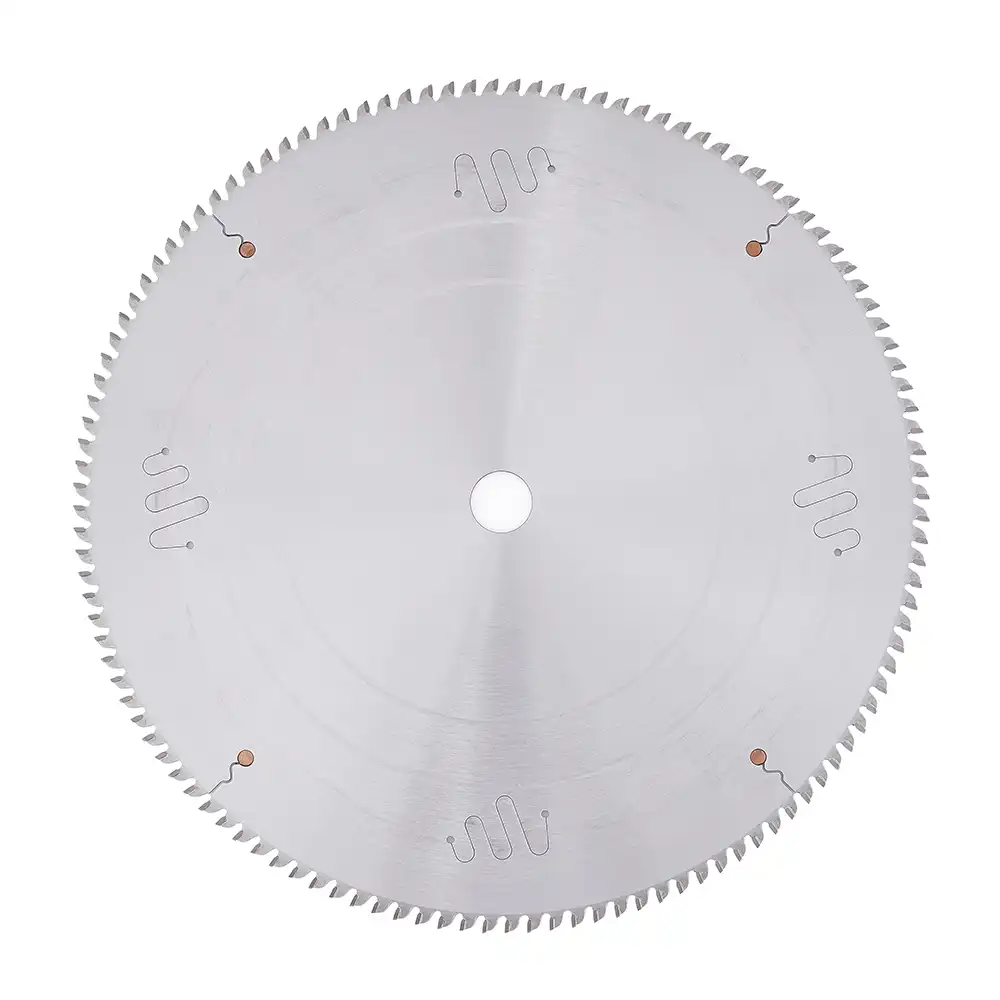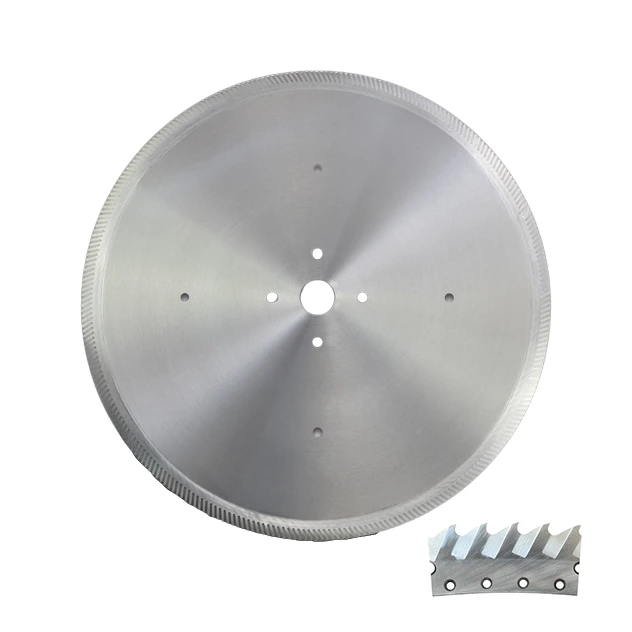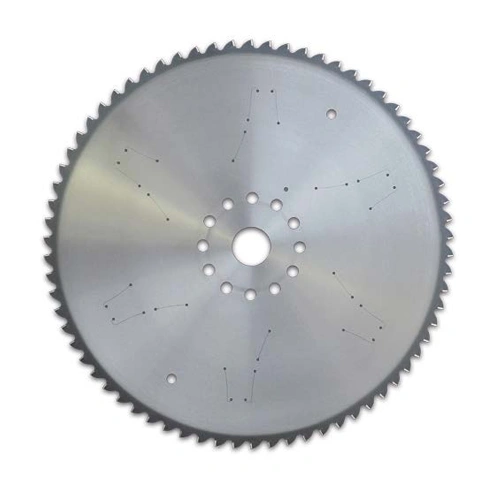
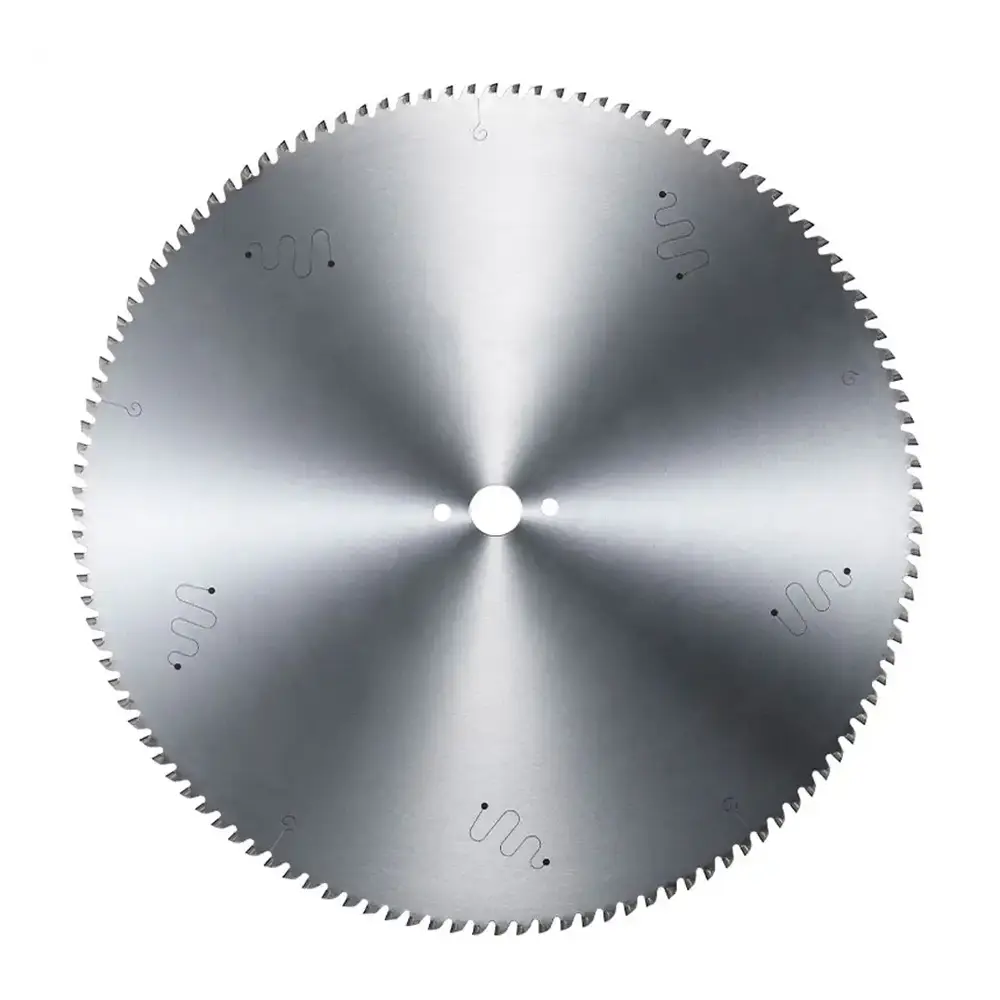
Estimate your material savings: See how a thinner kerf increases workpiece yield with our Short-Stock Material Yield Calculator.
Typical Applications
- Precision cut-to-length sawing of aluminum and copper-alloy profiles, tubes, and small solid sections where material utilization is critical.
- High-yield production environments in which every millimeter of material saving directly impacts profitability.
- Non-ferrous sawing lines that demand smoother cut faces and significantly reduced or eliminated downstream milling, facing, or deburring operations.
Key Performance Advantages
- Kerf can be reduced by up to 50% compared with conventional circular saw blade designs, delivering substantial material savings.
- Helps boost material yield by at least 5% — and often more — in suitable high-volume applications, directly lowering raw material costs.
- Teeth are manufactured from premium ultra-fine grain carbide, providing sharp, long-lasting edges with excellent wear resistance and minimal built-up edge on aluminum and copper alloys.
- The saw body is precision-engineered from high-quality tool steel, ensuring superior rigidity, low vibration, and excellent stability even at thin kerf widths.
- Supports mirror-like cut surfaces that can reduce or completely eliminate secondary milling and finishing operations in many jobs, saving both equipment investment and labor costs.
- Precision sawing capability consistently achieves length tolerances as tight as +/-0.05 mm in a stable production process.
Problems This Circular Saw Blade Helps Solve
- Excessive material loss caused by unnecessarily wide kerf in conventional blades, which wastes valuable aluminum and copper-alloy stock.
- Low material yield when processing expensive non-ferrous metals, directly eroding profit margins.
- Additional finishing costs and extra process steps caused by poor cut surface quality, rough ends, or heavy burr formation.
- Precision issues and dimensional inconsistency in applications that require tight cut-length tolerances and minimal variation.
- Higher overall production costs resulting from unnecessary secondary milling, increased labor, and extra machine investment for post-cut processing.
Application Notes
- Ultra-thin kerf circular saw blades require good machine rigidity, accurate clamping, and stable feed control to avoid circular saw blade deflection.
- Use proper coolant and chip evacuation to reduce aluminum adhesion and keep the narrow kerf cutting freely.
- Match feed speed and RPM carefully to the material thickness, because overfeeding can quickly damage a thin-kerf circular saw blade.
- Confirm whether the application is better suited to thin-wall profiles, tubes, sheets, or light solid sections before final specification.