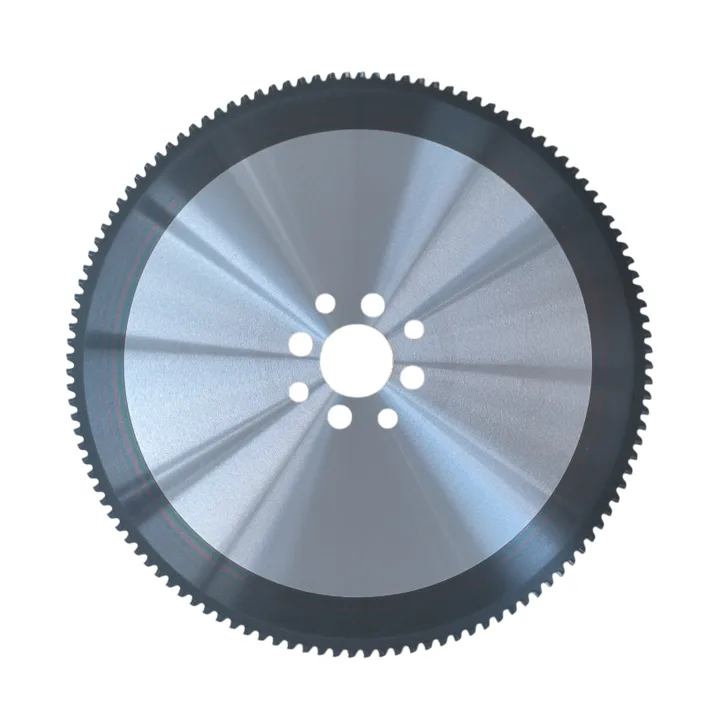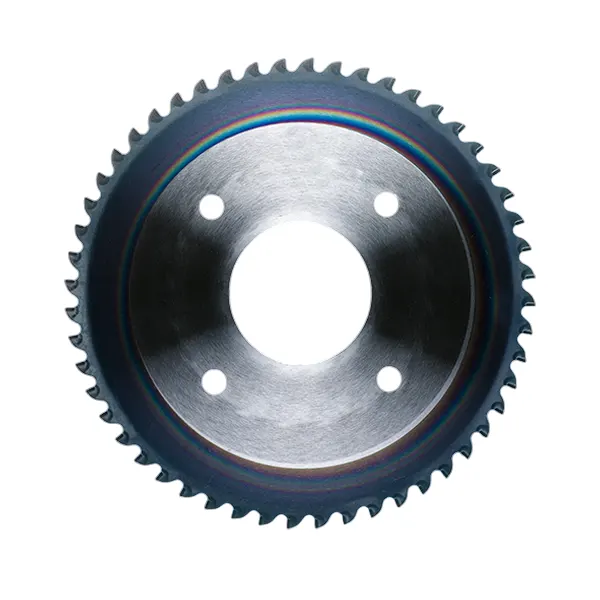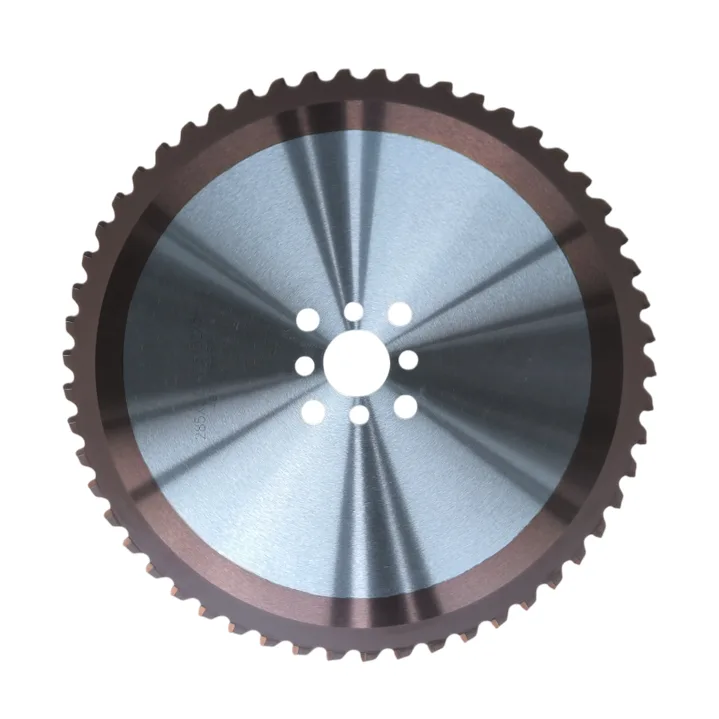
Typical Applications
- Billet preparation on railway rail production lines: cutting rail steel billet to specified lengths before the hot rolling process—head cropping to remove defective ends, tail cropping, and precision cut-to-length in a single cold sawing operation prior to furnace charging and rolling.
- Billet preparation on steel wheel production lines: cutting wheel billet to weight-controlled lengths before the hot forming and roll-pressing process—accurate billet weight is critical to final wheel geometry and dimensional consistency.
- High-volume billet cutting operations on rail and wheel production lines where consistent cut length accuracy, predictable cold saw blade service life, and minimal unplanned downtime are essential to production efficiency.
Key Performance Advantages
- Purpose-designed carbide grade formulated for cold sawing of rail and wheel billet—maintains cutting edge sharpness under the high cutting forces and large chip loads of solid-section cuts on high-carbon rail steels and wheel steels, and resists the built-up edge and adhesive wear that cause premature tip failure on general-purpose cold saw blades.
- Purpose-designed tooth geometry promotes smooth chip formation and efficient chip evacuation from the kerf on large solid-section cuts, reducing heat build-up and maintaining clean cut face quality throughout the cold saw blade service life.
- High cut length accuracy: cold sawing produces flat, square cut faces with tight length tolerances—critical for rail production where billet length directly controls rolled rail length, and for wheel production where billet volume controls wheel dimensions.
- No heat-affected zone: cold sawing keeps cut zone temperatures low, preserving billet end metallurgy and avoiding surface hardening or decarburisation at the cut face that would affect the subsequent hot rolling or hot forming operation.
Problems This Cold Saw Blade Helps Solve
- Rapid carbide tip wear or tip breakage when cutting rail or wheel billet with general-purpose cold saw blades not matched to the hardness and large chip loads of high-carbon rail and wheel steels.
- Poor cut face quality—burr, taper, or material drag—causing billet-end defects that affect downstream rolling or roll-pressing process quality.
- Short and unpredictable cold saw blade service life causing unplanned production stoppages and tool change downtime on high-output rail and wheel billet preparation lines.
- Excessive heat generation at the cut zone causing surface discolouration or metallurgical changes at billet ends that affect subsequent hot working quality.
Application Notes
- Flood coolant is required—direct adequate coolant flow to the cutting zone to support chip evacuation and control cutting temperatures throughout the cut.
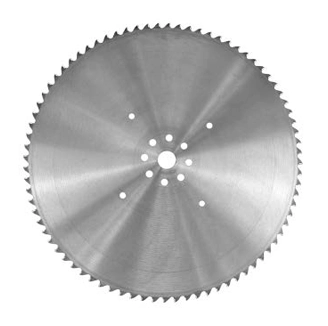
- Confirm cold saw blade diameter, bore diameter, kerf width, and pinhole pattern against machine specifications before ordering; dimensions vary across billet cold saw models and billet cross-section size ranges.
- Cold saw blade specifications can be customised to billet steel grade, cross-section diameter or side length, and machine type. Contact us with your application requirements.