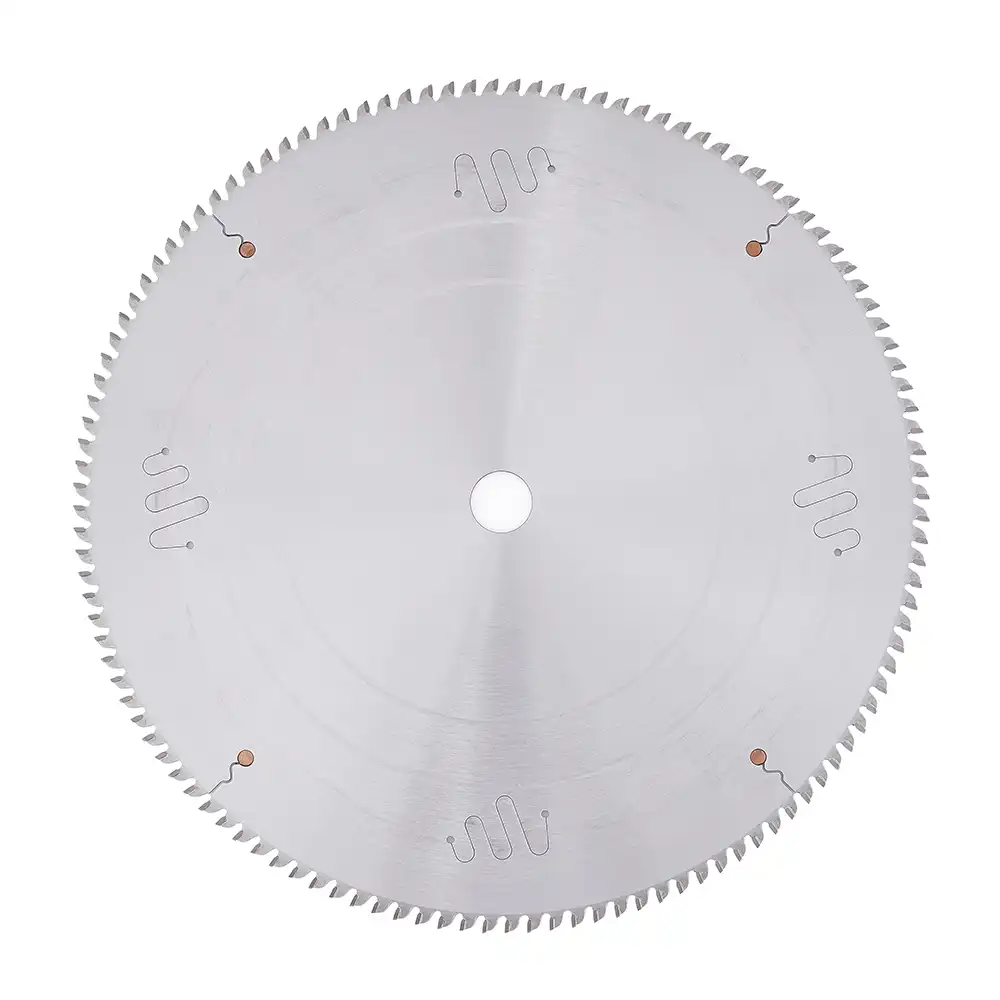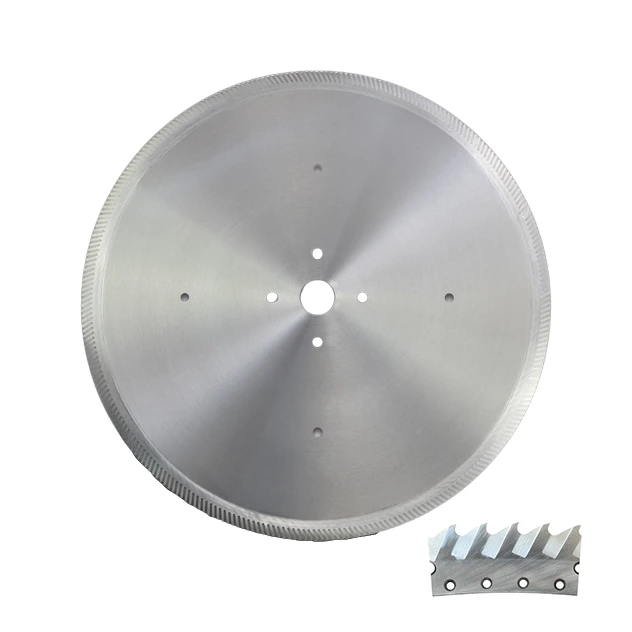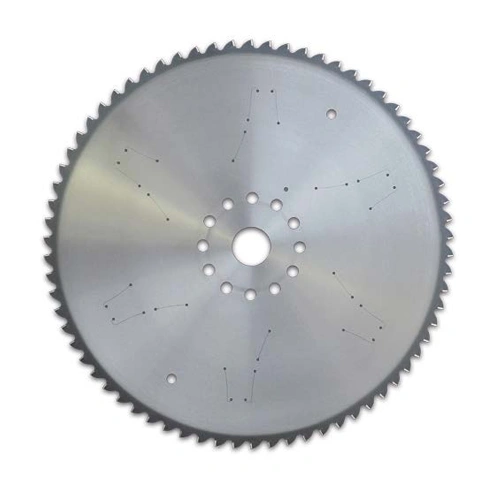
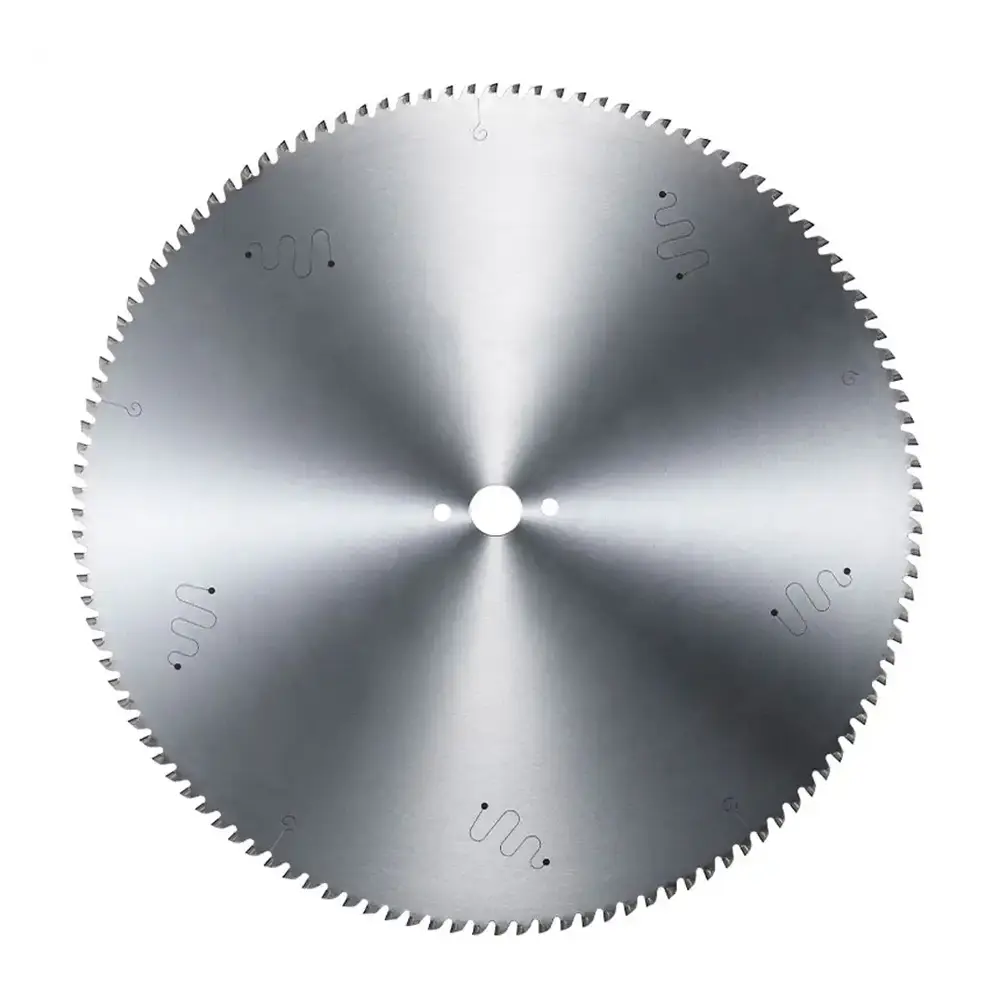
Typical Applications
- Primary: High-volume cutting of thermally broken aluminum profiles in window and door fabrication lines.
- Secondary: Cutting standard aluminum alloy profiles for conventional window and door frame applications (where carbide blades also remain viable).
- Energy-efficient construction projects that require thermally broken frames paired with insulated glazing.
- Cut-to-length operations on automated double-head and single-head sawing machines in window and door processing facilities.
About Thermally Broken Aluminum Profiles
Thermally broken aluminum profiles are a specialized construction used in energy-efficient windows and doors. A non-metallic insert — typically a polyamide (PA66) strip — is pressed into a channel in the aluminum extrusion, physically separating the inner and outer aluminum sections. This breaks the thermal bridge, significantly reducing heat transfer through the frame.
When paired with insulated glazing, thermally broken profiles are widely used in commercial and residential construction for thermal insulation and energy savings.
However, the polyamide insert is highly abrasive to conventional carbide cutting edges. In production environments that process large quantities of thermally broken profiles, carbide blade life drops substantially — making PCD tips the practical solution for this material.
Key Performance Advantages
- Thermally broken profiles are the core strength of this blade: the polyamide thermal break insert is highly abrasive and rapidly dulls carbide edges.
- PCD tips maintain cutting edge integrity far longer when regularly contacting polyamide thermal break inserts.
- In comparable production conditions, PCD blades typically achieve around 10× the blade life of carbide blades on thermally broken profile cutting.
- Dramatically fewer blade changes mean significantly less production stoppage, lower tool cost per panel, and more consistent edge quality throughout extended production runs.
- Also suitable for standard aluminum profiles; secondary benefit is extended tool life even on conventional material.
Problems This Circular Saw Blade Helps Solve
- Rapid carbide blade wear caused by the highly abrasive polyamide thermal break insert in thermally broken aluminum profiles — often lasting only 1/10th as many cuts as on standard material.
- Frequent blade changes and production stoppages disrupting output on high-volume thermally broken profile lines.
- Escalating tooling cost when processing large daily volumes of thermally broken profiles with carbide blades.
- Inconsistent cut quality and edge burring from carbide blades wearing quickly during a production shift.
- Yield loss and rework caused by edge degradation and inconsistent surface finish.
Application Notes
- Use suitable coolant and chip evacuation to minimize aluminum adhesion on tooth edges, extending blade life further.
- Maintain strict machine alignment, blade runout, and clamping to fully protect the PCD cutting edge and avoid premature wear.
- Schedule PCD blade regrinding with qualified service providers to preserve tip geometry and diamond-substrate bonding correctly.