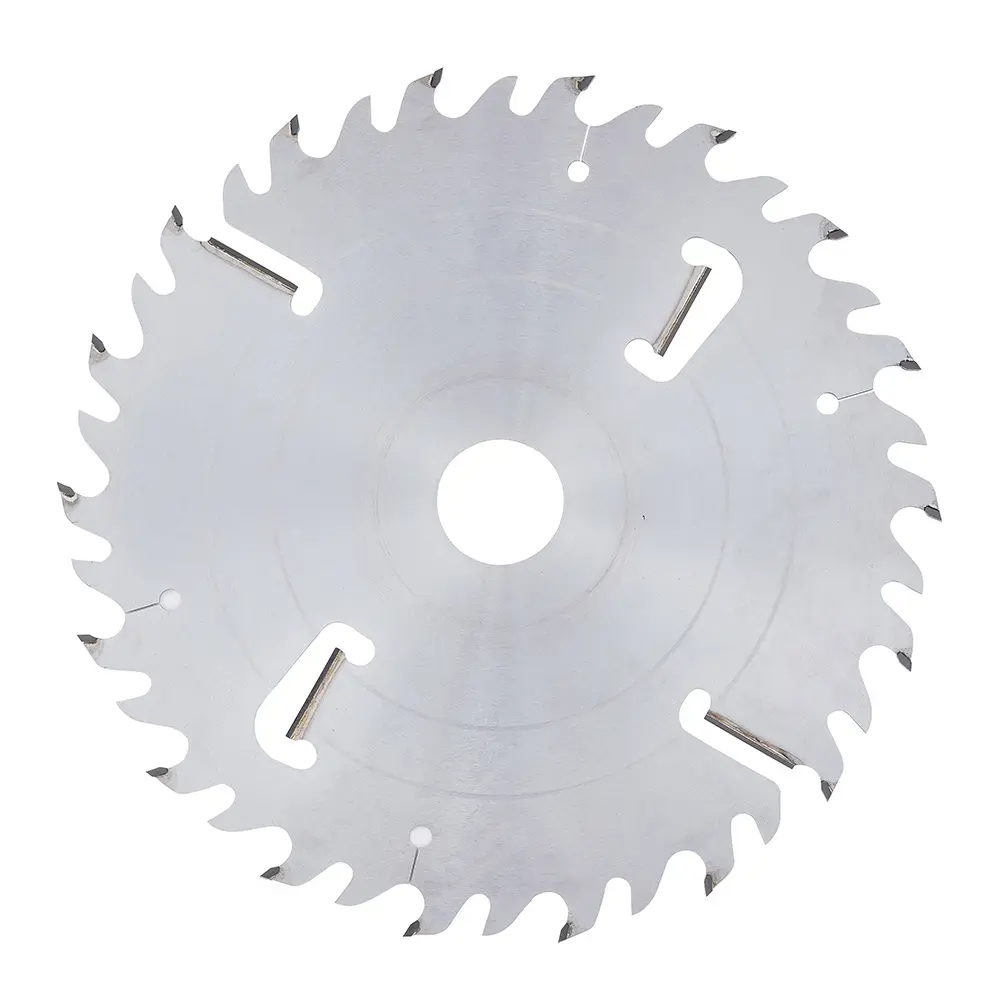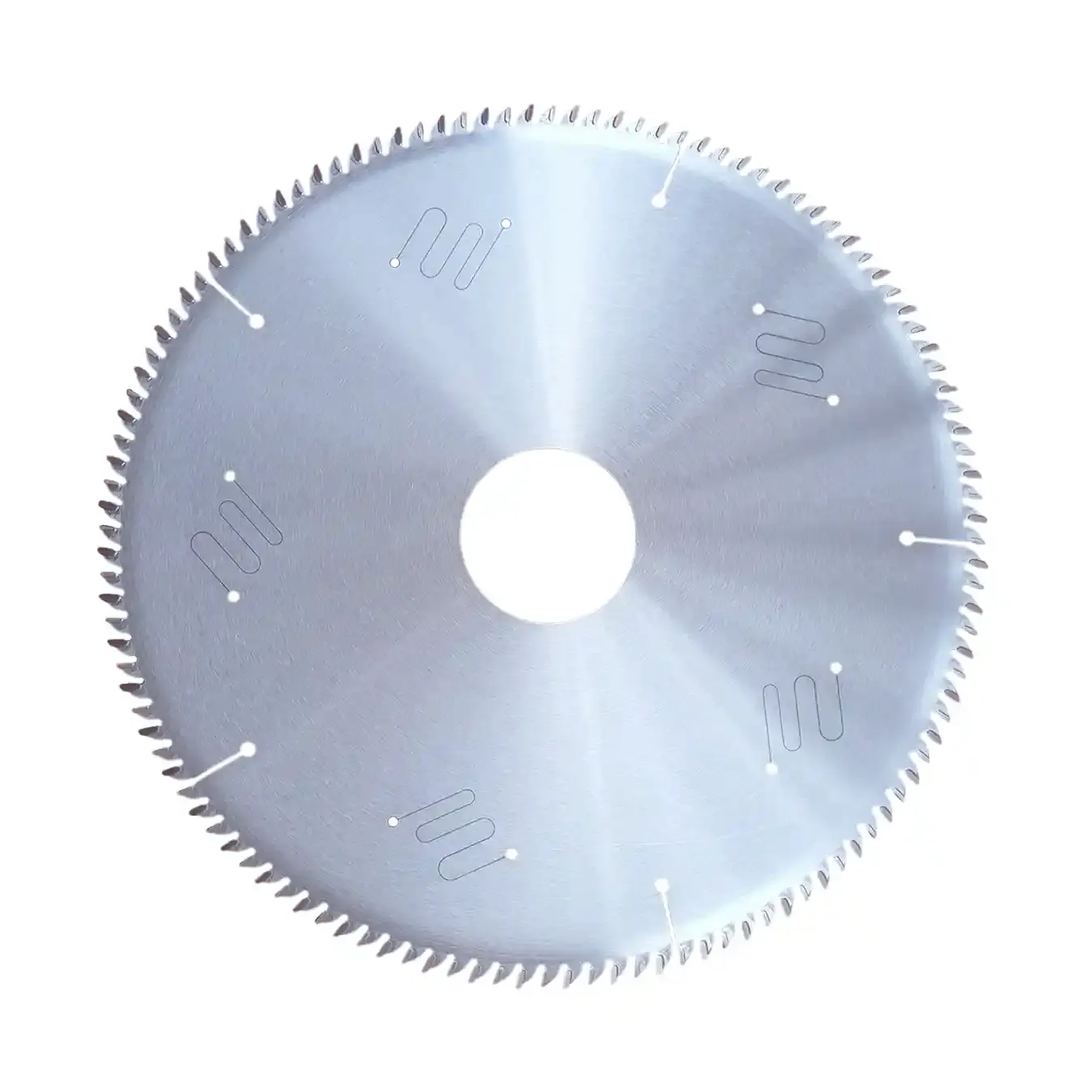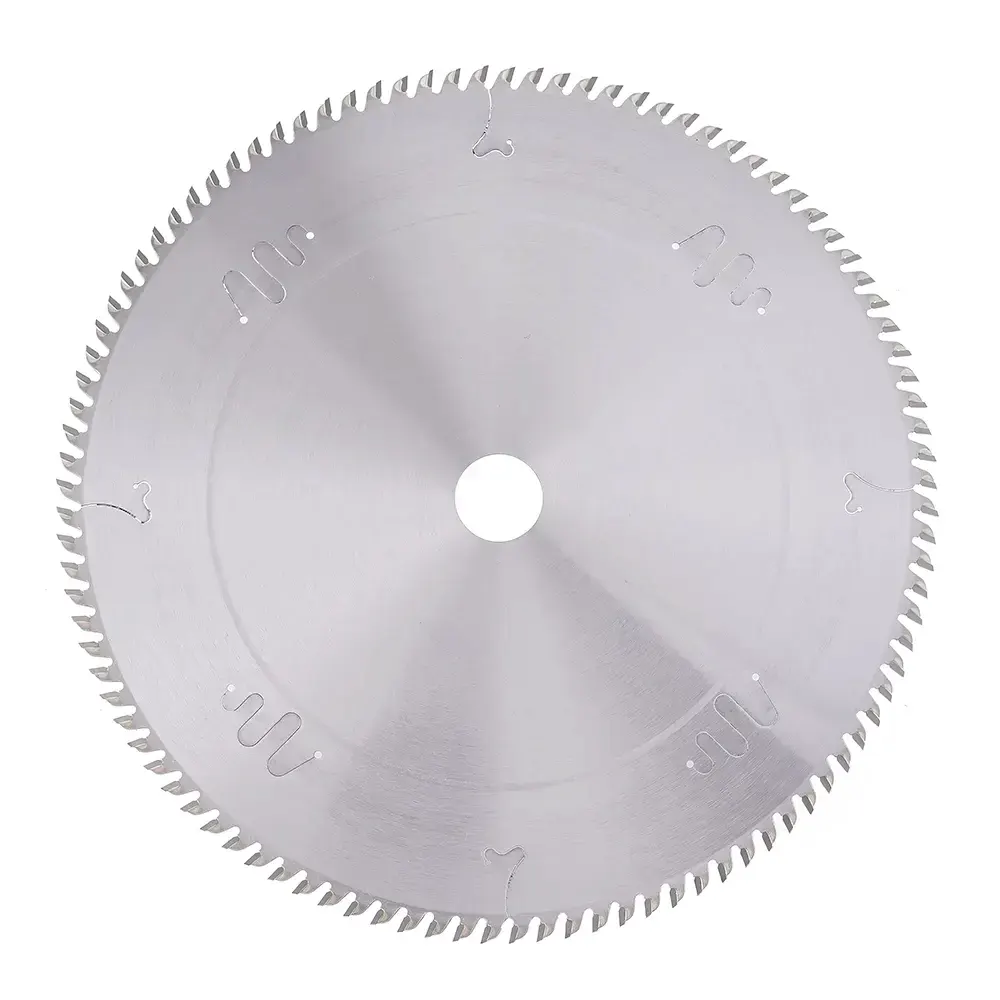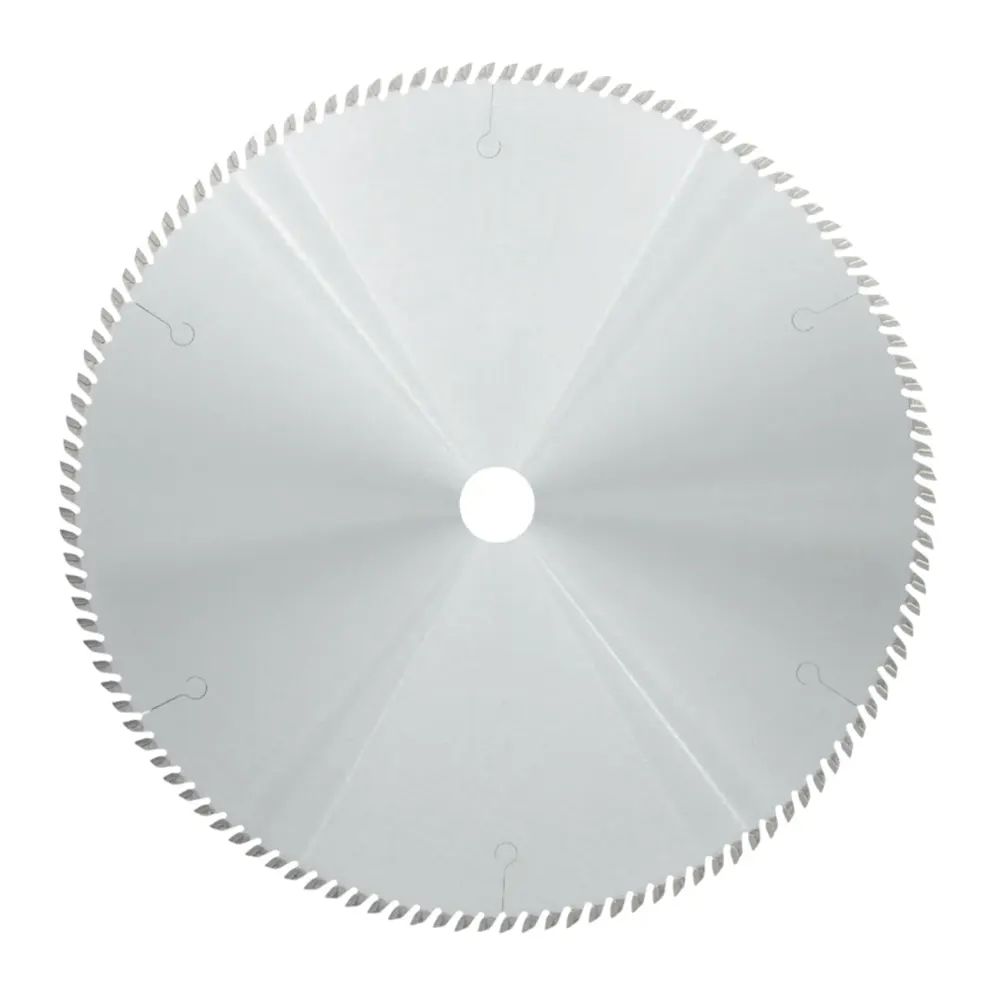
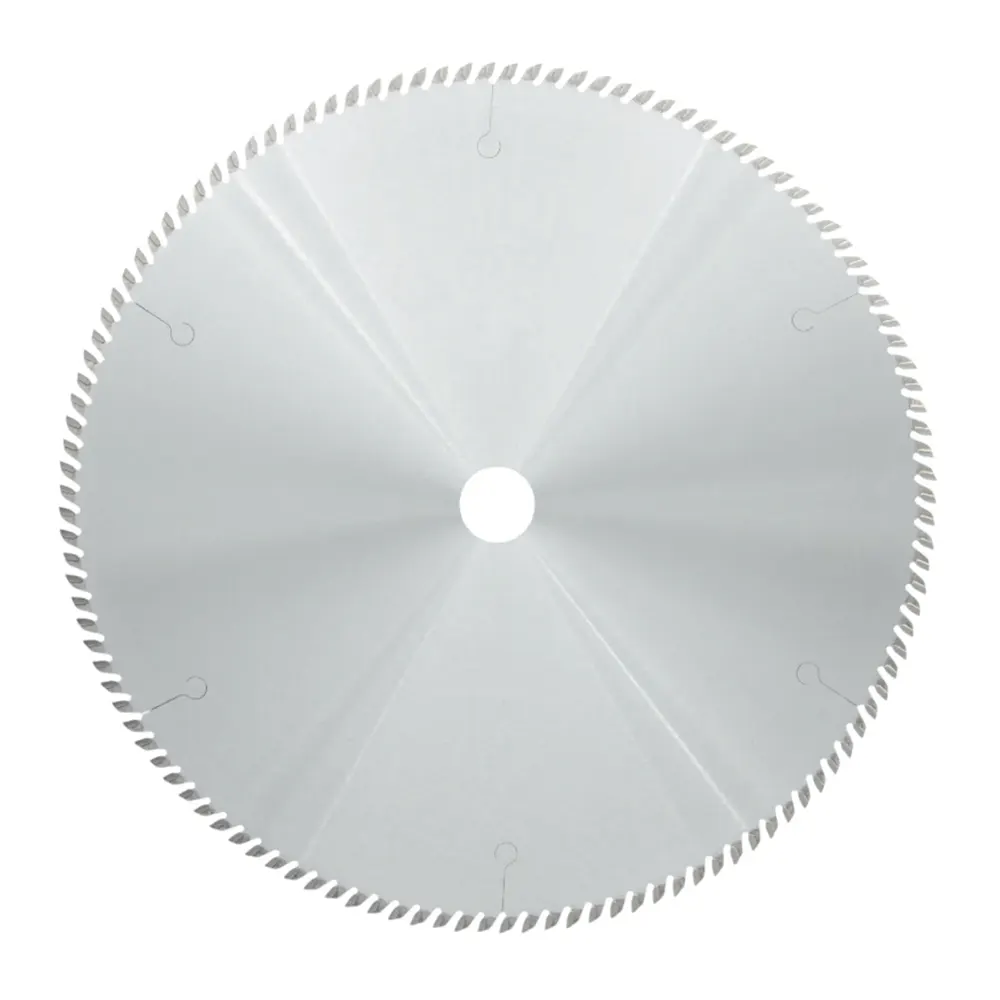
Typical Applications
- End trimming and mitre cutting of solid wood picture frame mouldings and decorative mouldings on double head cutting machines and radial arm saws, producing the precise angled ends required for gap-free corner joints.
- Cut-to-length of softwood and hardwood moulding profiles on sliding table saws, table saws, and squaring saws in frame manufacturing and interior trim production.
- Crosscutting MDF, plywood-based, and other wood-composite frame blanks and moulding profiles where clean cut faces and tight dimensional tolerances are needed for assembly.
- Trimming extruded and co-extruded plastic (PVC, PS, ABS) picture frame and decorative moulding profiles to length, where splinter-free edges are essential for a finished appearance.
Key Performance Advantages
- ATB5 high-bevel tooth geometry produces exceptionally smooth, splinter-free cut faces on both the top and bottom surface of mouldings, eliminating the need for sanding or touching up before corner assembly.
- Clean, square cut ends ensure tight, gap-free mitre and butt joints when assembling picture frames and decorative trim — any chip or tear-out on the cut face becomes visible at the corner and must be reworked.
- Fine-pitch high tooth count options maximize surface quality on narrow or complex moulding profiles where each tooth takes a very small chip.
- Precision-ground tungsten carbide tips maintain consistent cutting geometry through long production runs across mixed batches of wood, MDF, and plastic mouldings.
- Thin kerf (2.0 mm) options minimize material waste when cutting premium solid wood moulding stock.
- Anti-stick surface treatment (polished finish or chrome plating) prevents resin and plastic residue buildup, keeping cut quality consistent throughout the shift.
Application Notes
- For mitre joints, ensure the machine stop, fence angle, and circular saw blade runout are all within tolerance — even a small deviation in cut angle or squareness creates a visible gap at the assembled corner.
- Use the appropriate tooth count for the profile thickness: higher tooth counts (100–160T) for thin or intricate profiles; moderate tooth counts (80–100T) for heavier moulding stock.
- When cutting plastic mouldings, reduce feed speed slightly compared to wood to prevent melting or smearing at the cut face, and check that the circular saw blade is clean and sharp.
- Resharpen on schedule; a dull circular saw blade tears rather than slices moulding fibres, producing fuzzy edges that prevent clean corner joints in frame assembly.