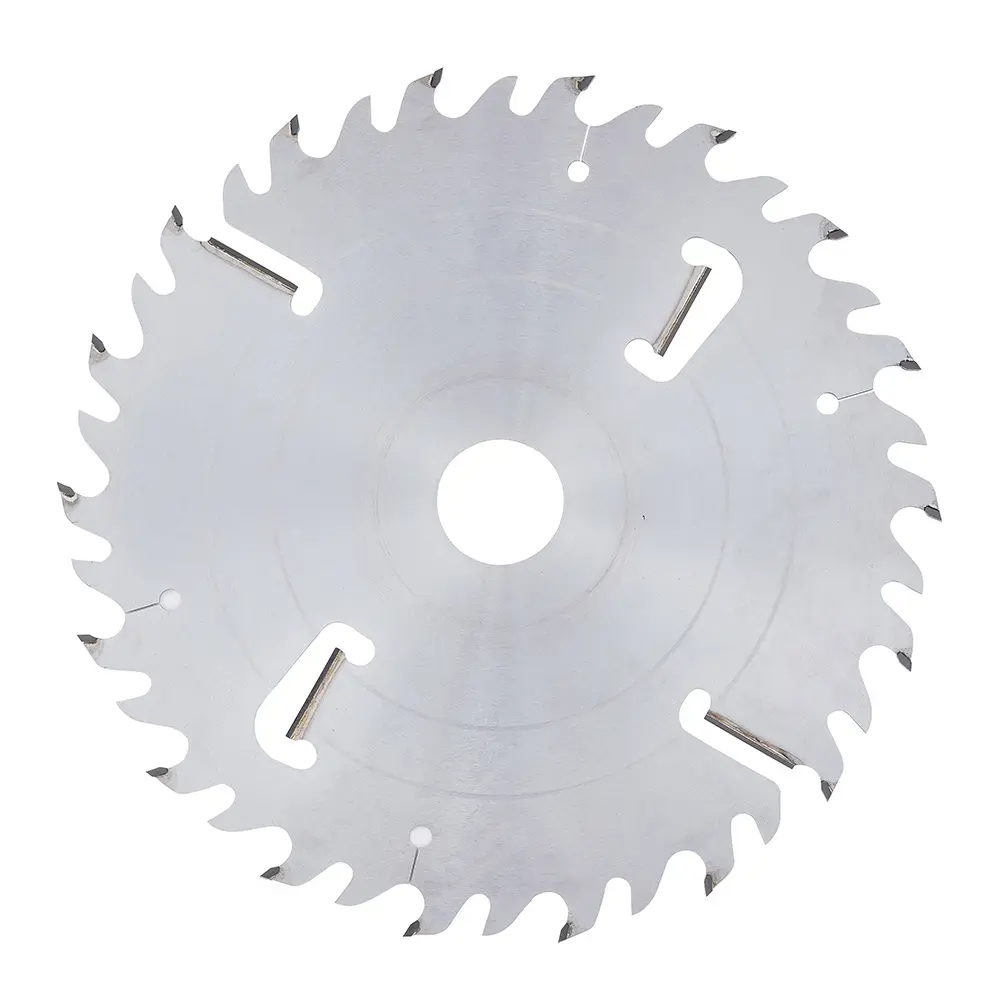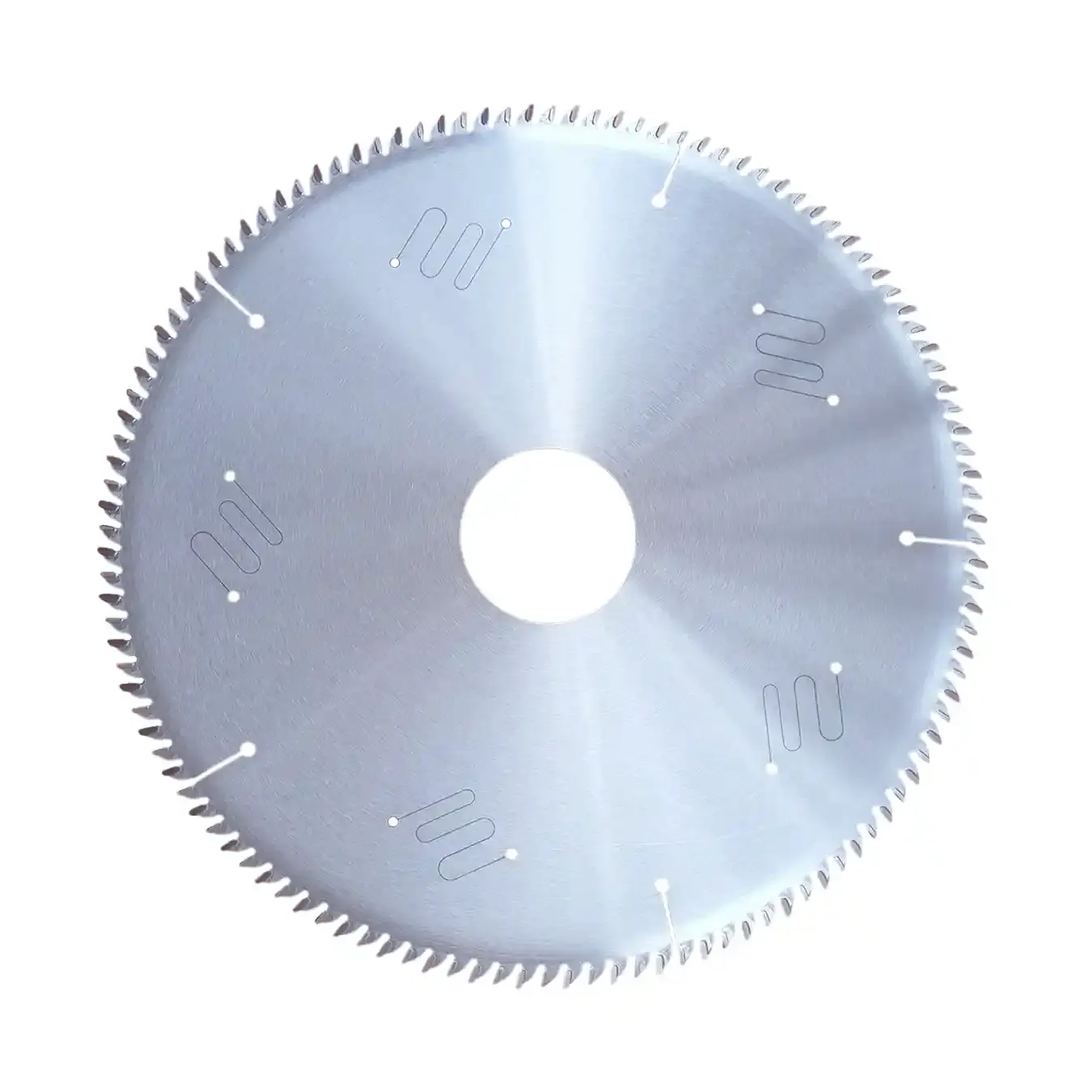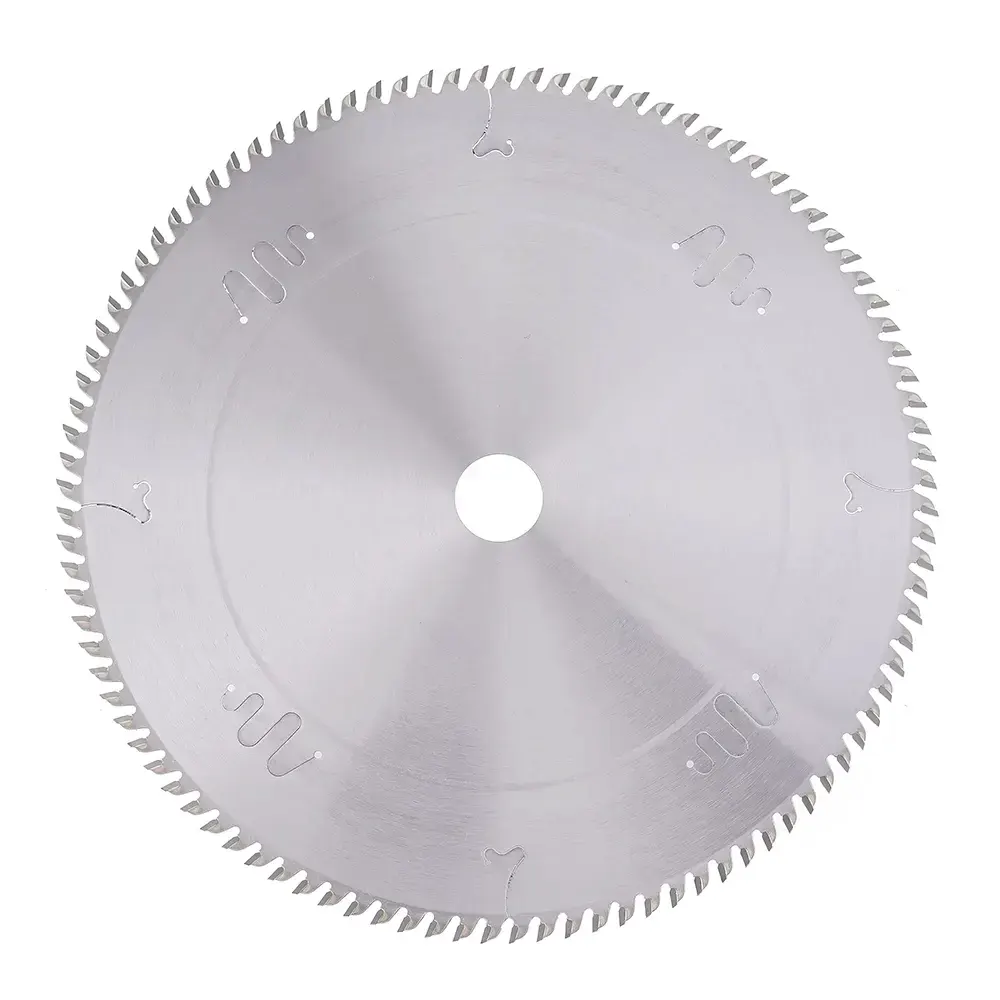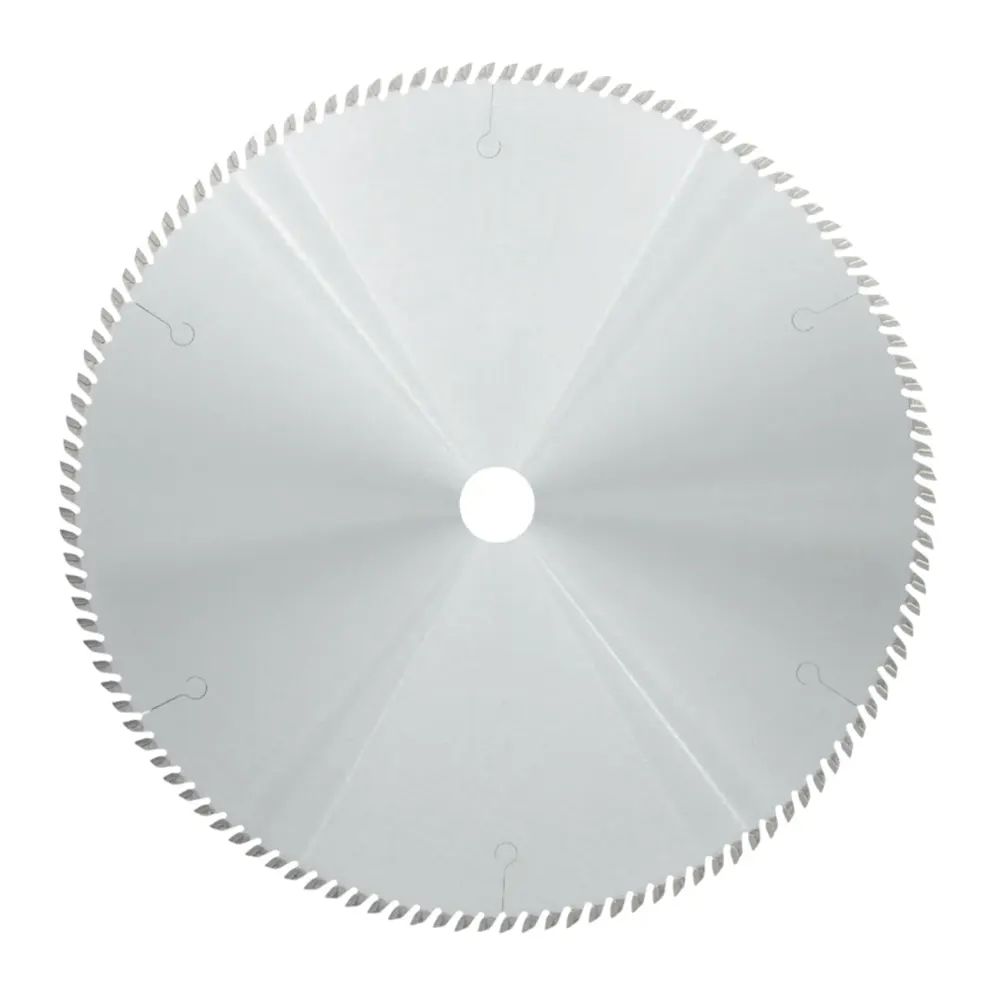
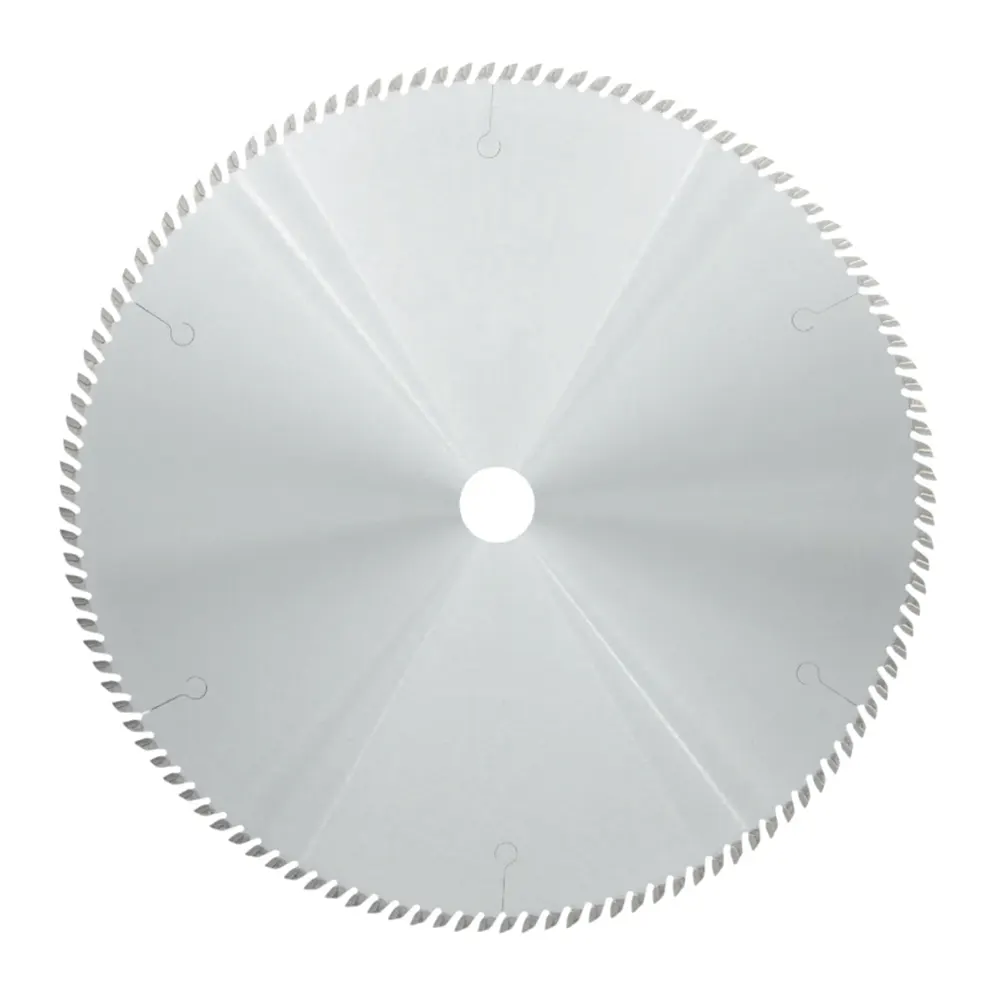
Typical Applications
- High-speed automated crosscutting of solid wood lumber on optimizing saws (Weinig OptiCut, Dimter OptiCut, etc.), where the machine scans each board for defects and positions the cut automatically at cycle times as fast as 0.07–1.0 second per cut.
- Defect removal and cut-to-length of softwood and hardwood boards for finger-joint blank, edge-gluing strip, and furniture component production, where every cut end must be clean enough for immediate downstream gluing or machining without reworking.
- Push-feed, through-feed, and undertable crosscut saw applications requiring high throughput combined with consistent cut quality across mixed lumber batches.
Key Performance Advantages
- ATB tooth geometry with high tooth count produces clean, fibre-free cut ends on both softwood and hardwood, leaving surfaces that are ready for finger jointing or edge gluing without additional facing or sanding.
- Blade body and tip geometry are engineered to withstand the extreme dynamic loads of optimizing saw operation — each cut cycle involves rapid acceleration, full engagement with the workpiece, and equally rapid retraction, which places far greater stress on the circular saw blade than conventional crosscutting.
- Precision tensioning and anti-vibration expansion slots maintain blade stability and concentricity under high-speed cycling, preventing the blade flutter that causes diagonal cut faces and wasted end trim.
- Tungsten carbide grade and tip geometry are selected for toughness as well as sharpness, resisting micro-chipping from the intermittent impact loading characteristic of optimizing saw cycles.
- Consistent cut quality across the full blade life reduces the reject rate in downstream automated finger-joint and gluing lines, where a single piece with a torn or fibrous end can cause a machine stoppage.
Application Notes
- Verify that the circular saw blade bore diameter, pinhole pattern, and flange dimensions match the optimizing saw spindle exactly — optimizing saws run at fixed high speeds and rely on precise blade seating for dynamic balance.
- Inspect and replace or resharpen the circular saw blade at the machine manufacturer’s recommended interval; on optimizing saws the high cycle count accelerates tip wear faster than the equivalent hours on a manual crosscut saw.
- A dull circular saw blade produces torn, fibrous cut ends that are visually similar to a sharp cut but fail in finger-joint or glue-joint strength — establish a proactive resharpening schedule based on board count rather than waiting for visible deterioration.
- Keep the circular saw blade clean; pitch and resin buildup from continuous high-speed cycling is heavier than on slower saws and will cause imbalance and affect cut quality if not removed regularly.