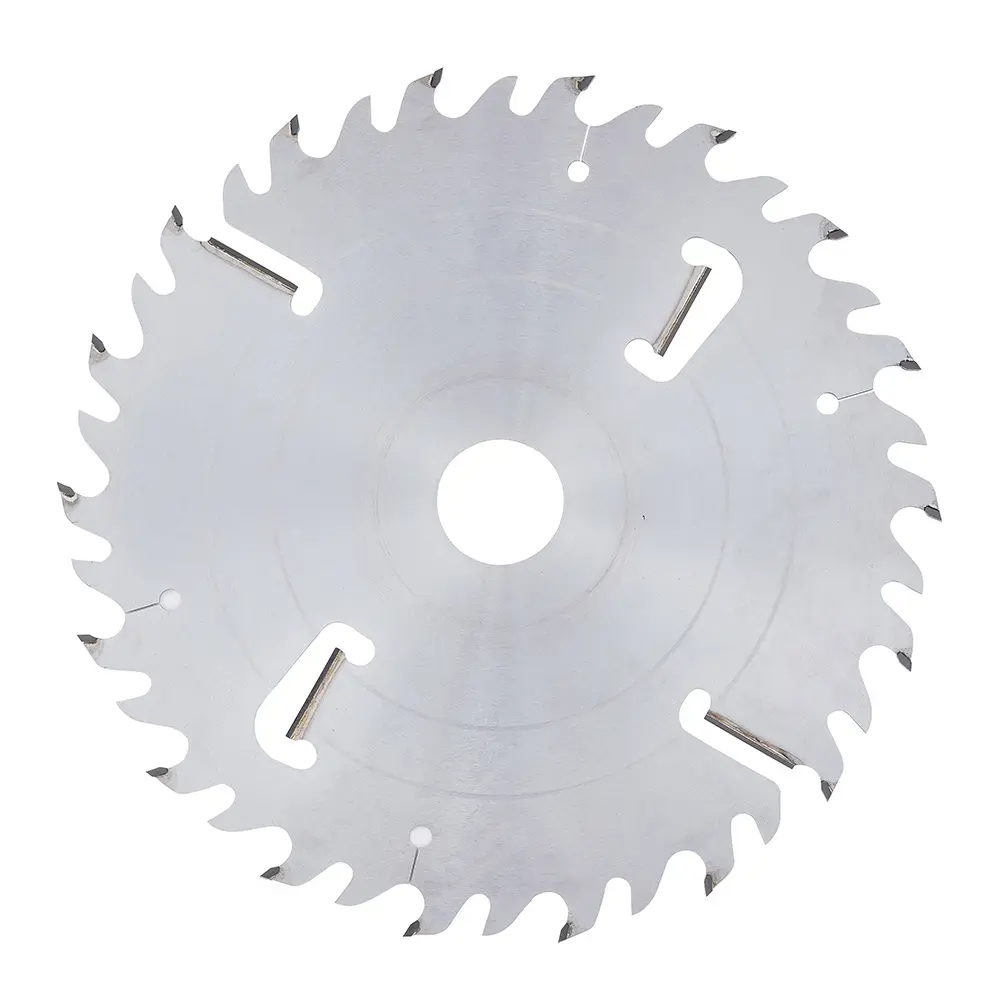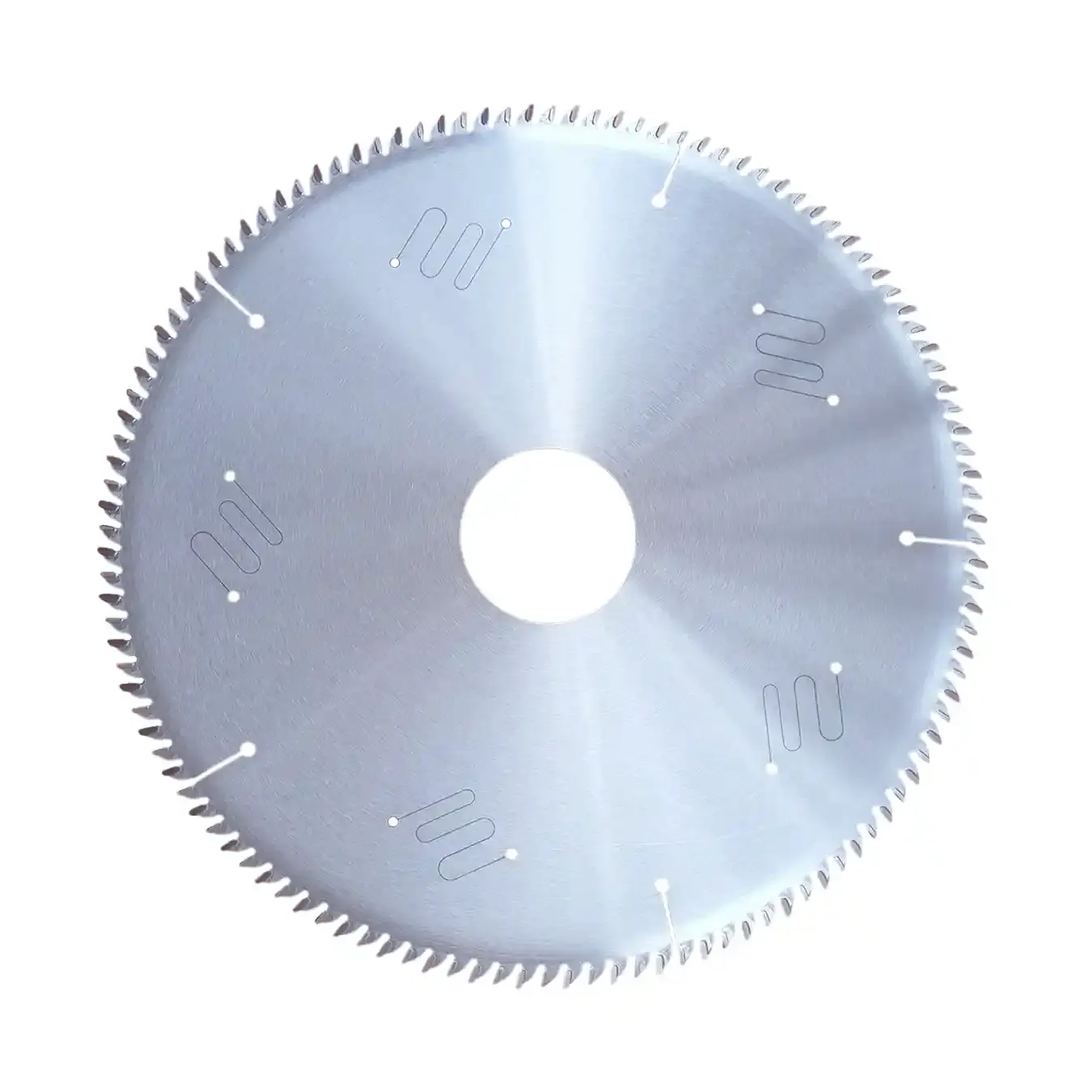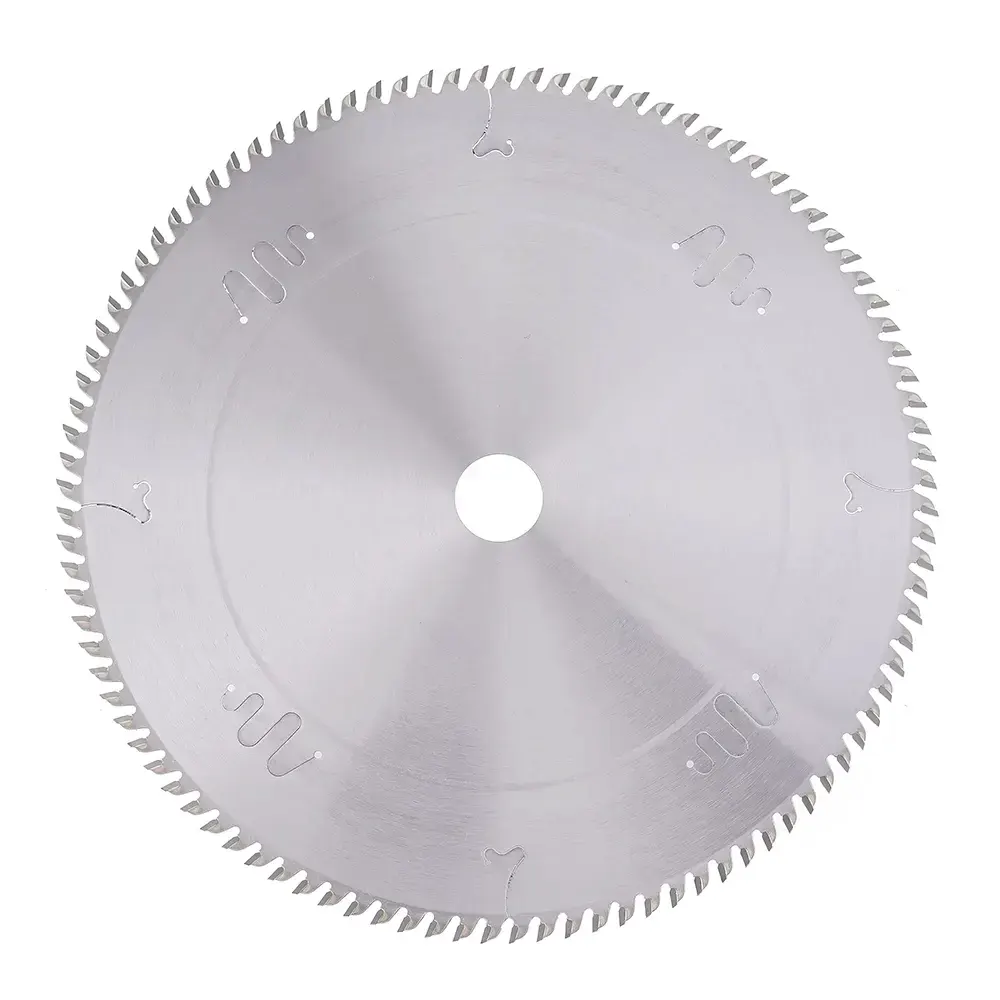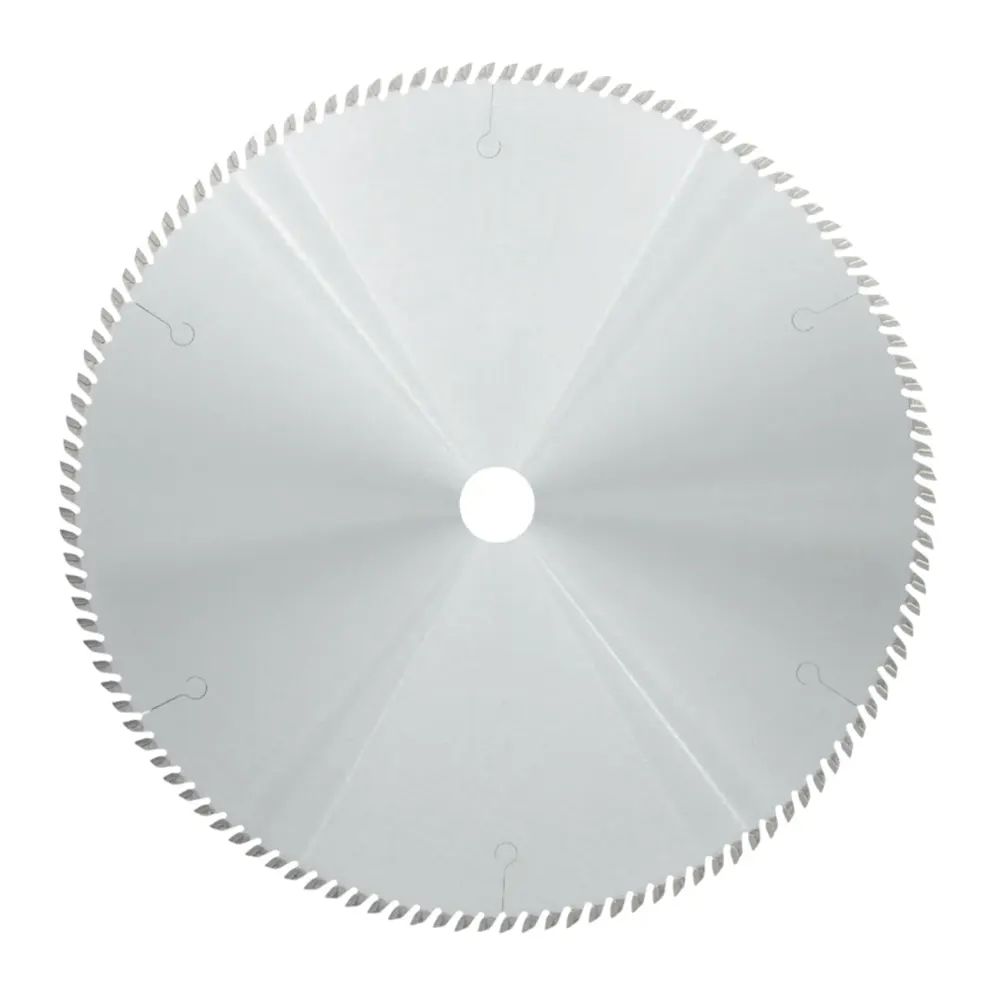
Typical Applications
- Edging and straight-line ripping of rough-sawn lumber and slabs on edging saws and straight-line rip saws, converting irregular natural edges into flat, square reference surfaces for downstream processing.
- Trimming solid wood components to precise width on double end tenoners, squaring saws, and trimming saws before finger jointing, edge gluing, or laminating.
- Multi-rip cutting of solid wood boards to consistent width strips on ripping and multiripping saws used in flooring, moulding, and finger-joint blank production.
- Shoulder cuts and step cuts on double end tenoners in window frame, door frame, and furniture component manufacturing.
- Trimming MDF, plywood, and particle board edges where these panel materials are processed on the same machines alongside solid wood.
Key Performance Advantages
- ATB tooth geometry produces a clean, splinter-free cut edge on both softwood and hardwood, reducing or eliminating the need for additional jointing or planing before gluing and finger jointing.
- Precision-ground tungsten carbide tips maintain edge sharpness through extended production runs on high-feed trimming and edging machines, keeping edge quality consistent across long batches.
- Thin kerf options minimize material loss during edge trimming and ripping, which is especially relevant when processing premium hardwood stock.
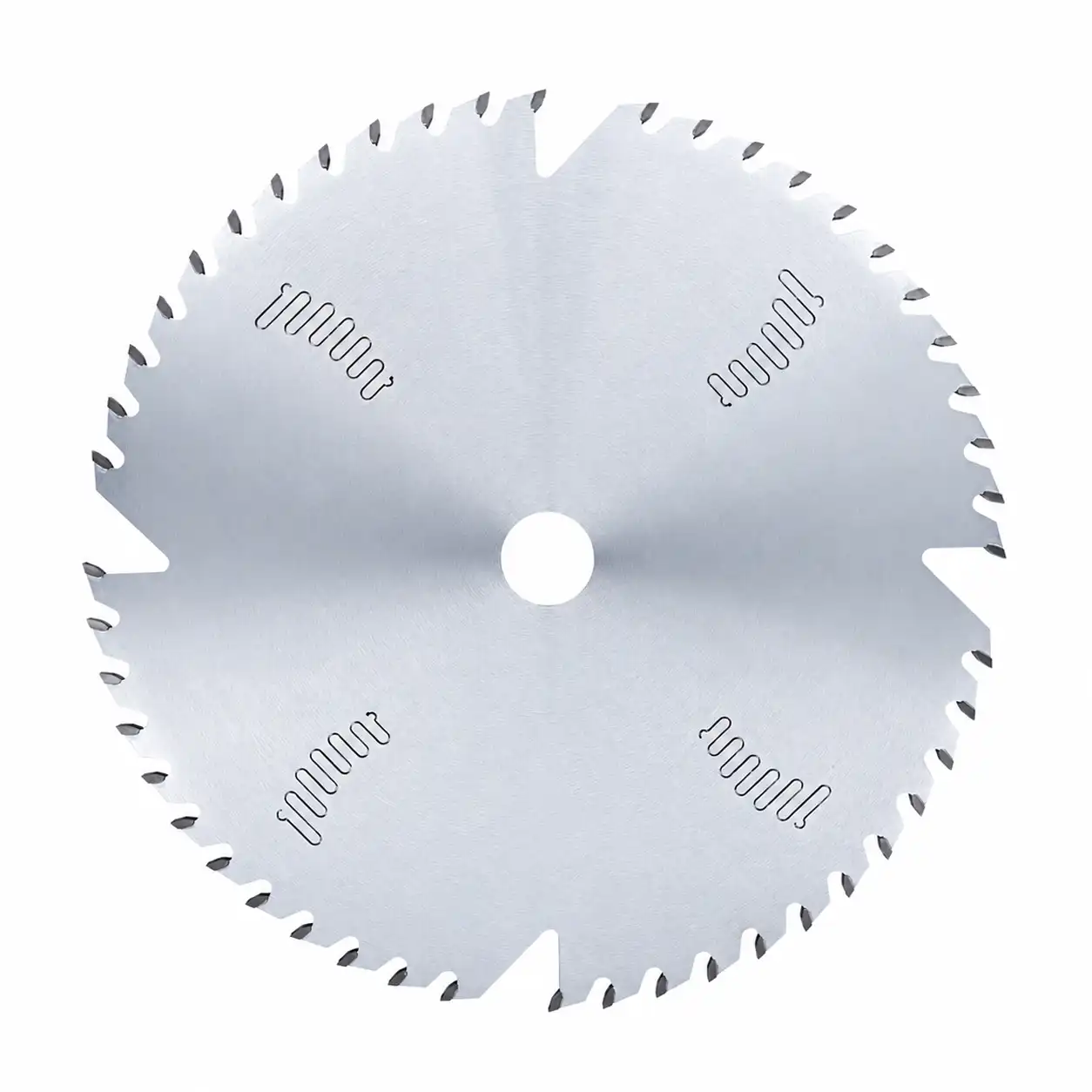
- Anti-vibration expansion slots with optional TPU filler and a precision-tensioned blade body reduce vibration at high feed speeds on multiripping saws, improving cut straightness and dimensional accuracy.
- Anti-stick surface treatment (polished finish or chrome plating) prevents pitch and resin buildup on the blade body, maintaining balanced rotation and clean cuts throughout the shift.
Application Notes
- For edge gluing and finger jointing, the trimmed edge must be straight and square — check circular saw blade runout and machine fence alignment regularly, as even small deviations translate directly into glue joint gaps.
- Match tooth count to the operation: moderate tooth counts (48–70T) suit high-feed edging and ripping; higher tooth counts give cleaner surfaces where downstream gluing or finishing demands tighter tolerances.
- On multiripping saws running multiple circular saw blades in parallel, ensure all blades are matched for diameter and kerf to maintain consistent strip width across the full board width.
- Clean pitch and resin deposits regularly; buildup on trimming and edging blades causes uneven cut pressure and leads to tapered or bowed edges that affect glue joint quality.