· Cutek Team · Technical Guides · 6 min read
Troubleshooting Aluminum Extrusion Cutting: 9 Common Problems and How to Fix Them
A practical, shop-floor guide to the most common aluminum extrusion cutting problems—chip welding, kickback, thin-wall deformation, burrs, scoring, out-of-square cuts, noise, rapid tooth chipping, and cut face discoloration—plus the blade geometry and machine setup that solve them.
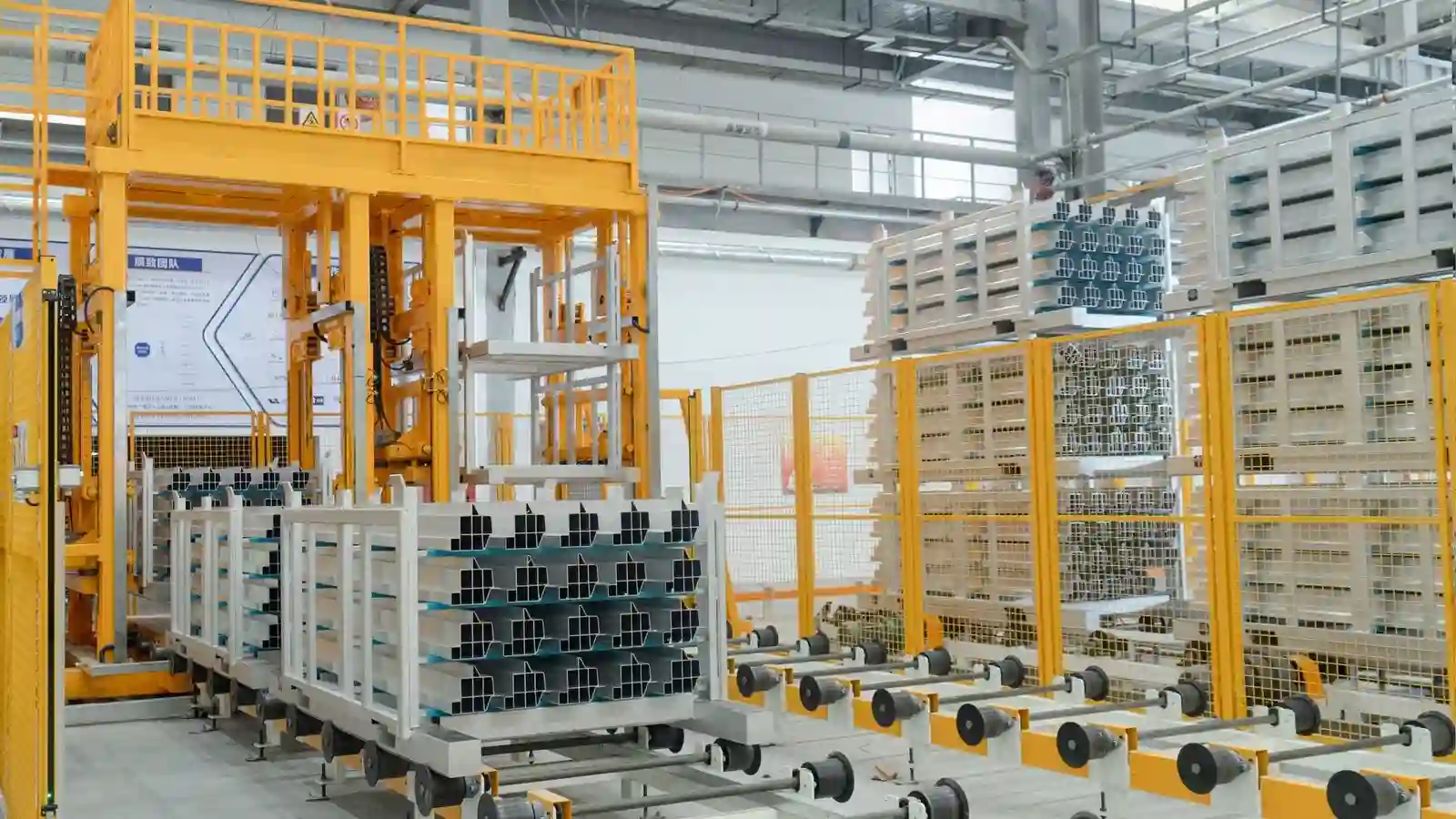
For window and door fabricators, automotive part suppliers, and industrial framing plants, cutting aluminum profiles is a daily operation. Yet aluminum is a notoriously “sticky” and unforgiving metal. A small mistake in machine setup—or the wrong circular saw blade for aluminum profile—leads to scrapped workpieces, accelerated tool wear, and production bottlenecks.
Whether you run a high-speed CNC up-cut saw or a standard chop saw, clean cutting comes down to understanding the mechanics behind the blade. Below are the nine most common aluminum extrusion cutting problems, each with an actionable, engineering-level fix.
1. Aluminum Sticking to the Teeth (Chip Welding / Built-Up Edge)
The problem: Aluminum melts, smears, and builds up on the carbide tips or the steel plate. Known on the floor as chip welding, built-up edge (BUE), or galling, it kills cut quality and can make the blade bind or crack.
The fix: Aluminum has a low melting point and high thermal conductivity, so frictional heat softens chips that then weld to the tooth.
- Never cut dry. Run a Minimum Quantity Lubrication (MQL) system with a quality cutting mist or wax stick.
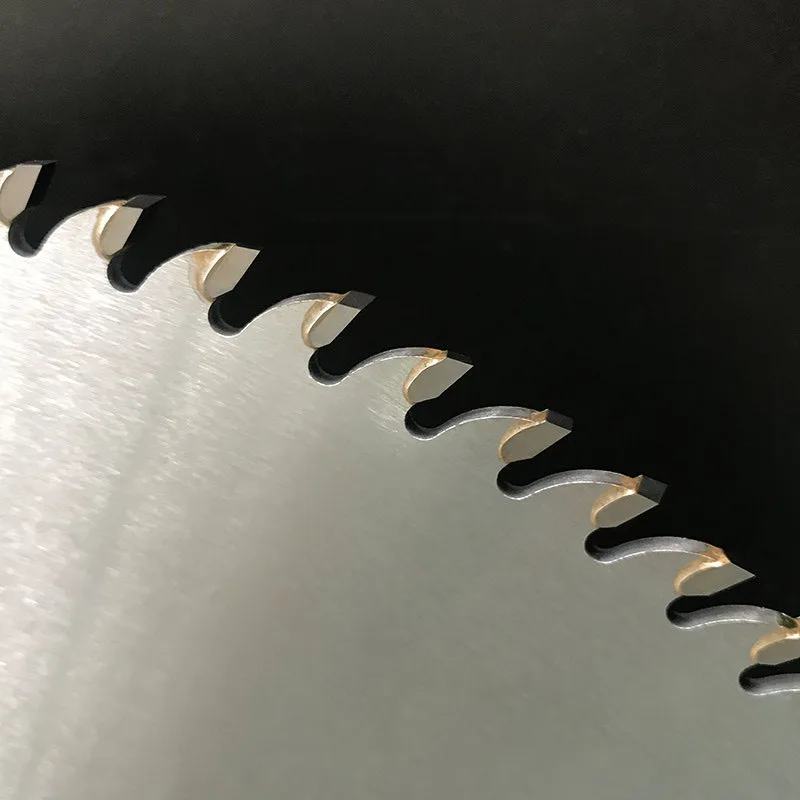
- Use polished gullets. A proper circular saw blade for aluminum profile has mirror-polished gullets so chips release instead of sticking.
- Balance RPM and feed. Too much speed with too little feed makes the teeth rub instead of cut. Raise the feed so each tooth takes a real bite and carries the heat away in the chip.
2. Workpiece Lifting or Kickback on Miter / Chop Saws
The problem: On a down-cutting miter, chop, or radial-arm saw, the profile suddenly jumps upward, climbs into the blade, or kicks back—risking the machine and the operator.
The fix: This is almost always the wrong hook (rake) angle.
- Run a negative hook angle. A positive hook—standard for wood—grabs the aluminum and lifts it. A chop-saw aluminum blade should use a negative hook (typically -5° to -6°) to push the work down and back into the fence.
- Clamp on both sides. Use pneumatic clamps either side of the cut line. Extrusions vibrate easily, and hand-holding is never acceptable for production cutting.
3. Deformation or Crushing of Thin-Walled Profiles
The problem: Thin-walled sections dent, crush, or collapse under blade pressure or clamping force.
The fix: Thin wall stock lacks rigidity and needs gentle, supported cutting.
- Increase tooth count. A high-tooth circular saw blade for aluminum profile (for example 100T–120T on a 350 mm blade) keeps more teeth in the cut at once, lowering the load per tooth.
- Use contoured jigs. Flat clamps crush hollow sections. Nylon or 3D-printed nesting blocks shaped to the profile support the walls so clamping force does not deform them.
4. Heavy Burrs on the Cut Edge
The problem: The cut face carries sharp, ragged burrs that demand secondary deburring before assembly or finishing—slowing the whole line.
The fix: Burrs mean the blade is tearing rather than shearing.
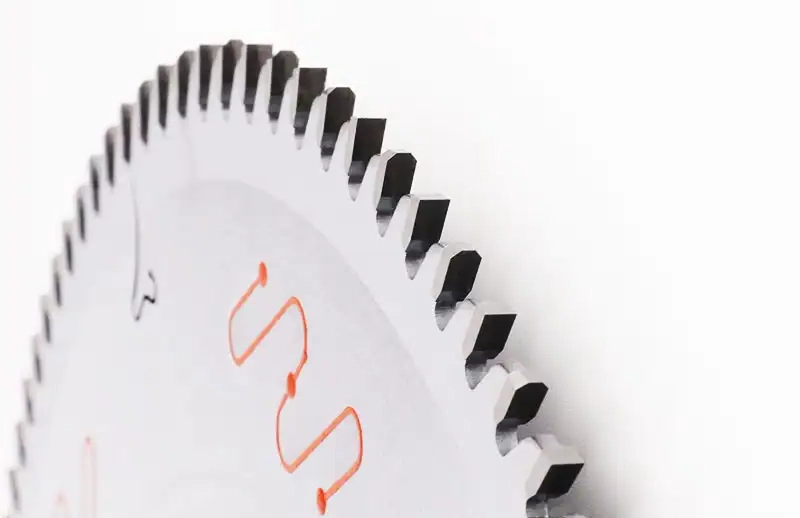
- Use TCG geometry. A professional aluminum blade uses a Triple Chip Grind (TCG) tooth form, alternating a chamfered “roughing” tooth with a flat “finishing” tooth to split the chip and leave a clean edge.
- Watch sharpness. Even premium carbide dulls; sudden burrs usually mean it is time to regrind.
- Ease off on exit. Burrs form as the teeth leave the material, so trimming the feed at the end of the stroke removes most exit burrs.
5. Deep Scoring Marks or “Steps” on the Cut Face
The problem: Instead of a smooth face, the surface shows deep concentric scratches, score lines, or uneven steps.
The fix: This signals lateral movement (wobble) during the cut.
- Check runout. Put a dial indicator on the arbor and flanges. Dirt or burrs on the mounting collars make the blade wobble and score the face.
- Stop blade deflection. Pushing too hard flexes the plate; a dynamically tensioned circular saw blade for aluminum profile stays rigid under load.
- Clear the chips. Poor chip evacuation drags swarf back through the kerf and re-cuts the fresh surface.
6. Out-of-Square Cuts (Poor Perpendicularity)
The problem: The mating profiles do not line up at assembly or welding because the cut is slightly angled or out of square.
The fix:
- Align the machine. Confirm the fence sits at a true 90° to the blade with a precision machinist square.
- Use a tensioned plate. A fatigued or low-grade blade loses tension and wanders, especially through thick solid sections. A premium aluminum blade holds its line.
- Feed consistently. Manual pull-down saws produce out-of-square cuts from uneven operator pressure; a hydro-pneumatic feed cylinder delivers a constant, repeatable feed rate.
7. Excessive Screeching Noise During the Cut
The problem: Cutting produces an unbearable high-frequency screech that breaches workplace noise limits and signals poor cutting dynamics.
The fix: That screech is aerodynamic vibration and harmonic resonance.
- Use a silenced body. A quality circular saw blade for aluminum profile has laser-cut expansion slots and resin-filled silencing lines that break up harmonics, damp vibration, and noticeably lower noise.
- Limit blade projection. Keep only about 10–15 mm of blade projecting above the profile to minimize flutter and noise.
8. Rapid Tooth Chipping or Premature Tip Loss
The problem: Carbide tips micro-chip or break away far sooner than expected, leaving rough cuts and a costly early blade change.
The fix: Carbide is hard but brittle, and shock destroys it.
- Match the grade. Use a fine-grain, high-toughness carbide rated for non-ferrous cutting rather than a general wood grade.
- Kill vibration. Loose clamping, worn arbor bearings, or excessive blade projection all hammer the tips. Tighten the setup before blaming the blade.
- Avoid hard re-entry. Letting the blade slam into the work at full feed chips teeth; ease the start of the stroke.
9. Discoloration or Heat Staining on the Cut Face
The problem: The cut face shows blue, brown, or smeared heat marks—often paired with sticky chips.
The fix: This is excess heat staying in the part instead of leaving with the chip.
- Improve lubrication. Increase MQL volume or switch to a higher-grade aluminum cutting fluid.
- Re-balance speed and feed. Lower the RPM or raise the feed so the teeth cut cleanly instead of burnishing the surface.
- Open the gullets. A blade with deeper, polished gullets carries hot chips clear of the kerf before they scorch the face.
Conclusion
Clean aluminum cutting is a balance of machine rigidity, proper lubrication, exact blade geometry, and proper tensioning. Work through these nine issues and your operators and procurement team can cut downtime, eliminate secondary finishing, and protect cost-per-cut.
The cutting tool is the heart of any extrusion line. To match the right tooling to your machines and profiles, explore our full range of circular saw blades for aluminum—dynamically tensioned, TCG-ground, and engineered for burr-free production.