· Cutek Team · Buying Guides · 5 min read
TCT Circular Saw Blade Surface Treatments: The Ultimate Procurement Guide
A buyer-focused guide to the surface finishes used on TCT circular saw blade bodies and teeth—bright grinding, chrome and nickel plating, black oxide, anti-friction coatings, printing, and PVD—what each one does and when to specify it.
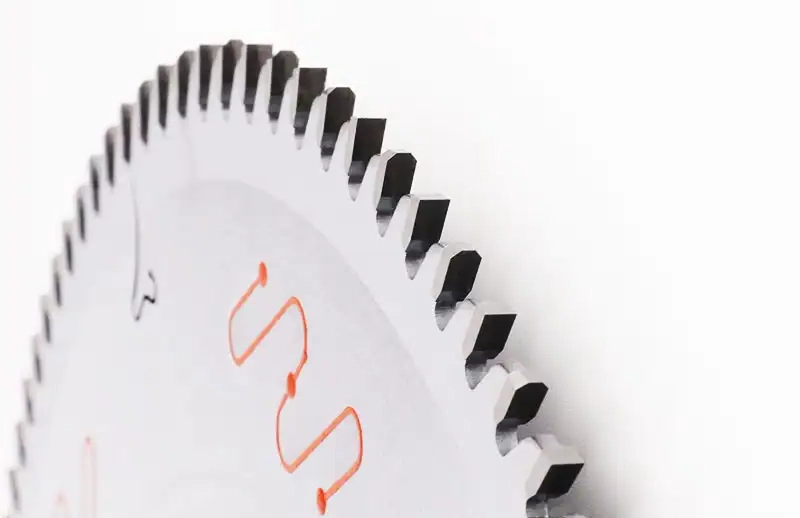
Two TCT circular saw blades can share the exact same carbide grade, tooth count, and steel plate material, yet behave entirely differently on the production floor. The secret lies in the surface finish.
For procurement managers, the challenge is separating finishes that drive real cutting performance from those that simply look good on a catalog page. To demystify this, you must understand one fundamental rule: the steel body (the plate) and the carbide teeth are treated for completely different reasons.
Body finishes are applied to fight rust, reduce kerf friction, and display branding. Tooth coatings are applied to fight extreme heat and mechanical wear. Here is the definitive guide to exactly what you are buying when you specify a surface treatment on your next TCT circular saw blade order.
1. Body Finishes: Fighting Rust and Friction
Most “coatings” that buyers ask about are actually just body finishes. These treatments cover the large steel disc to protect it during shipping, storage, and operation.
Bright Ground (Bare Steel)
The plate is precision-ground and polished, leaving bare steel with no additional plating.
- The Reality: It is the most economical finish and perfectly adequate for high-volume blades that are used and stored in dry, climate-controlled environments.
- Procurement Tip: Because bare steel rusts rapidly, ensure your supplier packages bright ground blades with high-quality anti-rust oil and VCI (Volatile Corrosion Inhibitor) paper if they will be sitting in your warehouse or traveling by sea.
Chrome Plating: Decorative vs. Hard Chrome
Chrome is where many buyers get tricked. Both types use the same chromium metal, but the thickness dictates the function.
Decorative Chrome (Flash Chrome): Typically only 0.1 to 0.5 µm thick. It exists purely to make the blade look mirror-bright and to prevent surface rust while sitting on a distributor’s shelf. It provides zero friction reduction during cutting.
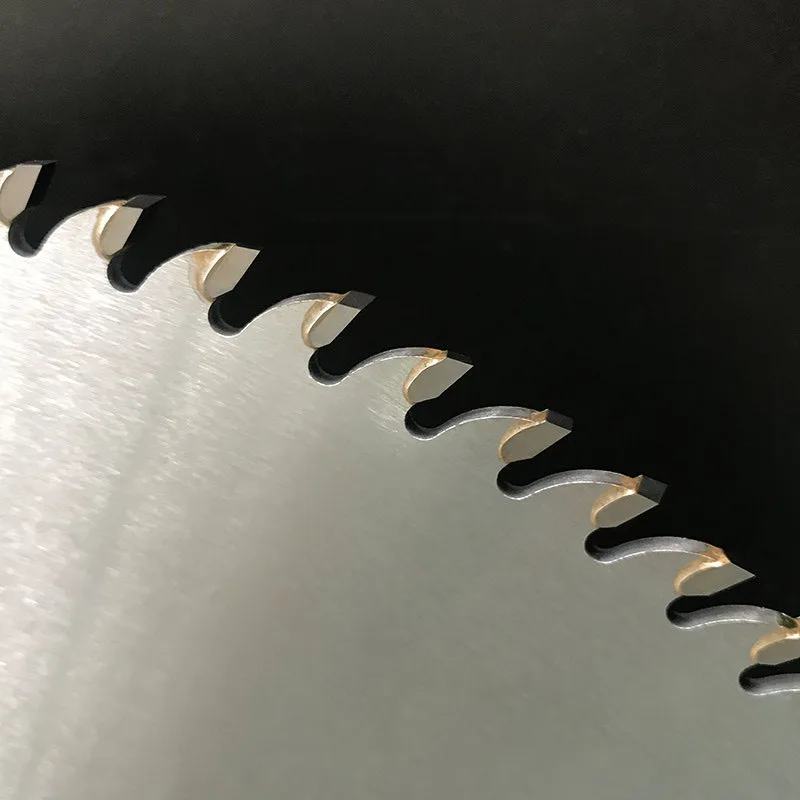
Hard Chrome (Functional/Industrial Chrome): Plated much thicker, typically 5 to 20 µm on saw plates, achieving a hardness of 65–69 HRC. This engineered layer genuinely reduces friction as the plate passes through the kerf and provides heavy-duty abrasion resistance.
Procurement Tip: Never just order “chrome.” Always ask your manufacturer for the plating thickness to ensure you are paying for actual performance, not just cosmetic shine.
Nickel Plating
Electroplated nickel provides an even, highly durable corrosion barrier with a satin-to-bright aesthetic. It is an excellent, cost-effective specification for TCT circular saw blades operating in highly humid workshops or facilities where coolant sits on the blade for extended periods.
Black Oxide / Steam Treatment
This is a controlled chemical oxidation process that grows a thin, matte blue-black magnetite layer (Fe₃O₄)over the steel.
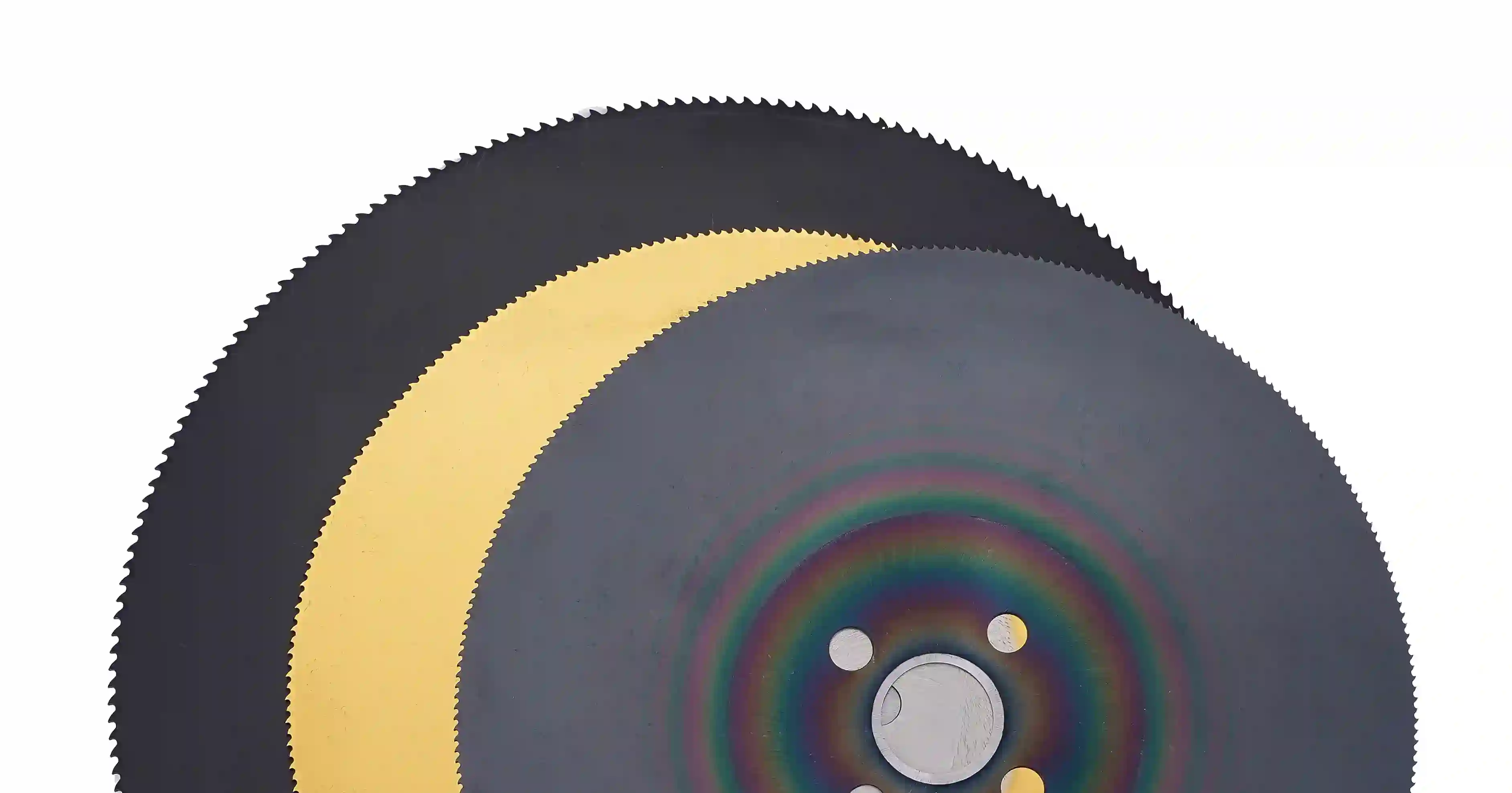
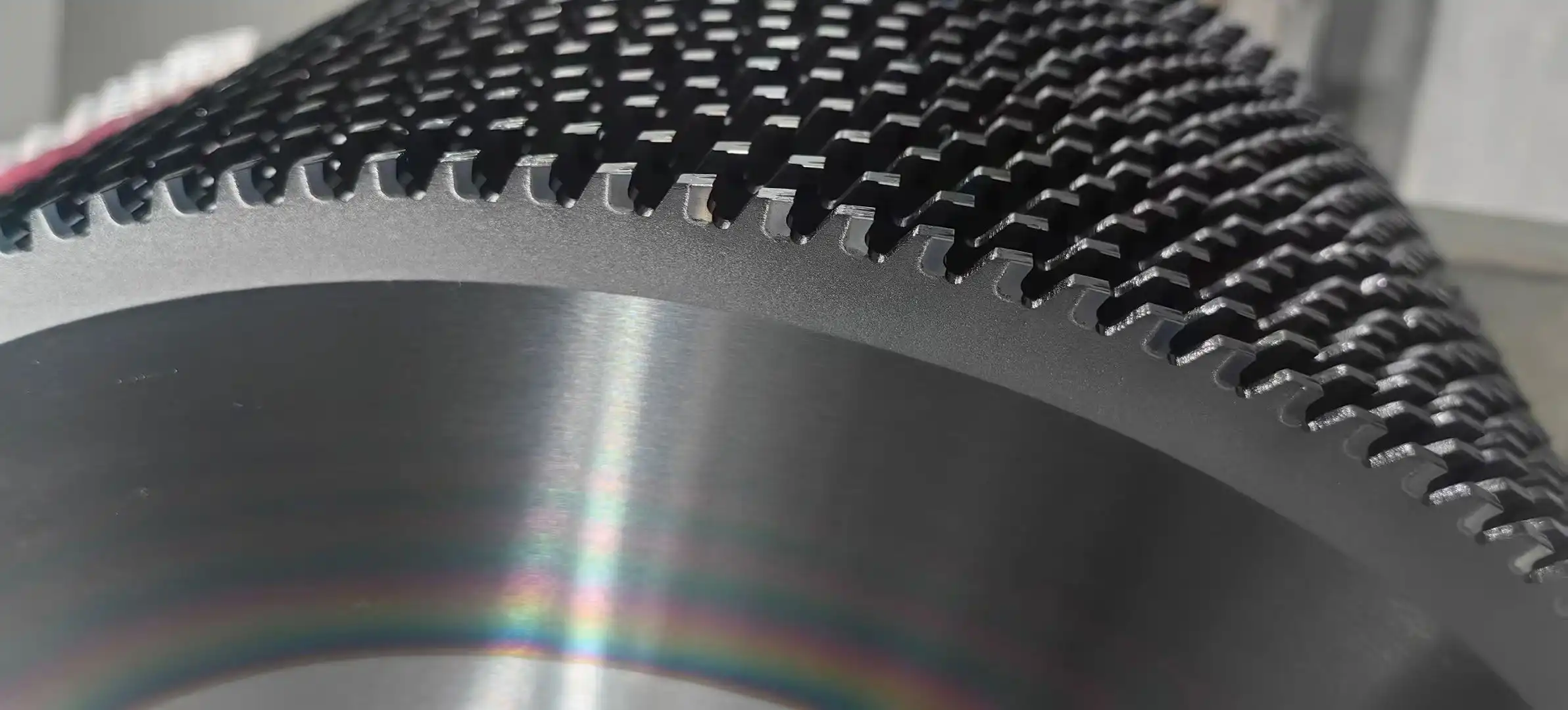
- The Reality: It adds almost no hardness, but the porous oxide layer is exceptional at trapping cutting oils. This acts as a boundary lubricant, preventing the workpiece material from galling or welding to the steel plate. It is the traditional, highly effective standard for heavy-duty metal-cutting blades.
Anti-Friction / Non-Stick Coatings (PTFE/Teflon)
Fluoropolymer coatings (like PTFE) are sprayed onto the blade body and baked.
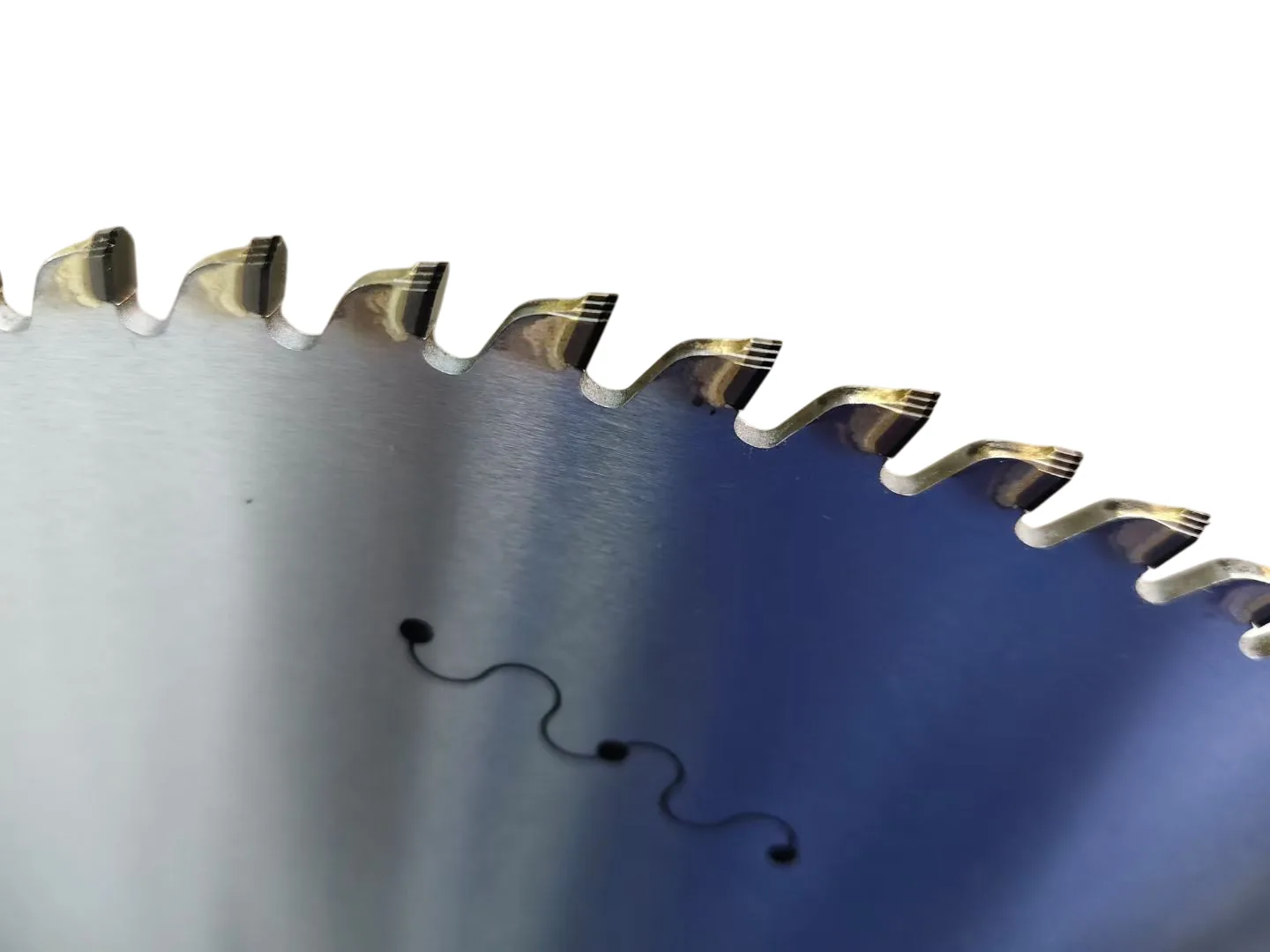
- The Reality: PTFE softens at low temperatures, making it useless for cutting steel. However, it is the ultimate solution for woodworking and non-ferrous aluminum cutting. It prevents sticky resin, pitch, sap, and aluminum chips from building up on the plate, ensuring the blade runs cool and clean.
2. Branding Treatments: Making Your Mark
Sometimes, a surface treatment is just about putting your logo and specifications on the tool.
- UV printing Lays down sharp, full-color graphics. This is strictly decorative and widely used for retail and power-tool blades where shelf-appeal drives sales.
- Laser marking Etches the blade size, RPM limits, and tooth geometry directly into the steel. It adds no coating, but it survives industrial coolants and heavy handling. For industrial B2B procurement, laser marking is the mandatory standard for traceability.
3. Tooth Coatings: PVD (Physical Vapor Deposition)
While body finishes protect the steel plate, PVD coatings protect the cutting edge. PVD applies ultra-thin (1–4 µm) ceramic films like TiN (Gold), TiCN (Grey), or TiAlN (Black) over the carbide teeth.
These coatings radically increase surface hardness (up to 3,500 HV) and form a thermal shield, allowing the teeth to cut faster and last significantly longer before dulling.
- The Manufacturing Reality: Modern PVD systems allow selective coating. To control cost and avoid unnecessary film on the steel body, most manufacturers coat only the carbide teeth—and sometimes the outer rim of the plate. Full‑plate coating is still possible, but it’s no longer the typical practice.
- Application: PVD is a premium investment reserved almost exclusively for cutting ferrous metals (steel tubes, stainless steel, solid bars). It is rarely necessary or cost-effective for standard wood, ferrous metal, or plastic cutting.
Quick Reference
| Treatment | Applied To | Primary Purpose | Best Application / Environment |
|---|---|---|---|
| Bright ground | Body | Baseline economy | High-turnover blades, stored with anti-rust oil |
| Decorative chrome | Body | Shelf appeal, light rust prevention | Retail blades, display inventory |
| Hard chrome | Body | Friction reduction, abrasion resistance | Industrial wood/panel cutting, long-life tooling |
| Nickel Plating | Body | High corrosion resistance | Humid workshops, heavy coolant usage |
| Black oxide / steam | Body | Oil retention, anti-galling | Carbon steel & tube metal cutting |
| PTFE (Non-Stick) | Body | Prevent resin/chip build-up | Solid wood, MDF, sticky aluminum profiles |
| PVD (TiN/TiCN/TiAlN) | Teeth + ring | Extreme wear & heat resistance | Ferrous metal cutting (Steel, Stainless) |
| UV print | Body | Decorative | Full-color retail branding |
| Laser marking | Body | Marking/decorative | Permanent, washproof ID |
The Bottom Line for Buyers
Match the finish to your factory floor’s actual failure mode, not the marketing brochure.
If your blades are rusting in the warehouse, specify hard chrome, nickel or demand VCI packaging. If your wood blades are gumming up with pitch, ask for hard chrome or PTFE. If you need maximum tool life cutting solid steel billets, invest in a PVD coating.
At Cutek, we engineer the total tool. Tell us your workpiece material, your machinery’s RPM, and your storage environment, and we will specify the exact combination of body finish and tooth coating to ensure you only pay for the performance your operation actually needs.