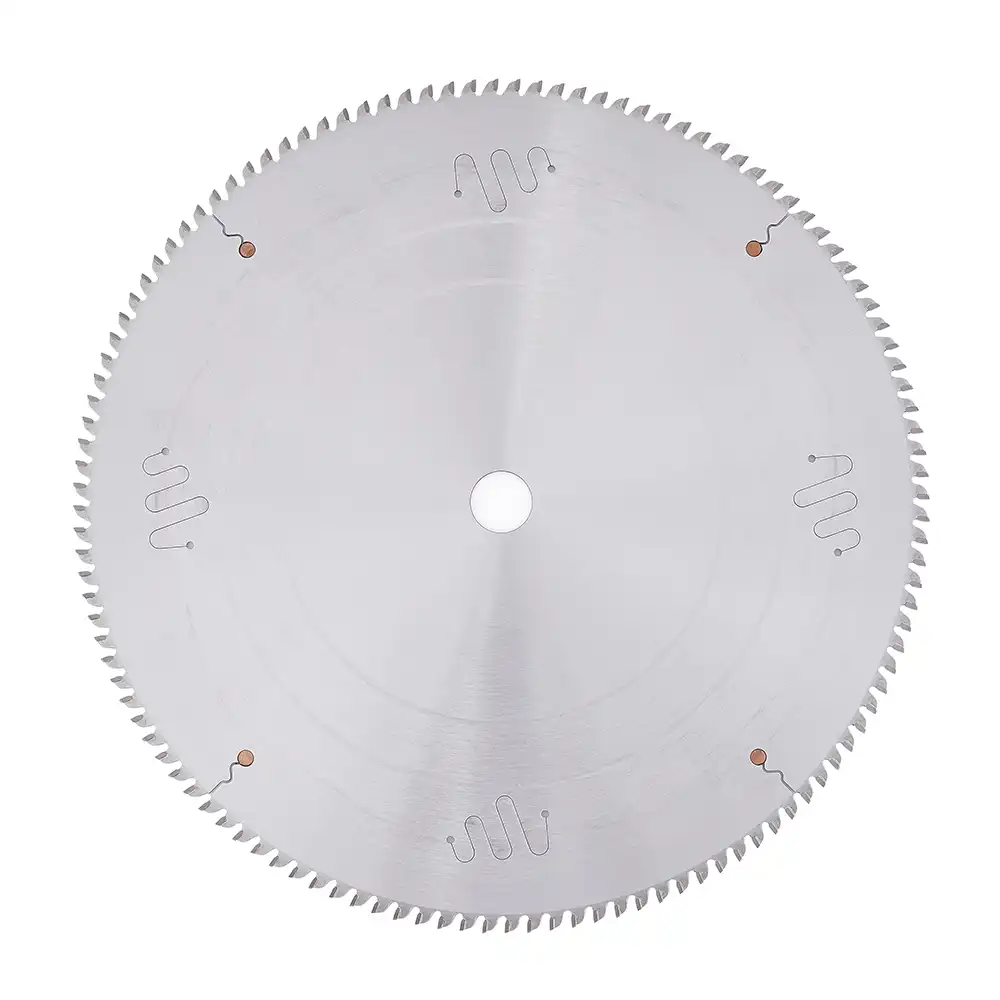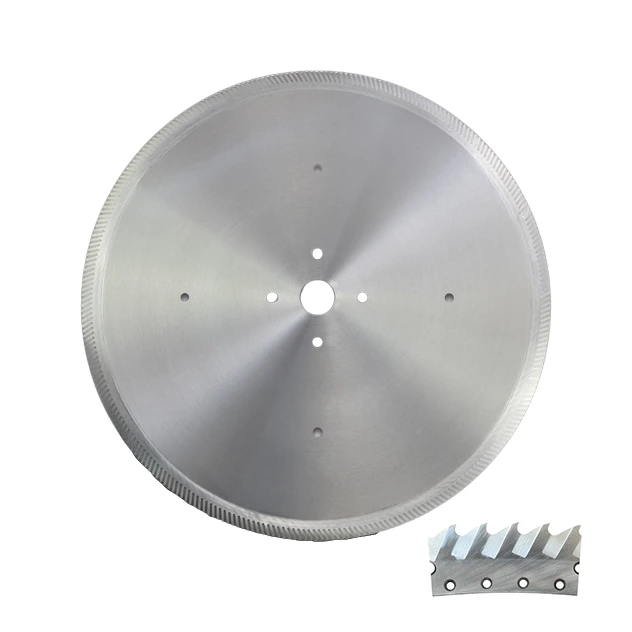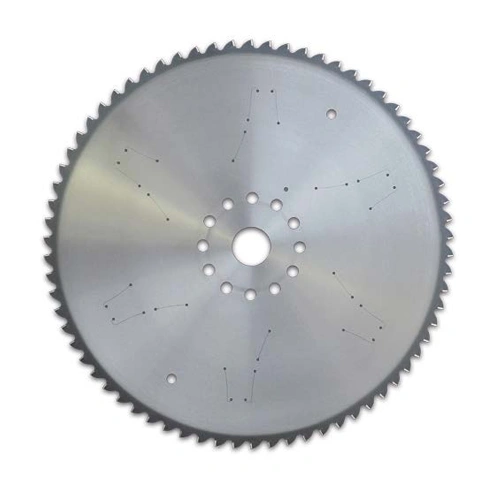
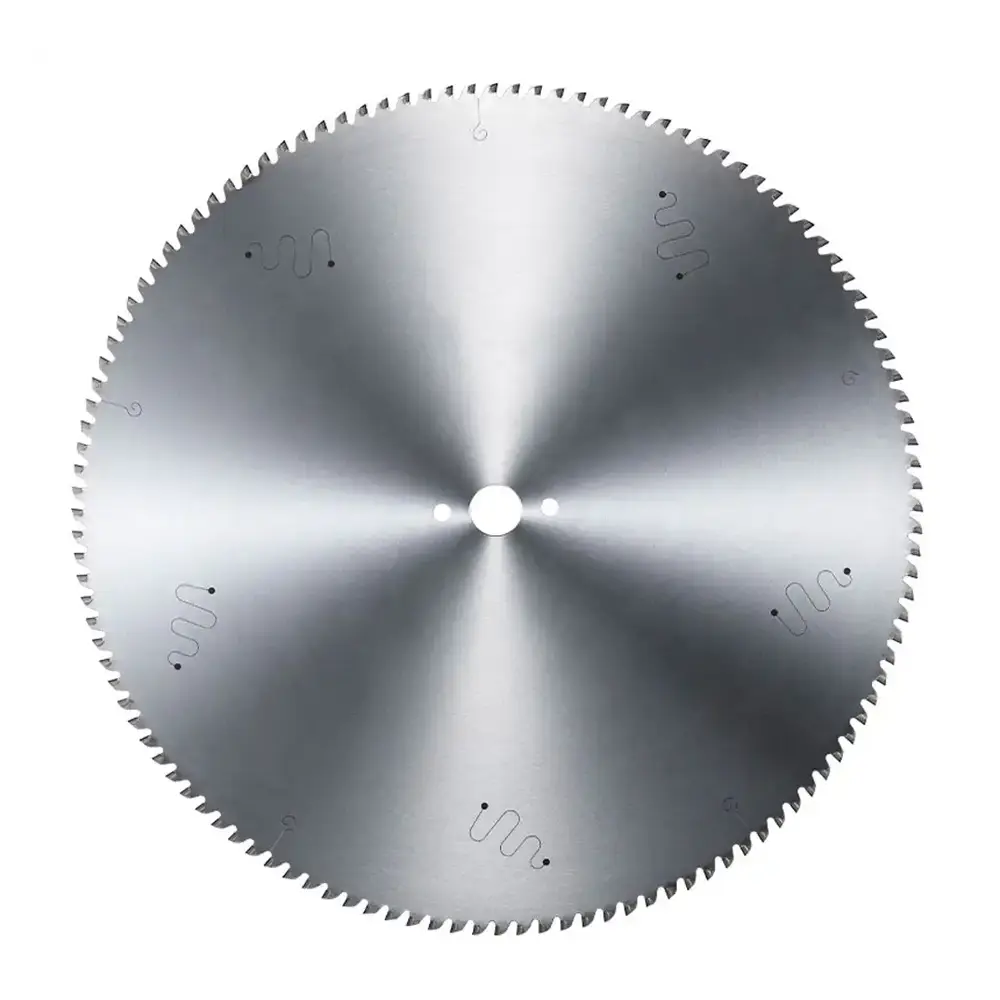
Typical Applications
- Primary: High-volume cutting of thermally broken aluminum profiles in window and door fabrication lines.
- Front-feed double head saws with inward blade tilting where the left blade is more exposed to offcut impact near the end of the cut.
- Energy-efficient window and door manufacturing with insulated frame systems.
- Cut-to-length operations on automated double head sawing machines.
Why This Version
- Thermally broken profiles are the main target, not a side application.
- NFDC is an improved version of NFDB, developed for front-feed machines with inward blade tilting.
- The mTCG-1 tooth form helps improve blade life where the cutting edge is more likely to be struck by the offcut at the end of the cut.
- Standard aluminum profiles can still be cut, but the clear advantage appears on thermally broken profile production in impact-prone setups.
Key Performance Advantages
- Improved blade life versus NFDB in front-feed, inward blade tilting cutting conditions.
- mTCG-1 tooth geometry is designed to better handle impact-prone cutting near cut completion.
- Fewer blade changes mean less downtime and more stable line productivity.
- Better long-run cost performance for daily, high-volume window and door fabrication.
- Also suitable for standard aluminum profiles when longer service life is preferred.
Problems This Circular Saw Blade Helps Solve
- Tooth damage caused when the offcut is struck at the end of a front-feed cut.
- Premature wear on blades used in inward blade tilting window and door saw layouts.
- Frequent blade changes that interrupt production flow.
- Rising tooling cost in high-volume window and door fabrication.
- Inconsistent cut quality caused by worn cutting edges.
Application Notes
- Use suitable coolant and chip evacuation to minimize aluminum adhesion on tooth edges, extending blade life further.
- Maintain strict machine alignment, blade runout, and clamping to fully protect the PCD cutting edge and avoid premature wear.
- Schedule PCD blade regrinding with qualified service providers to preserve tooth geometry and diamond-substrate bonding correctly.